[UEH 50] UEH Organizes Scientific Conference on “Developing High-Quality Human Resources – The Foundation for Restructuring Mekong Delta Provinces in the Post-Merger Period”
24 Sep, 2026

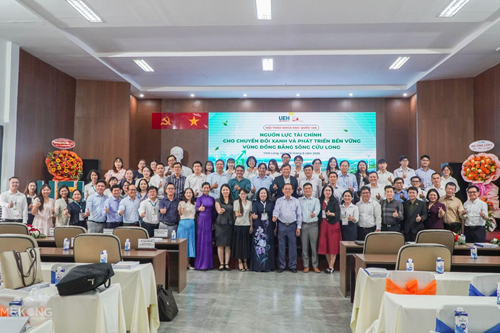
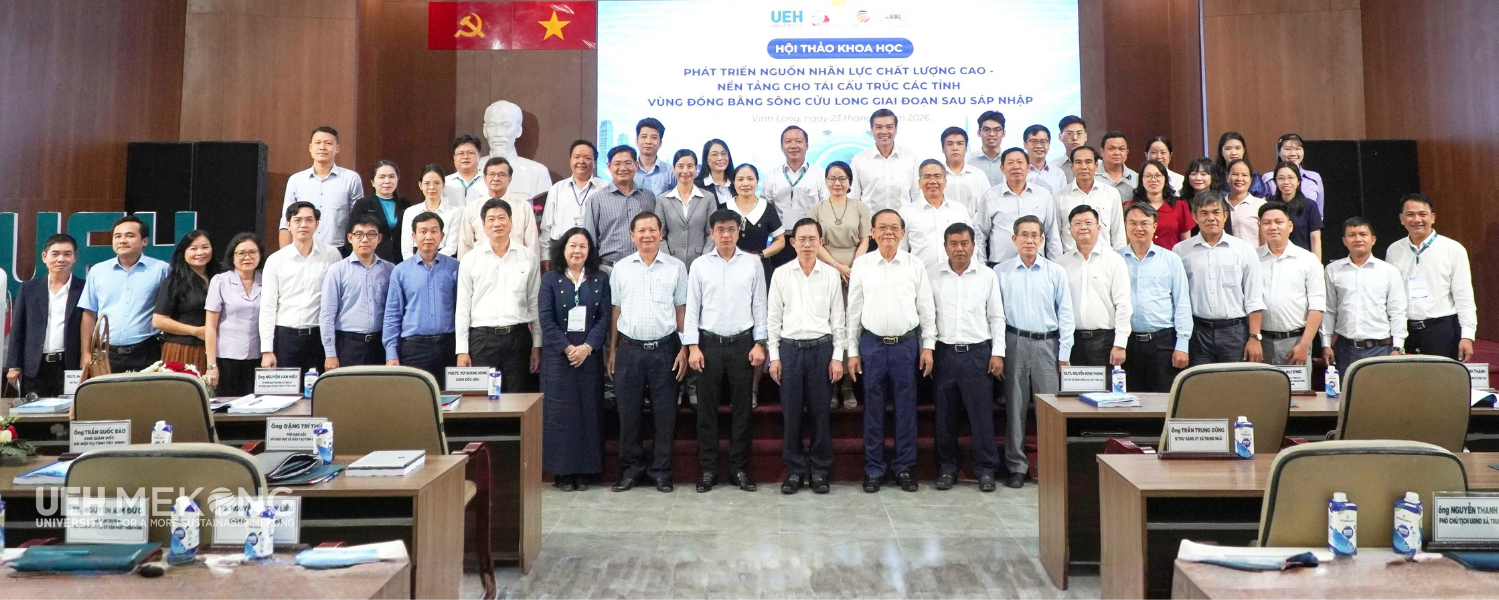
On September 23, 2026, the University of Economics Ho Chi Minh City (UEH) organized the scientific conference “Developing High-Quality Human Resources – The Foundation for Restructuring Mekong Delta Provinces in the Post-Merger Period” at UEH Mekong. The conference was part of a series of academic activities leading up to UEH’s 50th anniversary (October 27, 1976 – October 27, 2026), reaffirming the university’s role in fostering knowledge exchange, advancing research, and proposing practical solutions to support regional development needs in a changing landscape.
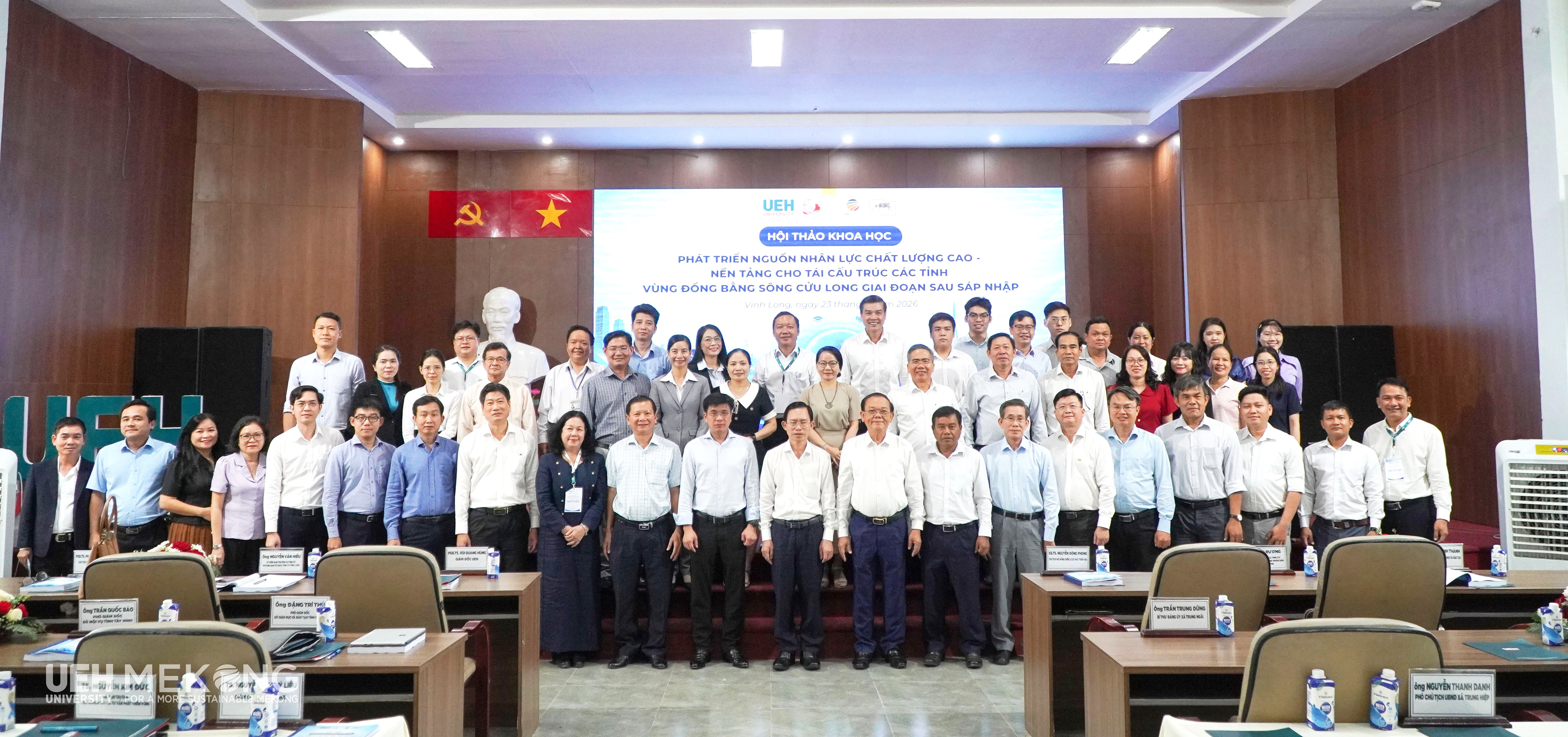
The scientific conference was launched on April 9, 2026, and received 100 research papers submitted by government agencies, research institutes, and universities across Vietnam. The conference program comprised one plenary session and seven parallel sessions. The participation of policymakers, experts, businesses, professional associations, and the academic community created a multidimensional platform for discussing high-quality human resource development. It also demonstrated UEH's role in connecting academic research, management practices, and policy consultation to support the development of the Mekong Delta region.
Throughout the conference, discussions focused on four key issues: (i) competency requirements for high-quality human resources in the new development context, particularly in the public sector and key economic industries; (ii) existing competency gaps, the causes of labor supply–demand imbalances, and labor migration trends within the region; (iii) collaborative models and governance solutions capable of delivering practical results; and (iv) approaches to translating research findings into feasible mechanisms and policies. These four issues provided a common framework connecting the plenary and thematic sessions, with the aim of identifying challenges and proposing human resource development solutions that respond to the restructuring requirements of Mekong Delta provinces following administrative mergers.
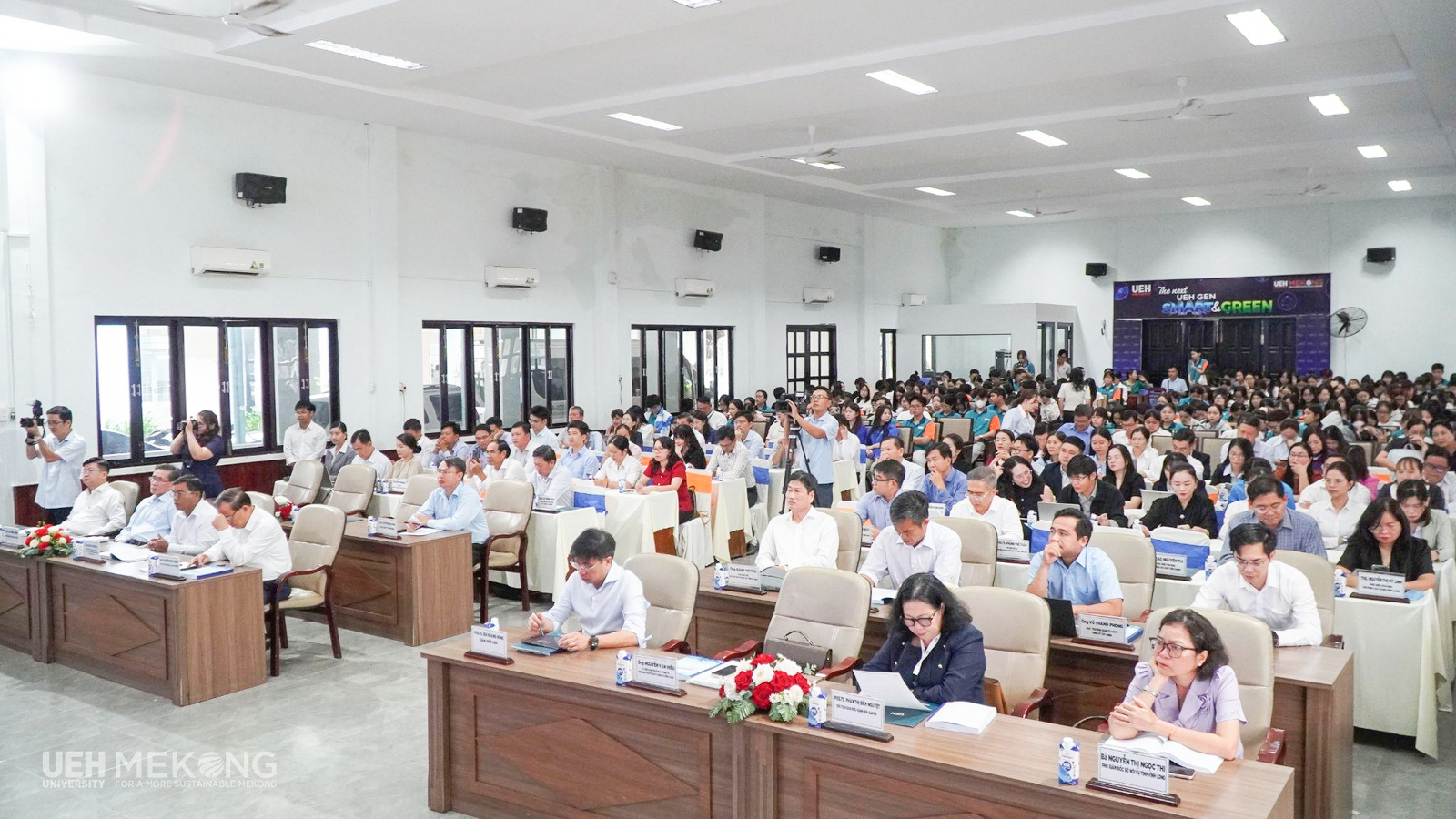
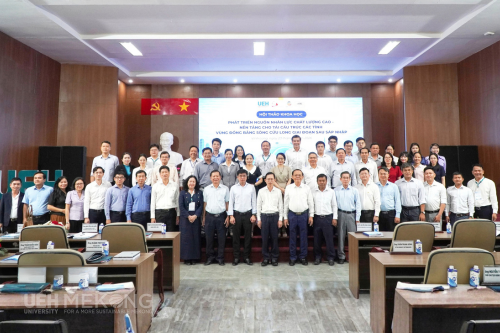
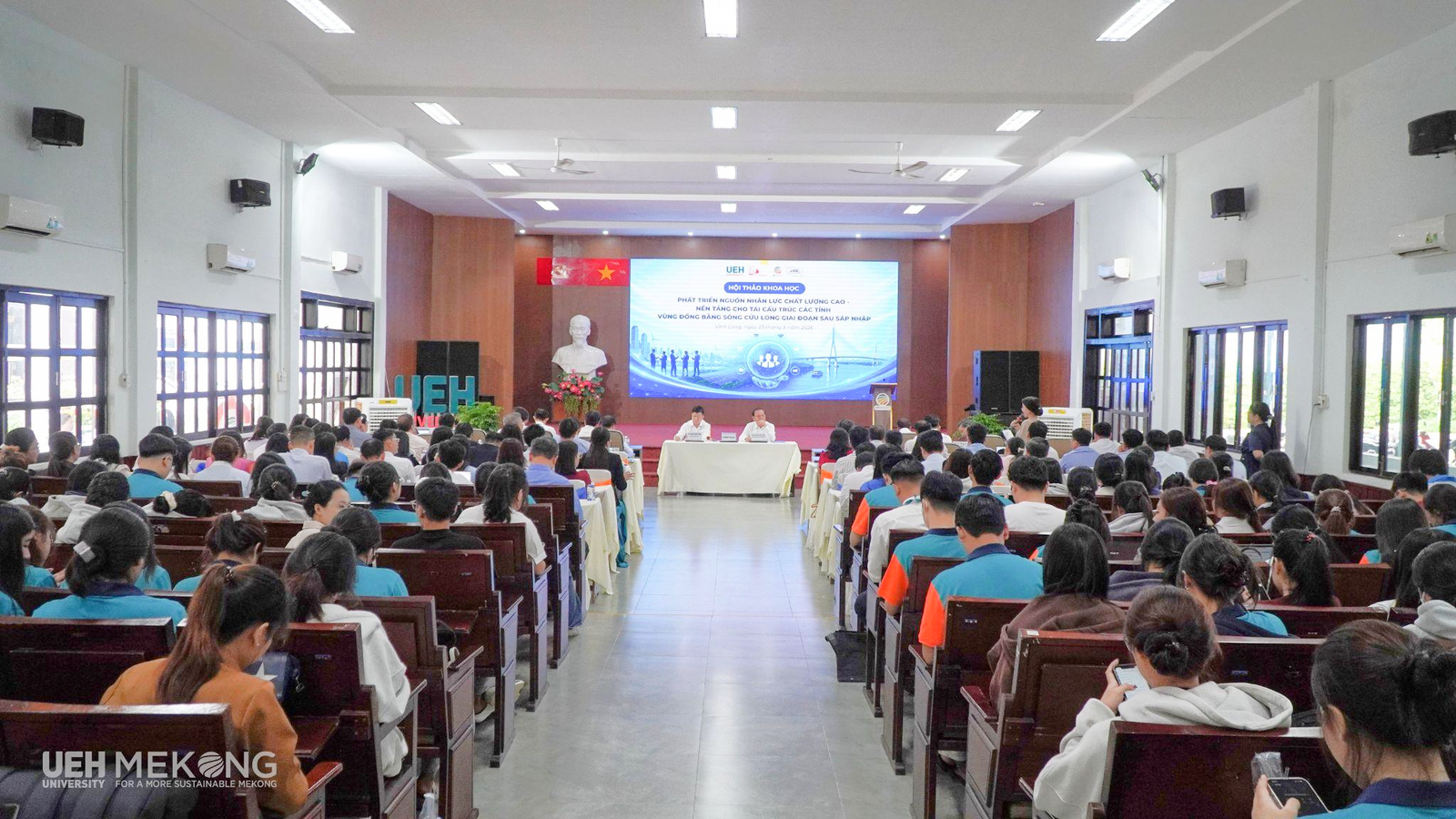
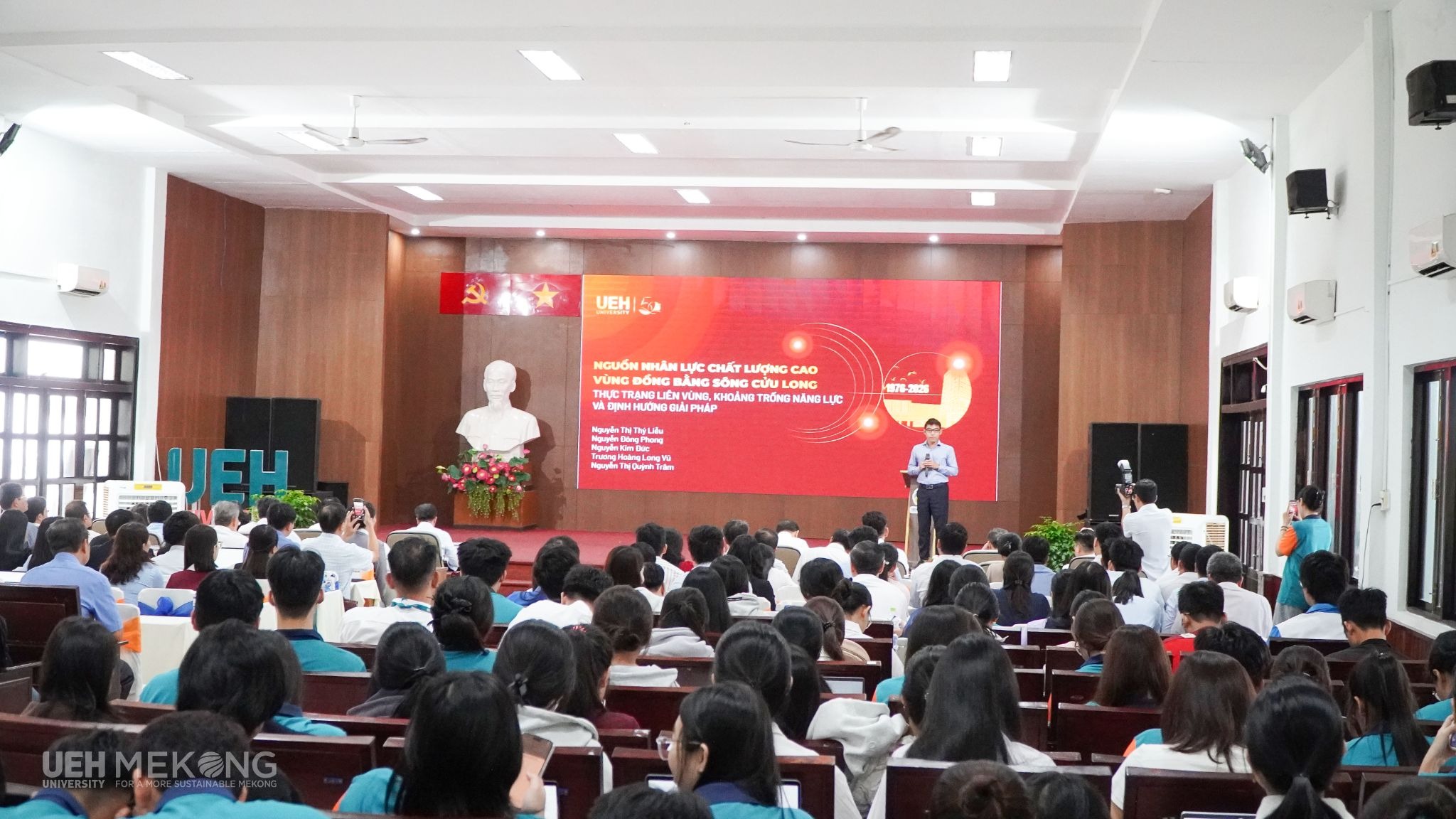
Overview of the opening session at Hall A, UEH Mekong
From Regional Restructuring Requirements to the Challenge of Developing High-Quality Human Resources
Delivering the opening remarks, Assoc. Prof. Dr. Bui Quang Hung, President of UEH, stated: “The restructuring of the Mekong Delta region has ushered in an entirely new phase of development. This transformation goes beyond organizational restructuring, creating a need for comprehensive changes in development planning, resource allocation, local governance, and regional connectivity. Within this restructuring process, high-quality human resources are the decisive factor. Regardless of how streamlined the administrative apparatus becomes or how extensively the development space expands, ultimate effectiveness still depends on people: the right people, with the right competencies, in the right positions.
The greatest challenge today is not the quantity of labor but its quality, skill composition, adaptability, and mobility. Digital transformation, green transition, the two-tier local government model, and persistent bottlenecks such as skills mismatches and labor migration are placing considerable pressure on both the public and private sectors.
This demonstrates that the Mekong Delta's human resource challenge must be approached as an issue involving the entire development ecosystem, in which each stakeholder has a distinct role: (1) Government: Establishing institutional frameworks and appropriate human resource management mechanisms aligned with the new governance model; (2) Educational institutions: Innovating curricula, strengthening practical connections, and enhancing digital and green competencies; (3) Businesses: Proactively identifying workforce needs, addressing collaboration gaps, and utilizing human resources effectively; (4) Researchers: Providing scientific evidence, models, and transferable solutions; and (5) Workers: Continuously developing their competencies to adapt to an increasingly flexible labor market.”
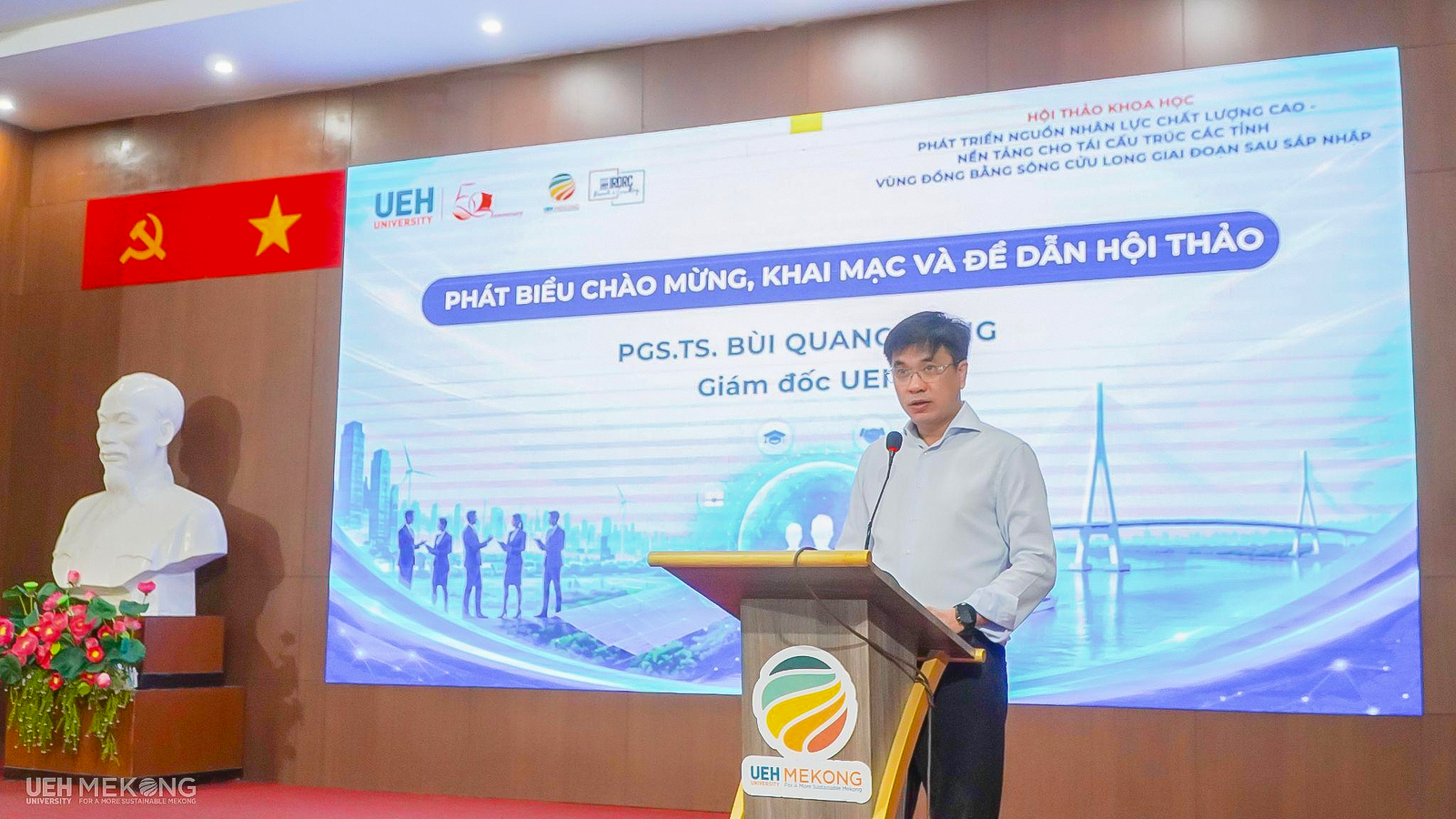
Assoc. Prof. Dr. Bui Quang Hung, President of UEH, delivers the opening remarks and sets the direction for the conference
In his introductory remarks, the President of UEH, who also served as Head of the Conference Steering Committee, proposed that discussions focus on four fundamental questions on behalf of the Organizing Committee. (1) Emerging requirements: What competencies should high-quality human resources possess in the new development context, particularly in the public sector and key industries? (2) Current conditions and bottlenecks: Where are the most significant competency gaps, and what factors contribute to labor supply–demand mismatches and migration patterns within the region? (3) Models and solutions: Which collaborative models and governance solutions are genuinely effective in practice? (4) Institutions and policies: How can research findings be translated into feasible and actionable mechanisms and policies? Through these questions, the conference aimed not only to identify the direction of high-quality human resource development in the Mekong Delta but, more importantly, to connect research outcomes with the practical challenges facing local authorities, management agencies, and businesses.
Plenary Session: Identifying Competency Gaps and Requirements for Regional Human Resource Restructuring
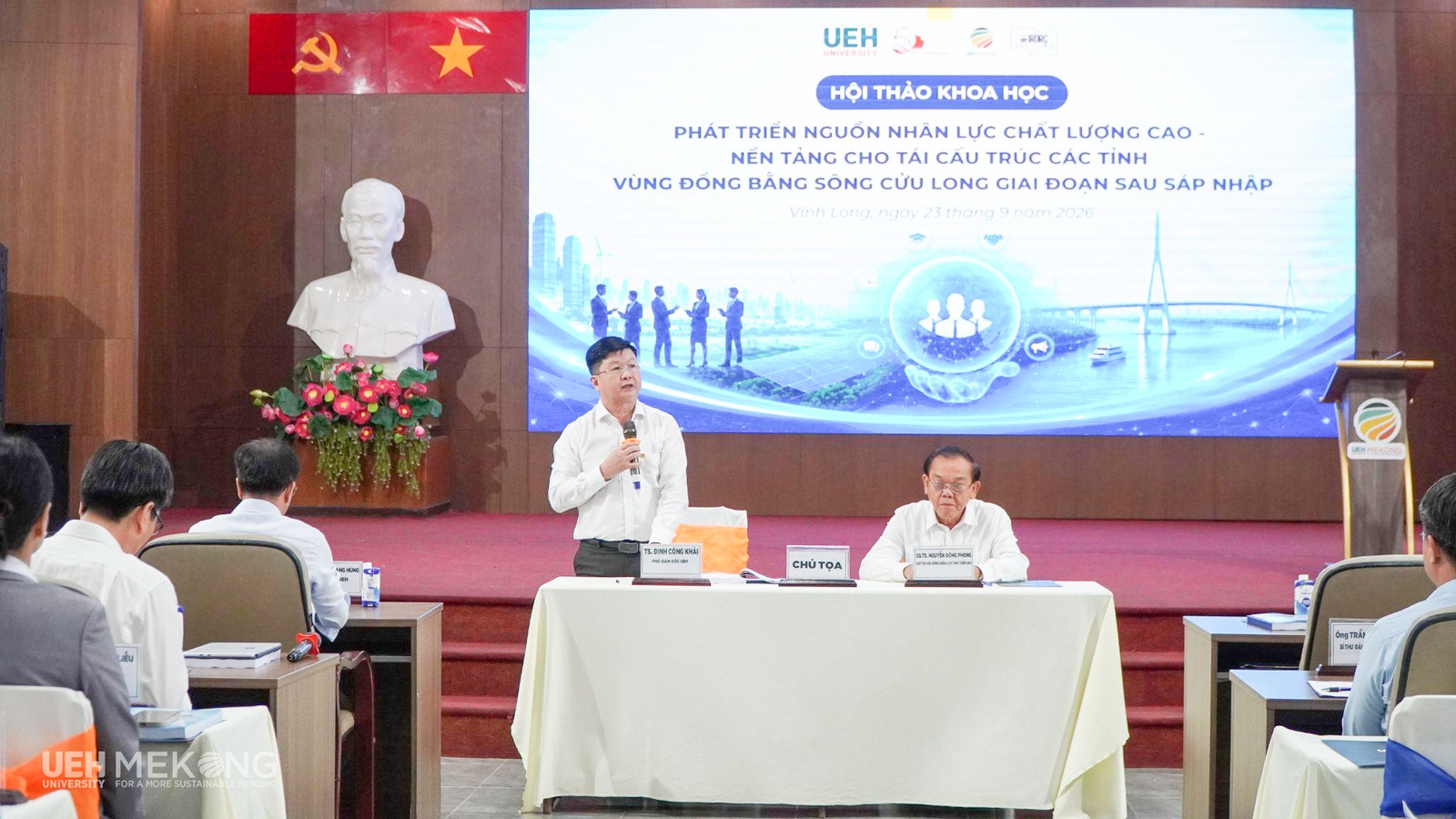
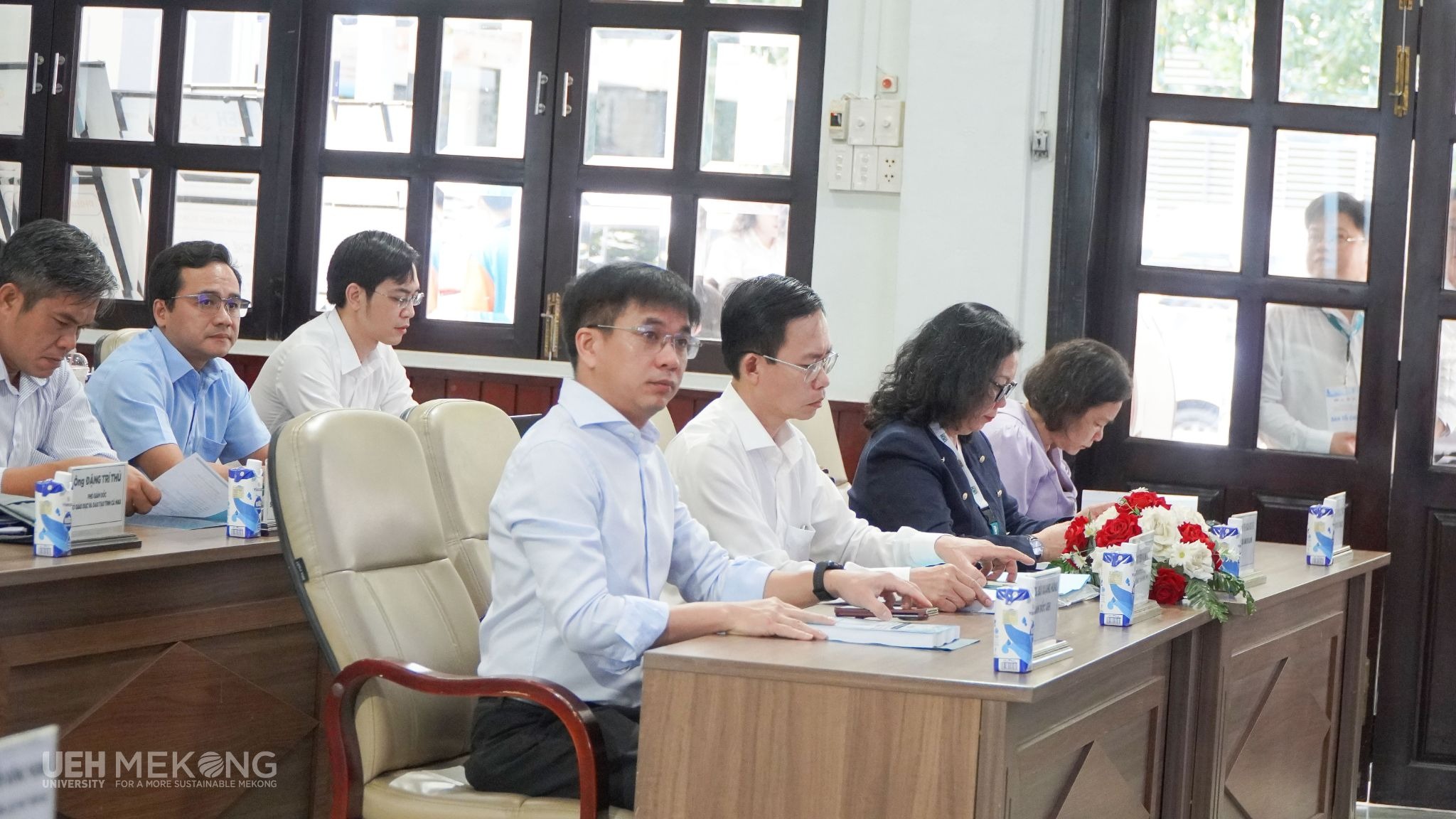
Prof. Dr. Nguyen Dong Phong, Chairman of the UEH Development Strategy Council and former Rector of UEH, and Dr. Dinh Cong Khai, Vice President of UEH, co-chair the plenary session
Presentations at the plenary session examined high-quality human resource development from two complementary perspectives: practical experiences in developing public-sector personnel at the provincial level and comprehensive research conducted from an interregional perspective.
Opening the session, Senior Specialist Nguyen Van Hieu, MA, Member of the Standing Committee and Head of the Organization Commission of the Vinh Long Provincial Party Committee, presented a paper entitled “Developing Public-Sector Personnel and High-Quality Human Resources: A Foundation for Governance Capacity and the Development of Vinh Long Province in the New Era.”
The presentation evaluated the size, quality, and structural imbalances of the public-sector workforce, including officials, civil servants, and public employees. It also examined mechanisms for combining local talent development with the attraction of external professionals. The findings emphasized the need to shift from personnel management based on staffing quotas and academic qualifications toward governance based on job positions, competencies, deliverables, and performance outcomes. Accordingly, the study proposed a human resource governance model built on four pillars: Data, Competencies, Results, and Ecosystem. Commissioning training programs based on specific job positions and expected outputs was identified as a key breakthrough to be implemented during the 2025–2030 term.

Senior Specialist Nguyen Van Hieu, MA, Member of the Standing Committee and Head of the Organization Commission of the Vinh Long Provincial Party Committee, presents his paper at the plenary session
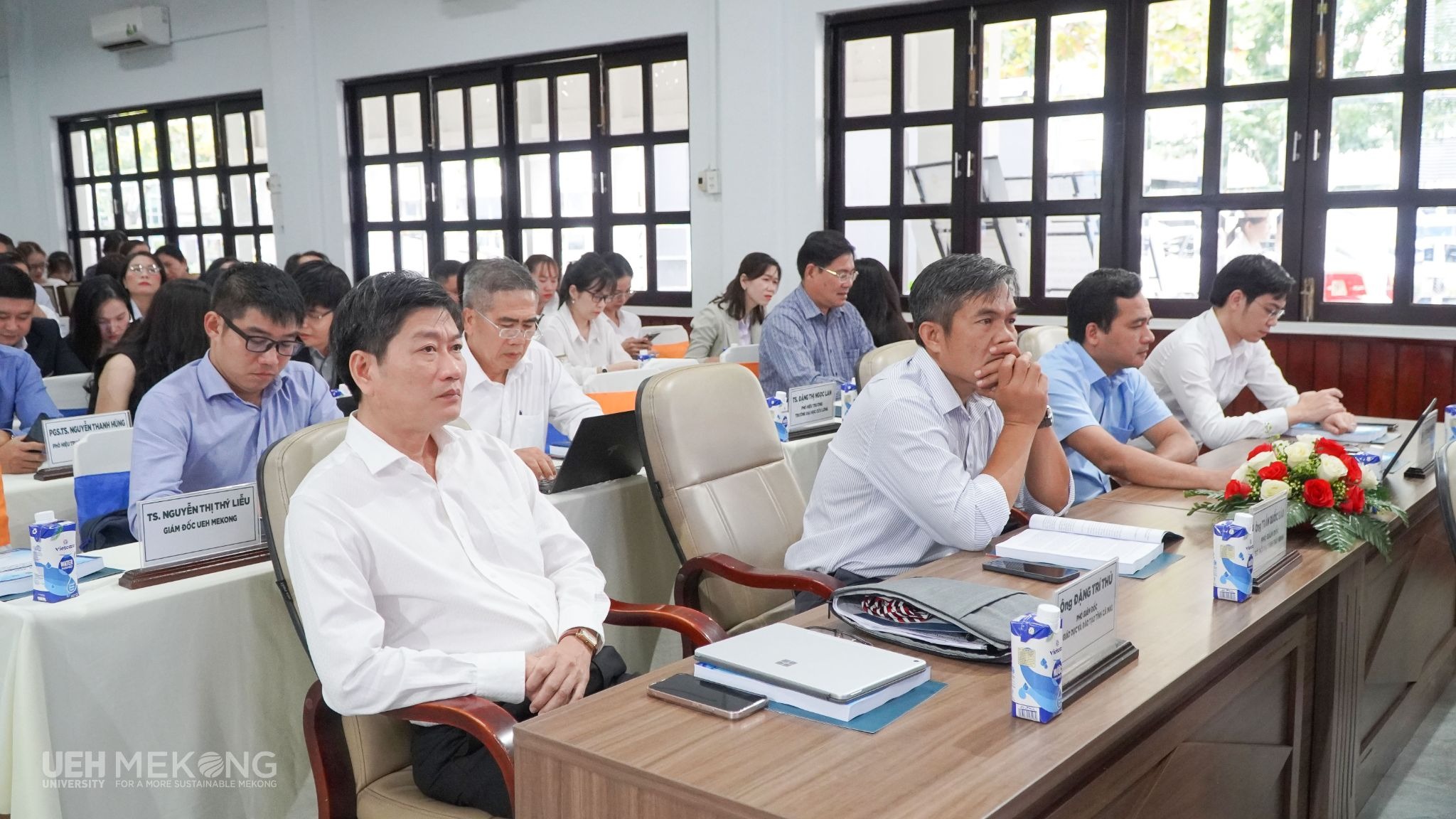
Drawing on experiences from Ca Mau Province, Mr. Dang Tri Thu, Deputy Director of the Ca Mau Department of Education and Training, delivered a presentation entitled “Developing High-Quality Human Resources in the Mekong Delta Following Administrative Mergers: Practical Experiences and Policy Implications from Ca Mau Province.” The research examined the shortage of high-quality human resources in a context where investment capital is no longer the only constraint on development. Based on an analysis of provincial resolutions, plans, and development proposals for 2025–2026, together with published labor and employment data, the research team compared workforce supply and demand across industry groups and project implementation schedules. The findings identified three interconnected mismatches affecting the region's capacity to meet workforce demand: a temporal mismatch between investment and education cycles; a structural mismatch between existing skills and targeted industries; and a spatial mismatch between newly consolidated administrative boundaries and labor markets that have not yet become integrated. The study also warned of the risk of “enclave growth,” in which projects generate economic output without retaining a corresponding share of highly skilled employment and added value within the local economy.
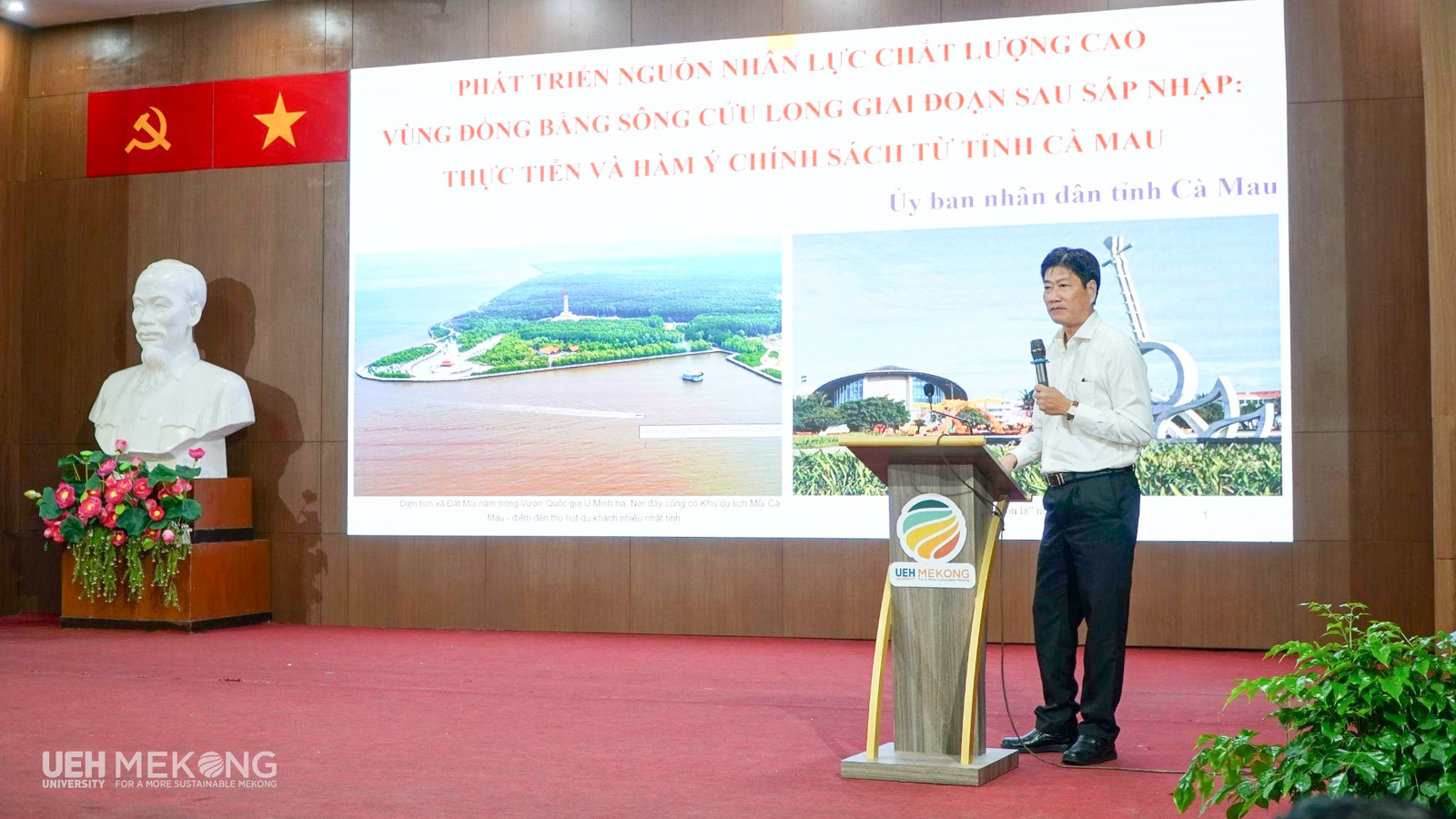
Mr. Dang Tri Thu, Deputy Director of the Ca Mau Department of Education and Training, presents a paper on behalf of the Ca Mau Provincial People's Committee at the plenary session
Next, Dr. Nguyen Kim Duc, Dean of the School of Economics (CELG, UEH) and Deputy Director of the UEH Institute for Regional Development Research and Consulting, presented the study “High-Quality Human Resources in the Mekong Delta: Interregional Conditions, Competency Gaps, and Proposed Solutions.” Using a mixed-methods approach and the Quintuple Helix (5H) theoretical framework, which brings together five stakeholders—Government, Universities, Businesses, Society, and the Environment—the study provided a comprehensive assessment of the region's human resource conditions and competency gaps.
The findings showed that developing high-quality human resources in a socio-economic region heavily affected by climate change cannot depend solely on infrastructure investment or financial resources. Greater attention must instead be given to institutional capacity, knowledge translation, and co-creation mechanisms among stakeholders. In particular, the presentation highlighted the distinction between Society 5.0 and Industry 4.0. While Industry 4.0 primarily emphasizes production efficiency and information technology infrastructure, Society 5.0 places people at the center of innovation. It seeks to address human-centered challenges so that individuals are not left behind by scientific and technological advancement. Instead, complex technological systems should be designed to meet human needs and improve quality of life, with connected stakeholders playing an essential role. The study also suggested drawing on experiences from socio-economic regions around the world that share similar characteristics, especially those facing both economic transformation and the need to adapt to climate change.
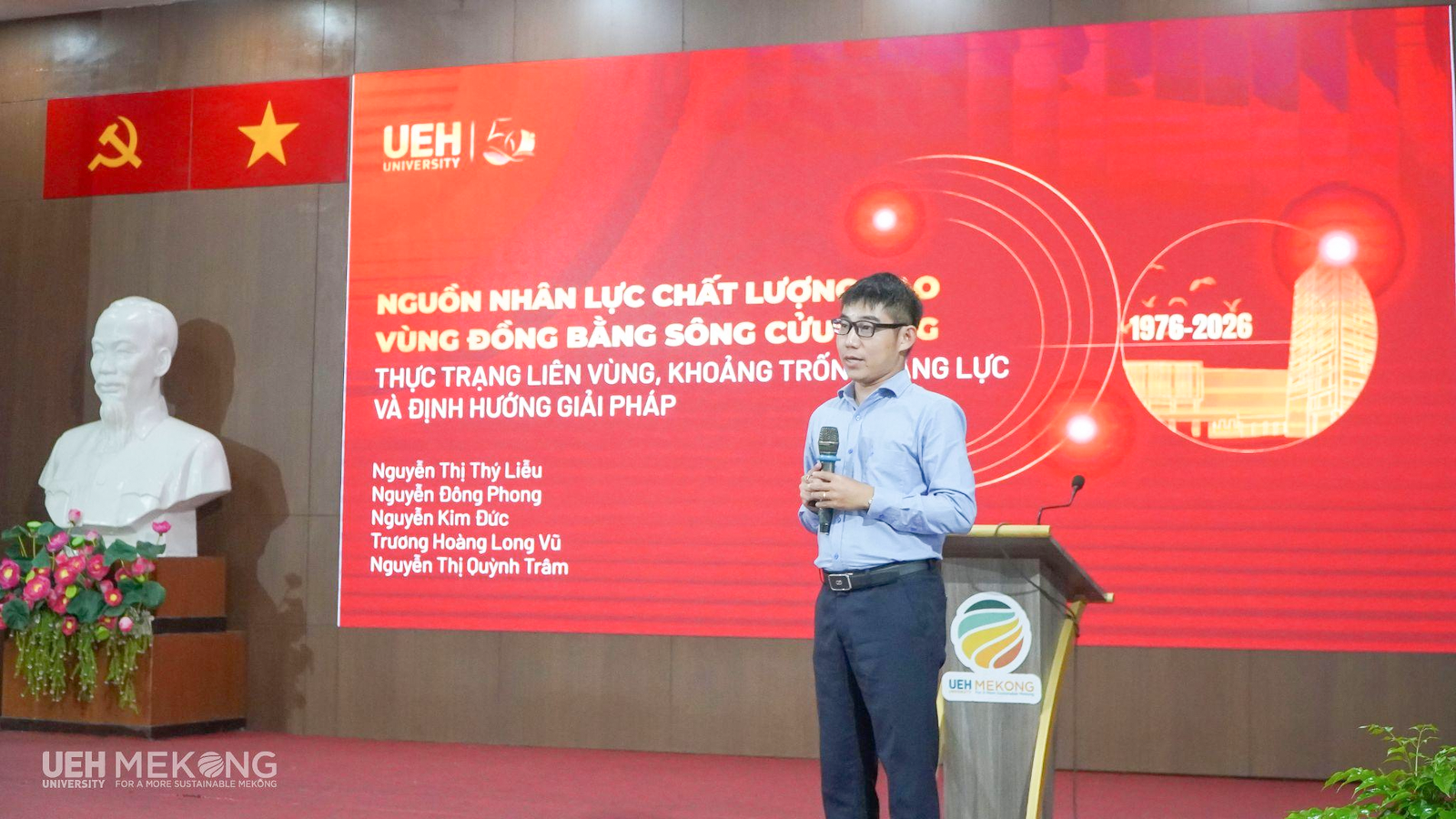
Dr. Nguyen Kim Duc, Dean of the School of Economics (CELG, UEH) and Deputy Director of the UEH Institute for Regional Development Research and Consulting, presents his paper at the plenary session
Concluding the plenary session, Prof. Dr. Nguyen Dong Phong, Chairman of the UEH Development Strategy Council and former Rector of UEH, who chaired the discussion, summarized six core bottlenecks affecting human resource development in the Mekong Delta. These included the low proportion of workers holding formal qualifications; shortages of leading specialists in emerging fields such as AI, digital transformation, and green governance; the migration of young, highly educated workers; insufficient demand-driven collaboration mechanisms among government, universities, and businesses; and a lack of labor market forecasting data and strategic human resource development plans.
Building on these findings, the conference identified six groups of strategic solutions to address the region's interconnected challenges. These focused on restructuring the public sector toward proactive development governance; establishing a five-stakeholder collaborative ecosystem; strengthening demand-driven education for key industries such as high-tech agriculture, logistics, and the marine economy; addressing workforce challenges at the commune level; improving forecasting capacity; and promoting sustainable regional cooperation. Participants were also encouraged to continue exploring these issues in the parallel sessions.
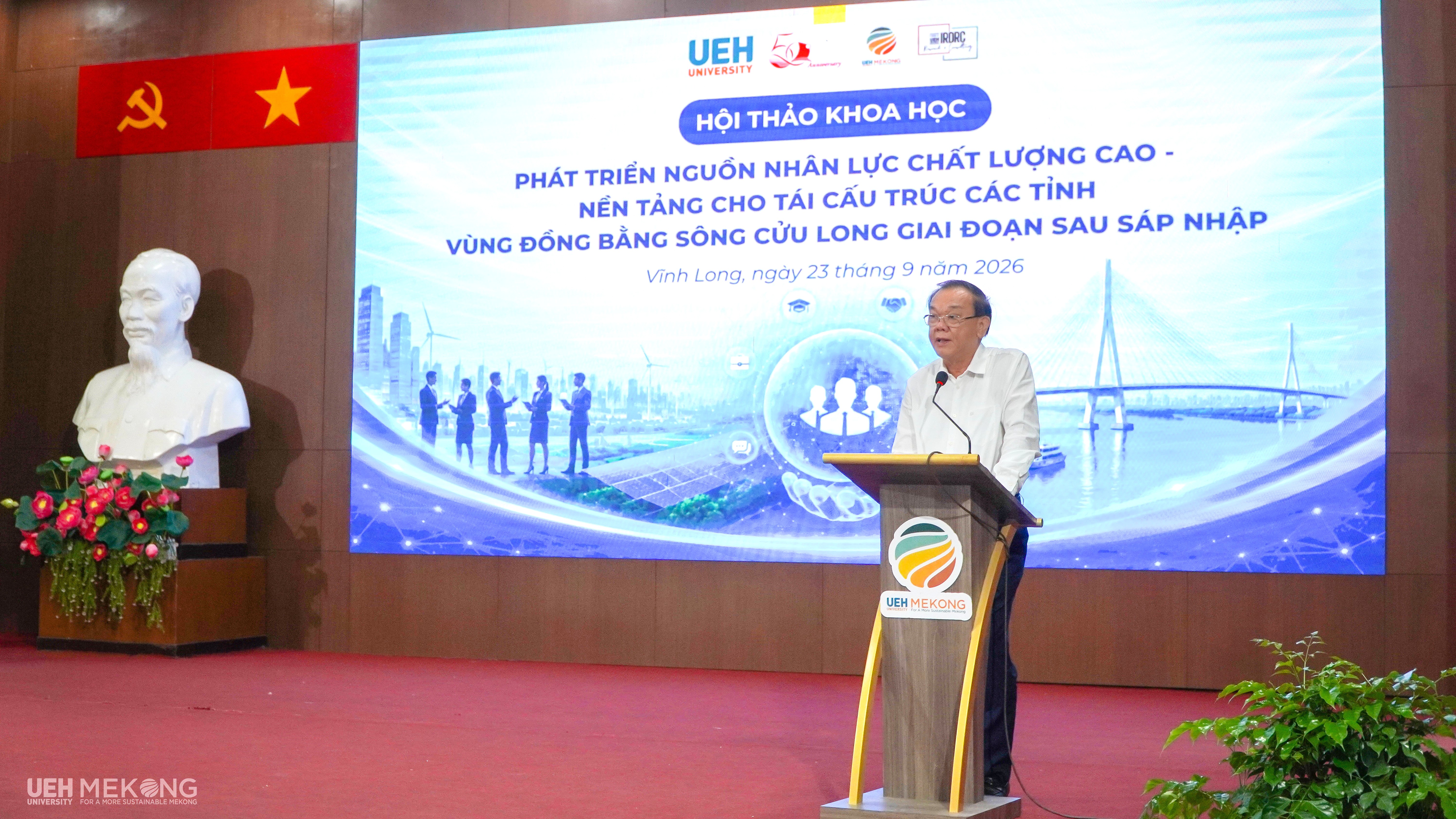
Prof. Dr. Nguyen Dong Phong, Chairman of the UEH Development Strategy Council, delivers the concluding remarks at the plenary session
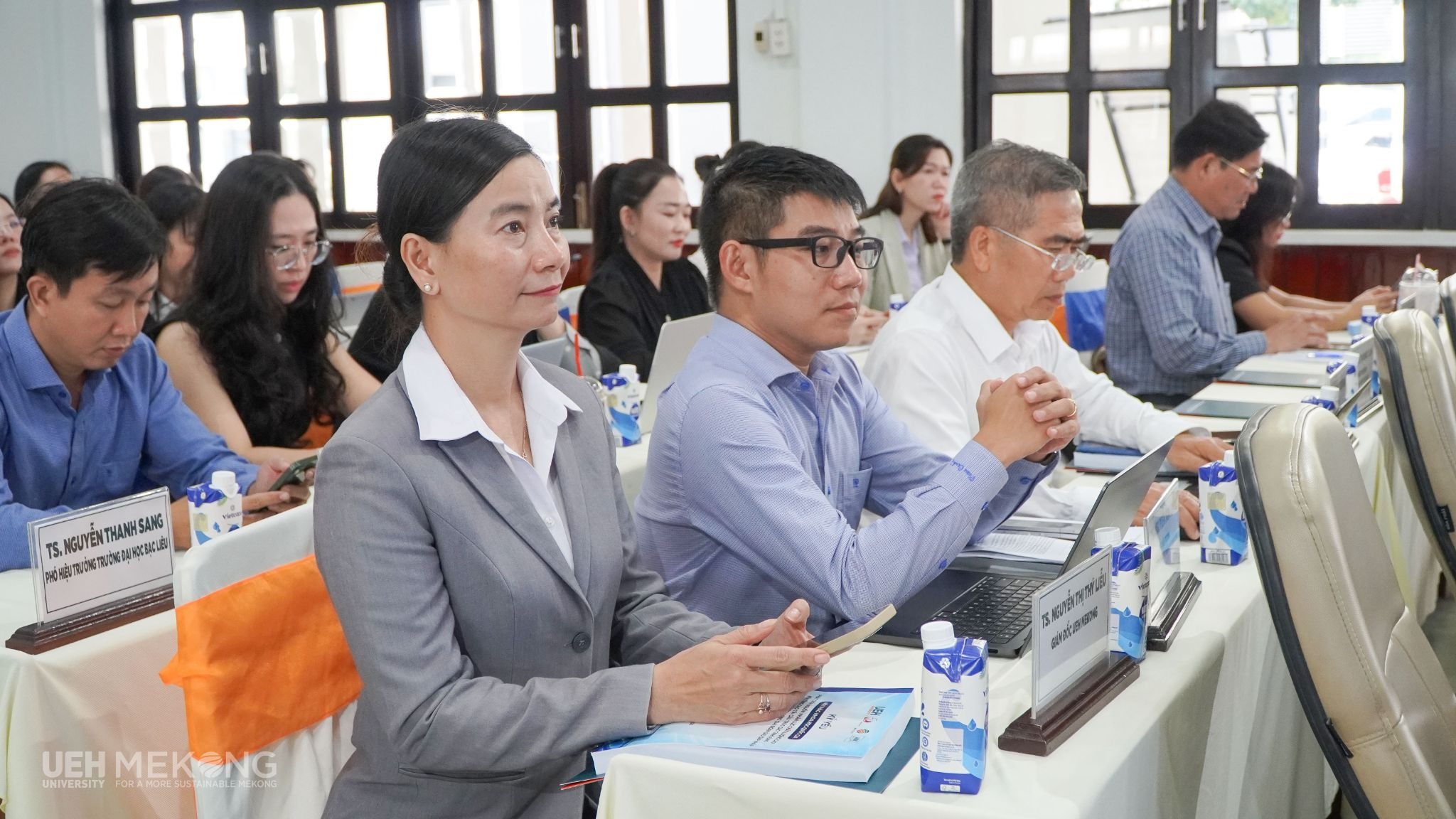
The plenary discussion provided a platform for researchers, policymakers, and local government representatives to exchange perspectives on performance evaluation mechanisms, position-based public-sector workforce planning, outcome-oriented education models, and solutions to reduce temporal, structural, and spatial mismatches in regional human resource development.
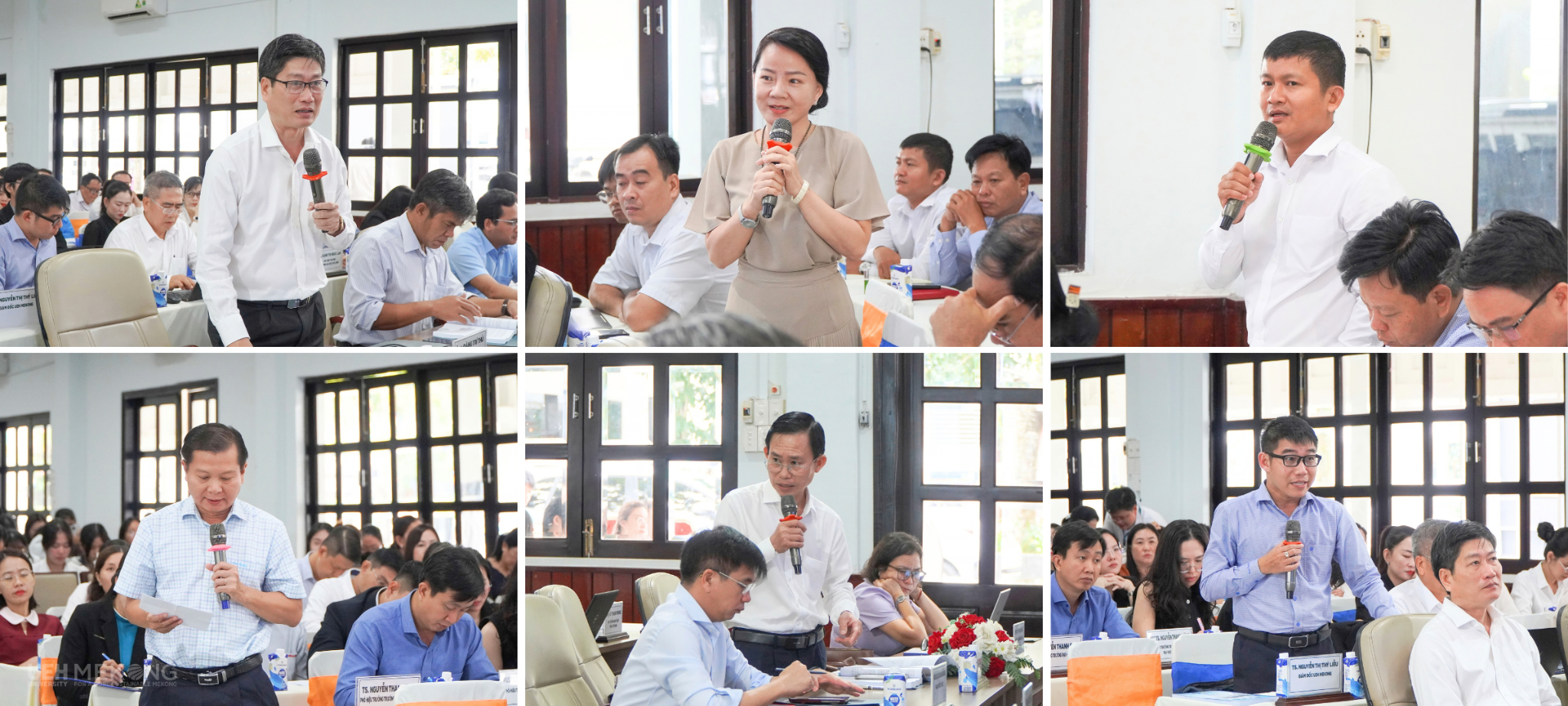
Delegates exchange perspectives and discuss topics at the plenary session
Seven Parallel Sessions: From Identifying Bottlenecks to Human Resource Development Solutions
Following the plenary session, seven parallel sessions were organized around four main themes. The discussions expanded from practical issues of organizational restructuring and public-sector workforce competencies to education strategies, labor market conditions, and mechanisms and policies for regional human resource development.
Theme 1 – From Local Experiences to Public-Sector Human Resource Development Models
In Session A, researchers focused on organizational restructuring and the competencies required of public officials and civil servants under the two-tier local government model. Presentations drew on perspectives from UEH, practical experiences in Can Tho City, and the demand for accounting professionals in the context of digital transformation.
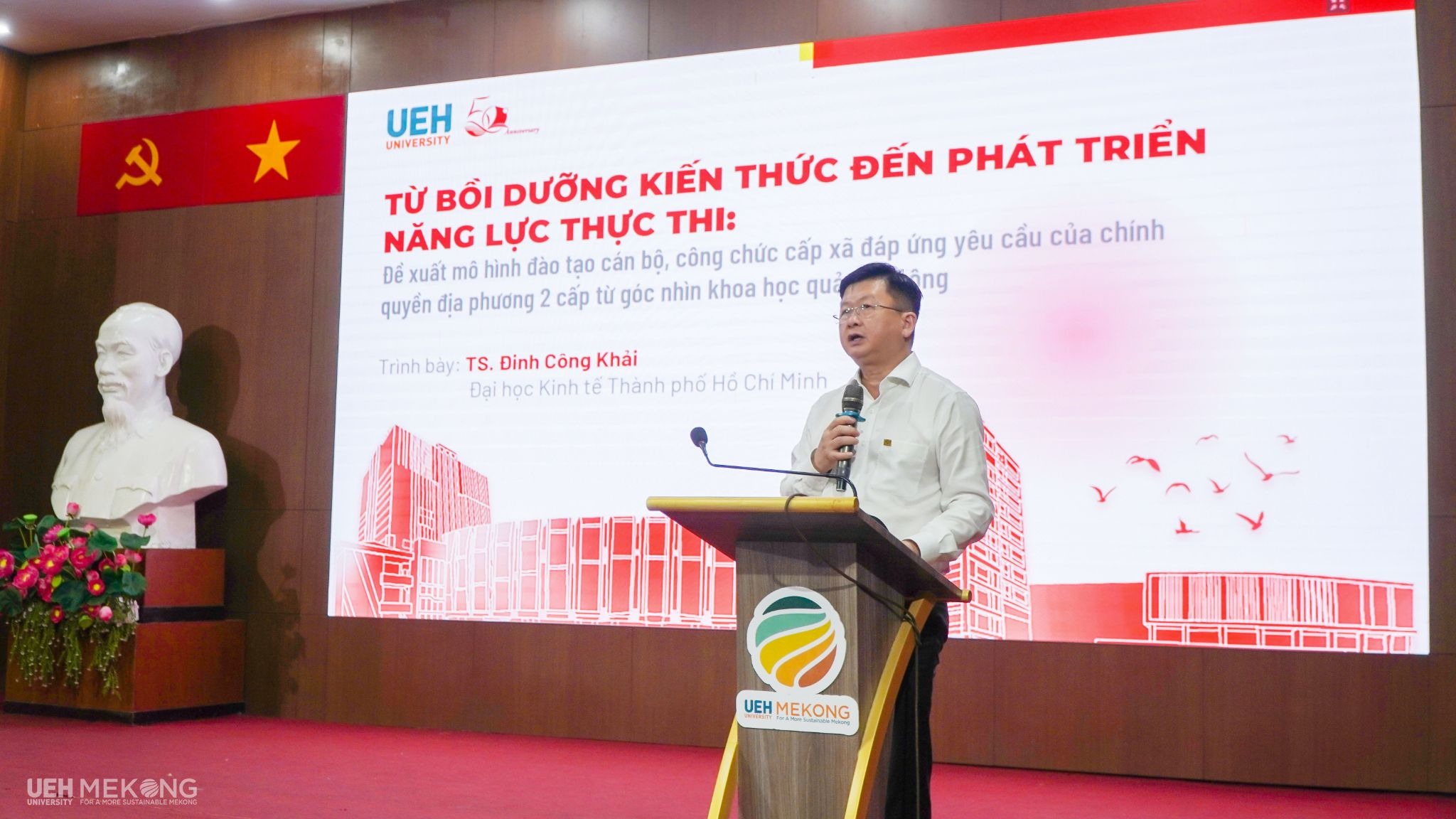
Dr. Dinh Cong Khai, Vice President of UEH, presents his paper at a parallel session
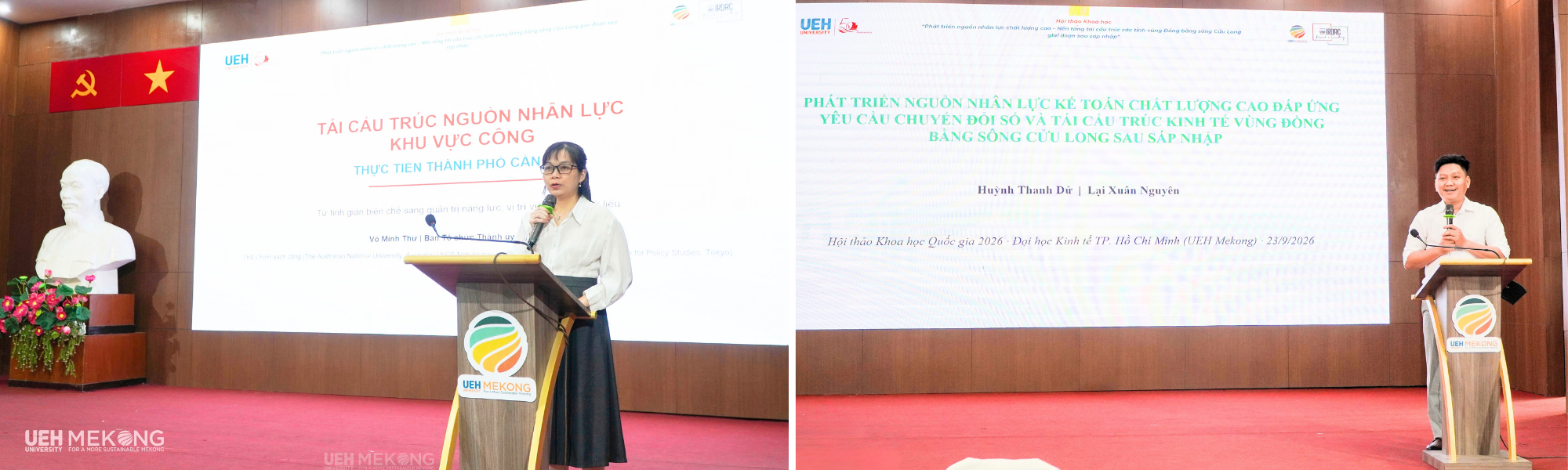
Authors present their research papers at a parallel session
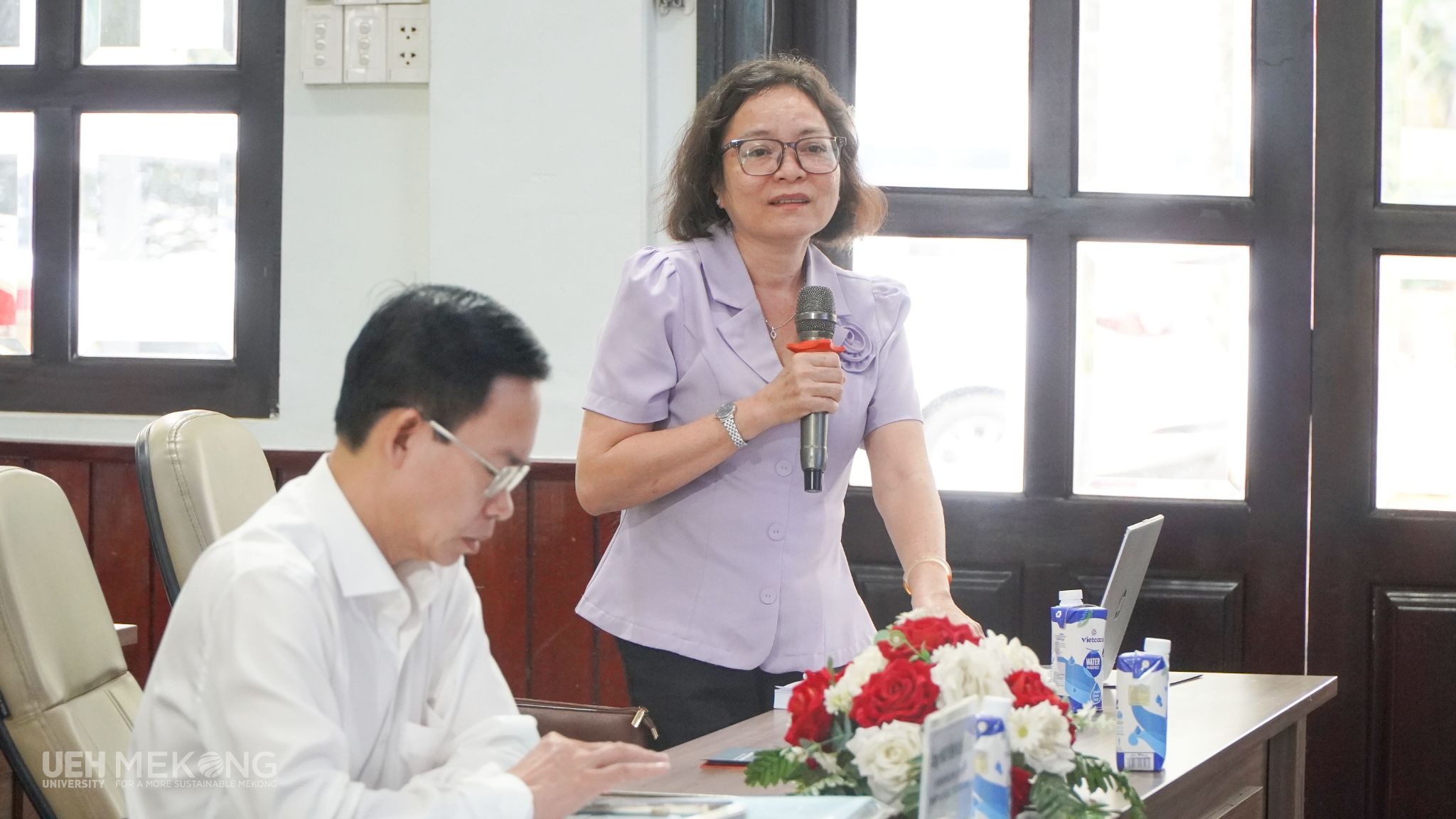
Ms. Nguyen Thi Ngoc Thi, Deputy Director of the Vinh Long Department of Home Affairs, shares her perspectives at the conference
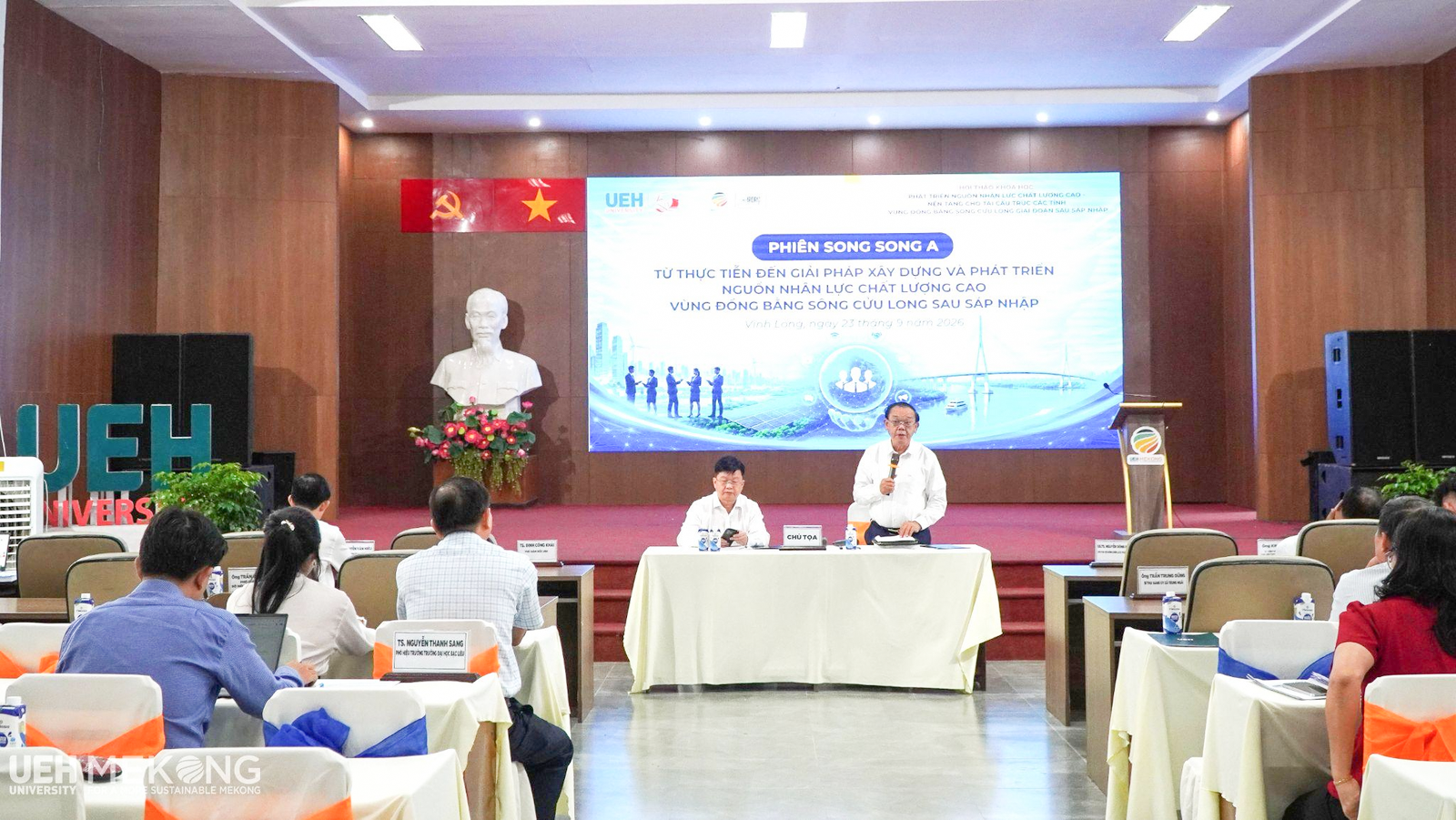
Prof. Dr. Nguyen Dong Phong, Chairman of the UEH Development Strategy Council and former Rector of UEH, and Dr. Dinh Cong Khai, Vice President of UEH, co-chair Parallel Session A
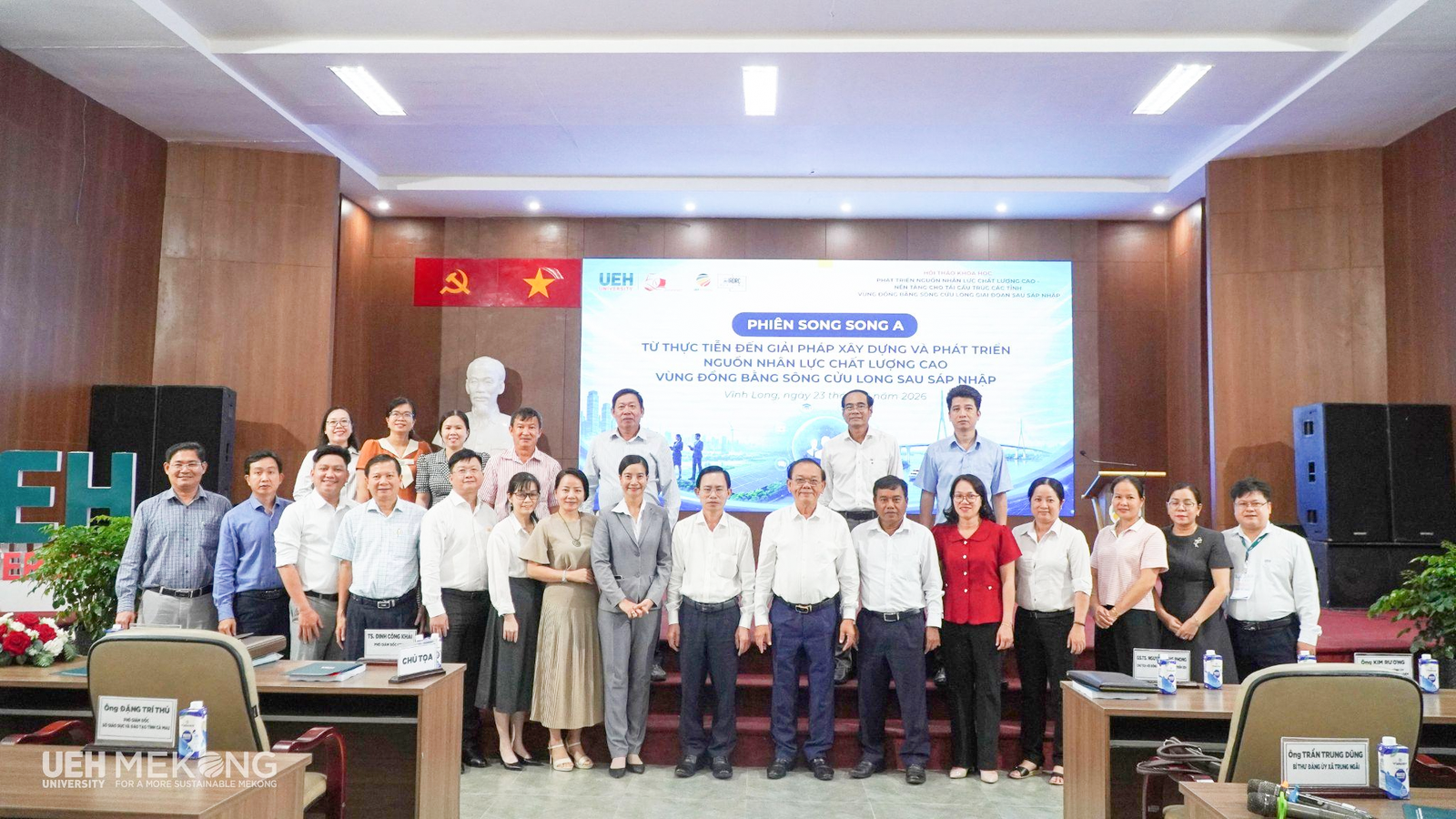
Participants in Parallel Session A take a commemorative group photo
Theme 2 – Emerging Contexts and Adaptive Education Strategies
Comprising two parallel sessions on “Theoretical Foundations, Regional Conditions, and Policy Directions for High-Quality Human Resource Development in the Mekong Delta” and “Digital Transformation in Human Resource Development and Management,” this theme focused on green and digital competency frameworks for workers, as well as international experiences in public-sector education and training. The presentations highlighted an important perspective: digital transformation in human resource development is fundamentally a challenge of human adaptability, alongside the need for technological investment and adoption.
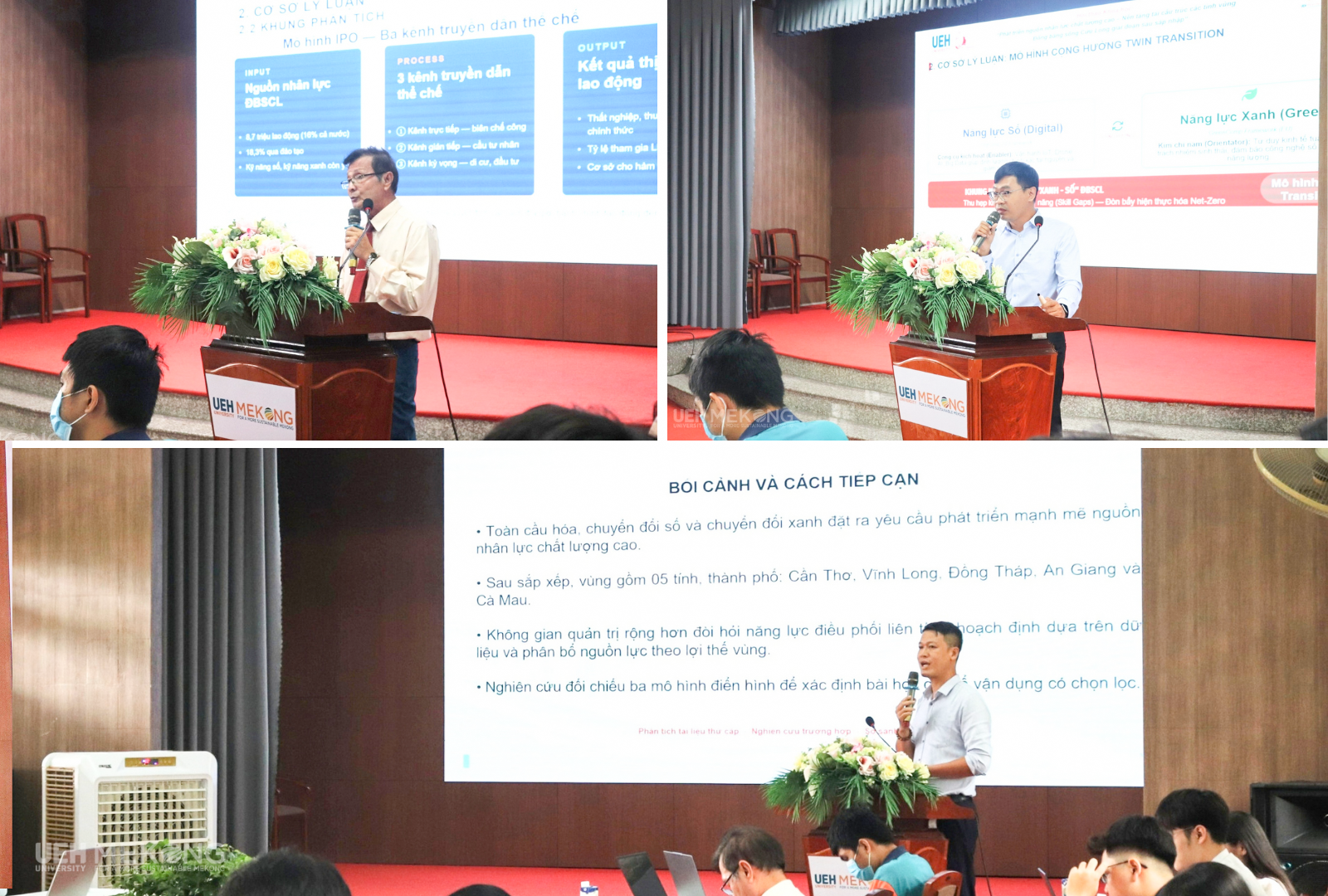
Authors present their research papers at a parallel session
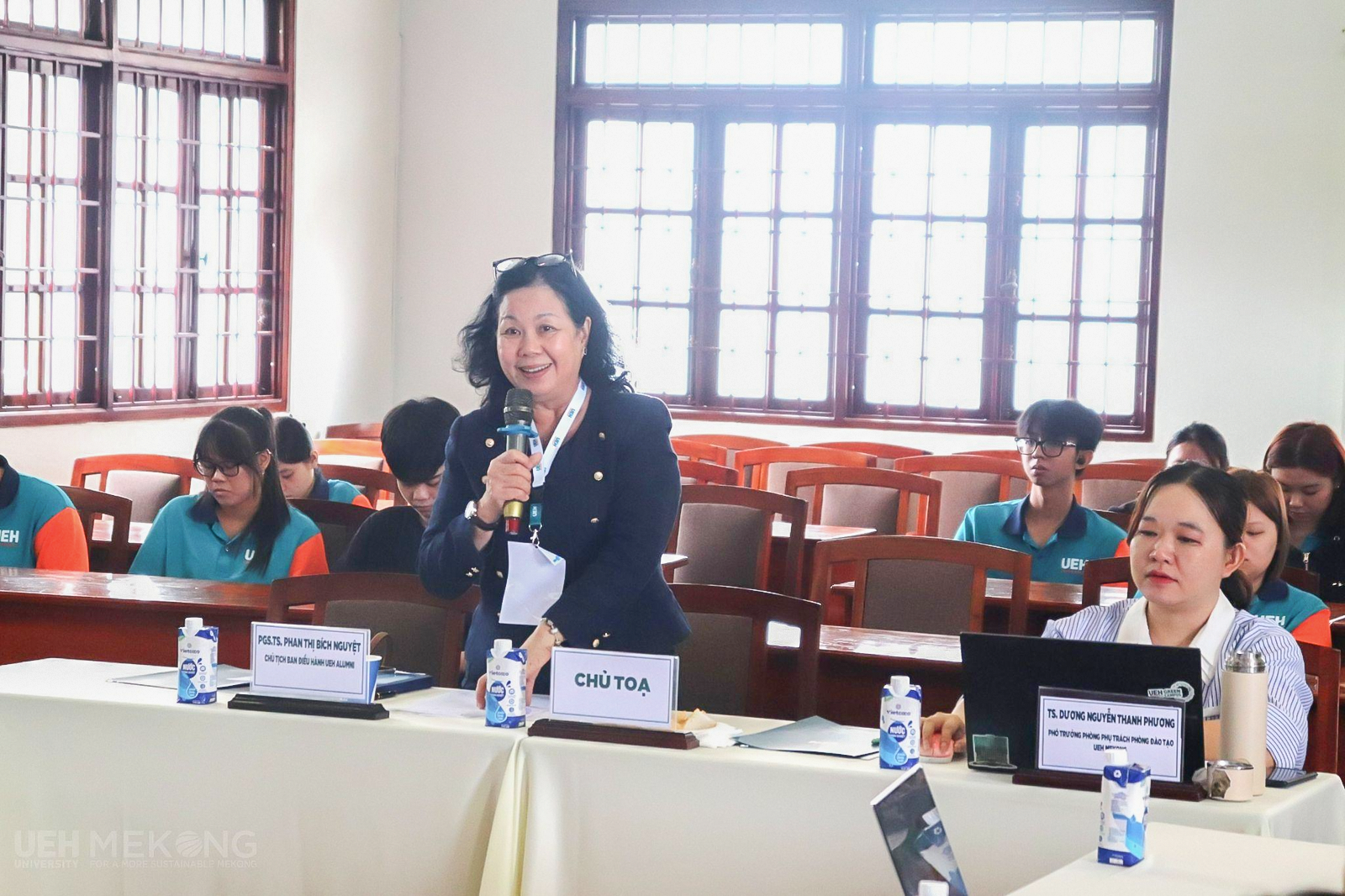
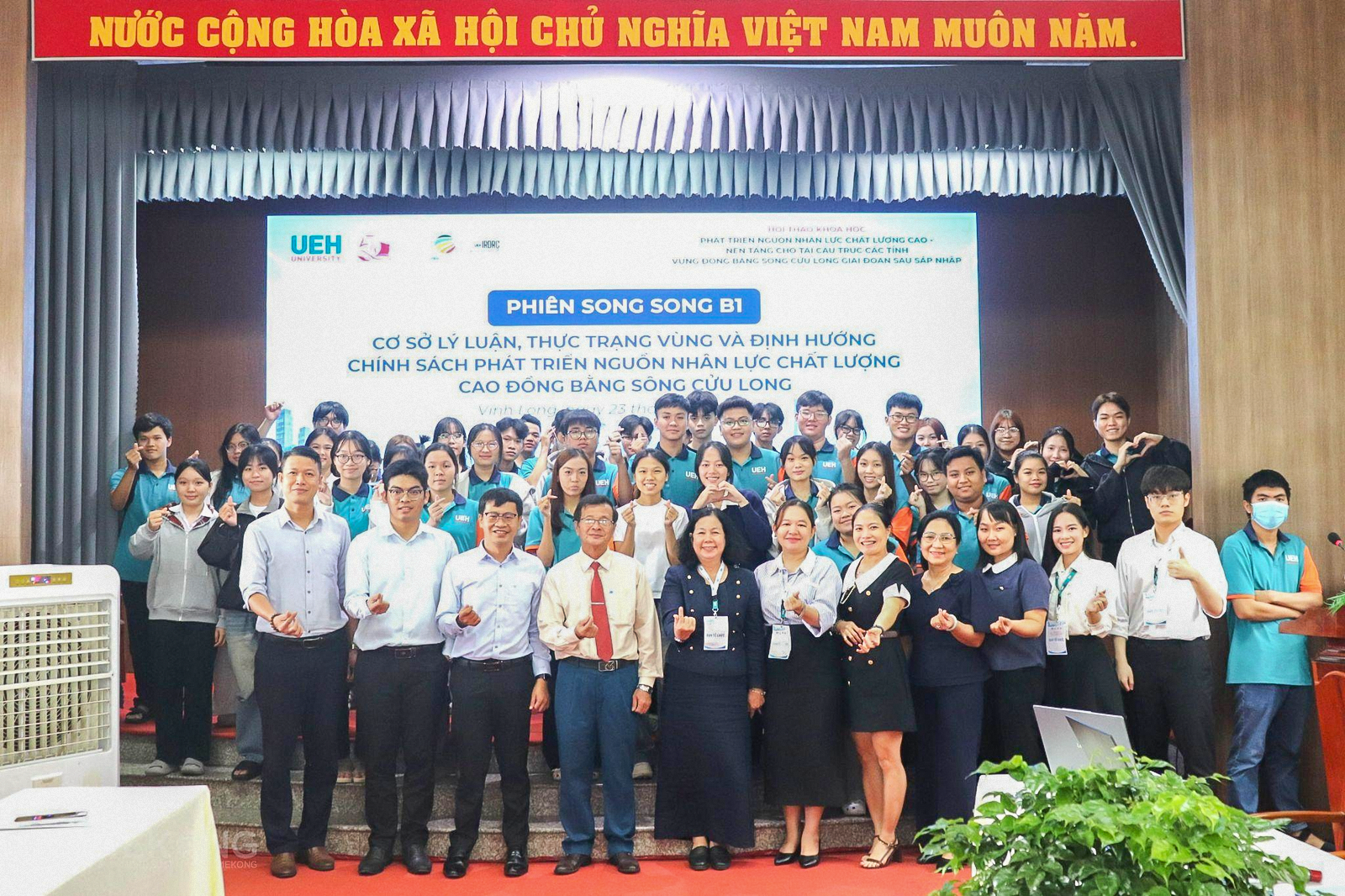
Assoc. Prof. Dr. Phan Thi Bich Nguyet, Chairwoman of the UEH Alumni Executive Board and former Vice Rector of UEH, and Dr. Duong Nguyen Thanh Phuong, Deputy Head in charge of the Department of Academic Affairs at UEH Mekong, co-chair Parallel Session B1
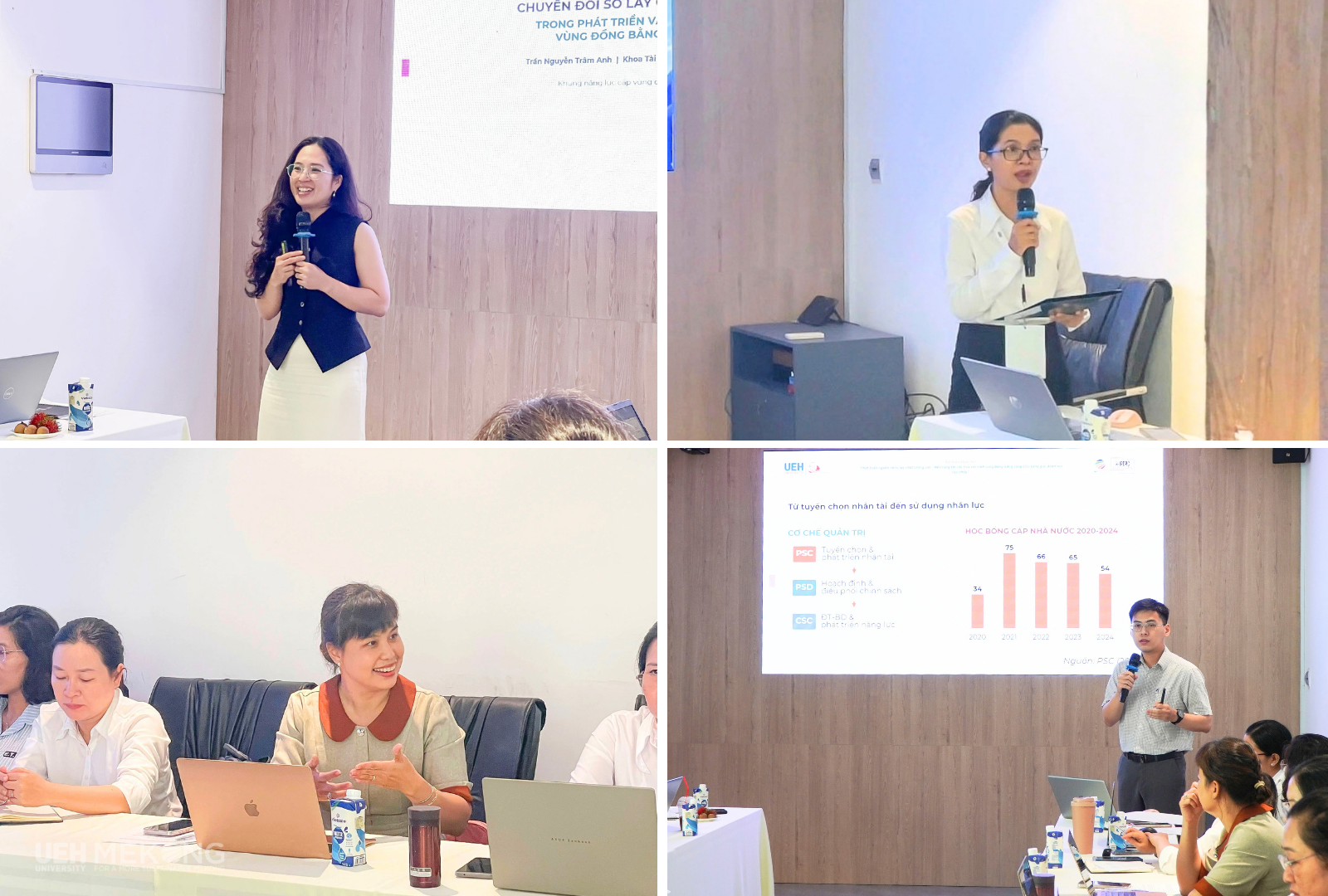
Authors present their research papers at a parallel session
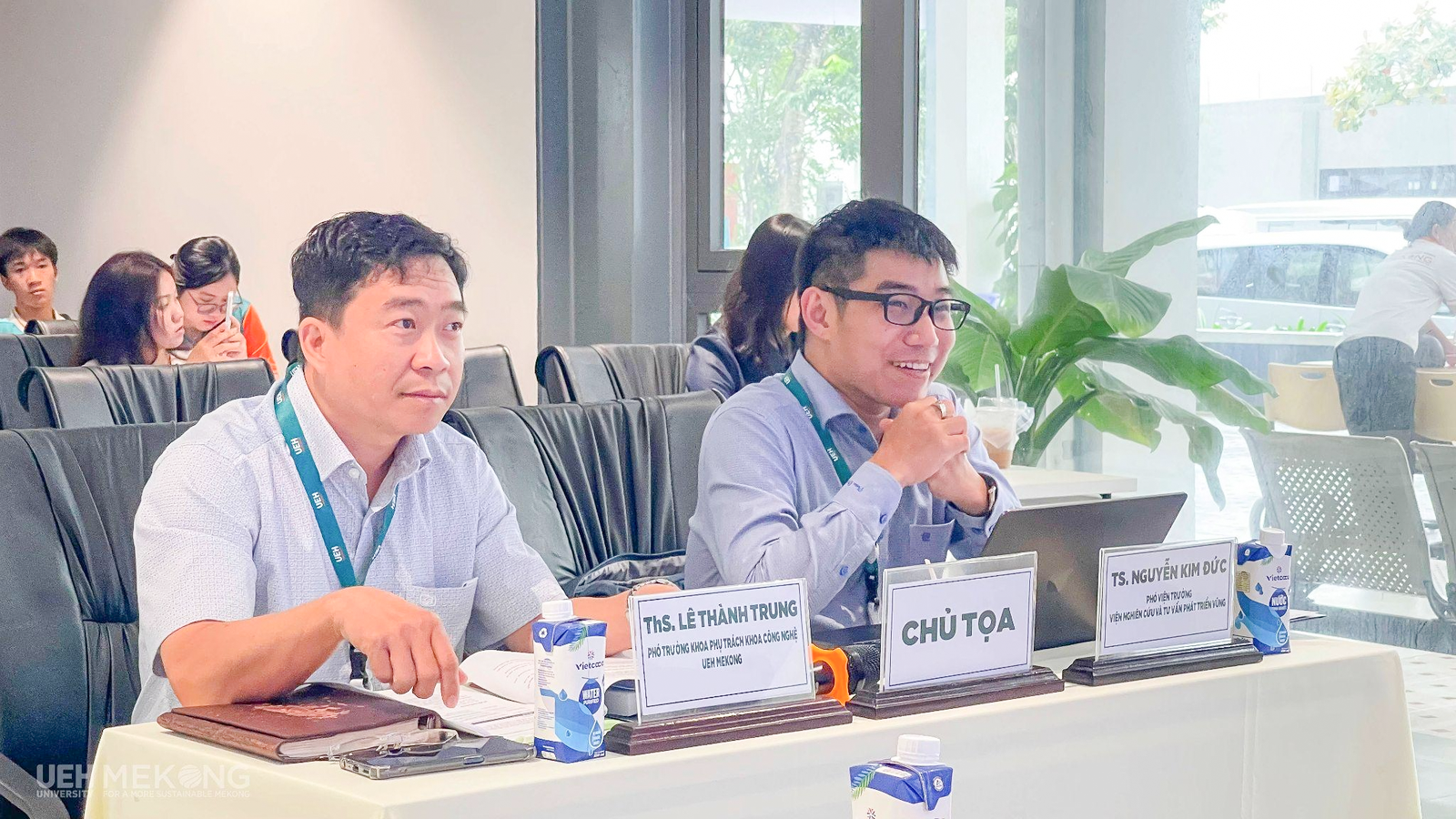
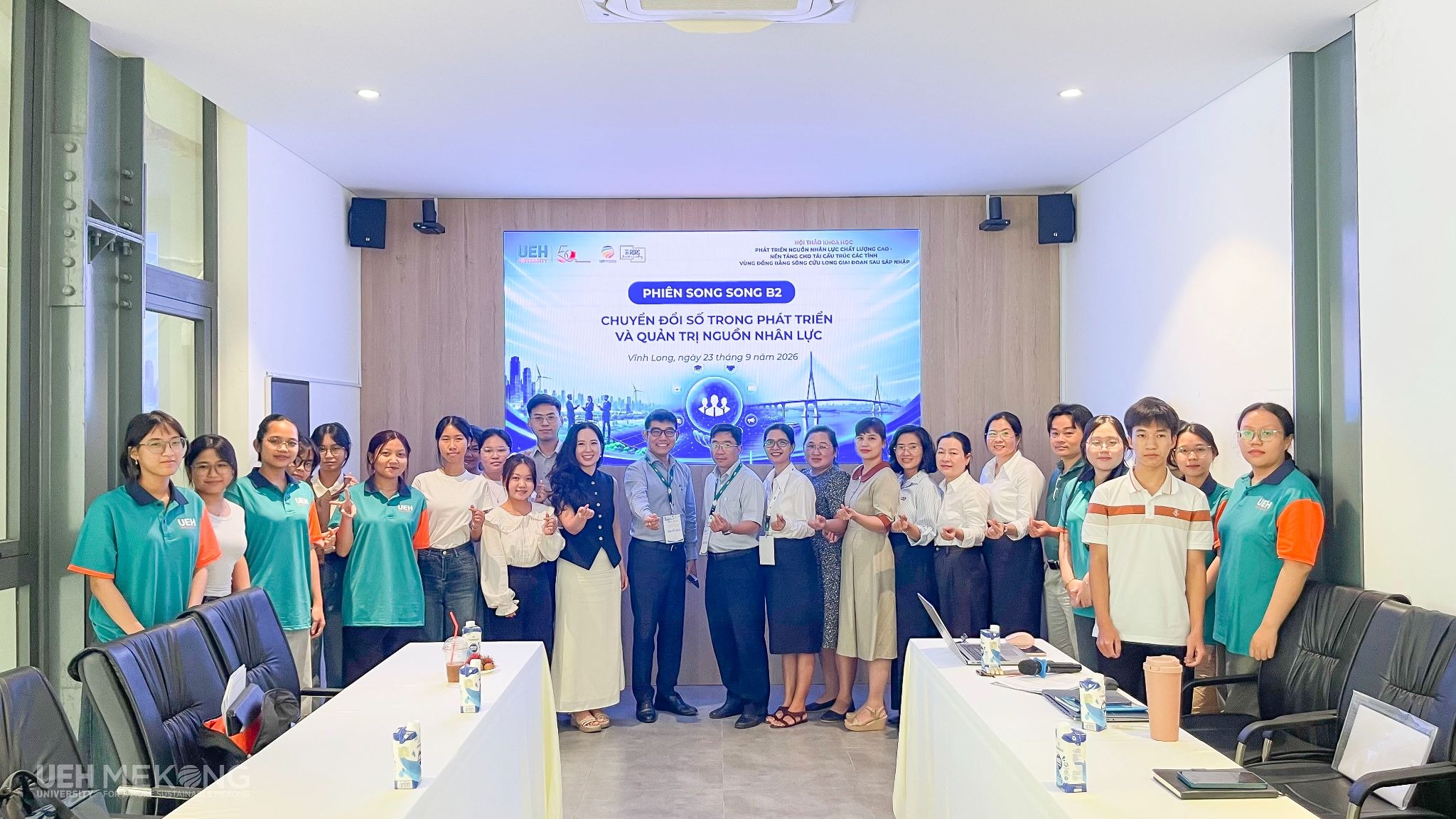
Dr. Nguyen Kim Duc, Deputy Director of the UEH Institute for Regional Development Research and Consulting, and Mr. Le Thanh Trung, MA, Deputy Dean in charge of the Faculty of Technology at UEH Mekong, co-chair Parallel Session B2
Theme 3 – Current Conditions and Bottlenecks in Human Resources and the Mekong Delta Labor Market
Two parallel sessions on “Human Capital, Social Adaptation, and Labor Migration in the Mekong Delta Following Administrative Mergers” and “Sector-Specific High-Quality Human Resource Development: Education, Tourism, Logistics, and Accounting” provided in-depth analyses of the factors influencing the formation and development of high-quality human resources.
The discussions clarified the relationships among adaptive capacity, labor mobility trends, and sector-specific workforce requirements. They highlighted the need for solutions that not only improve educational quality but also strengthen the Mekong Delta's ability to attract, retain, and effectively utilize its human resources.
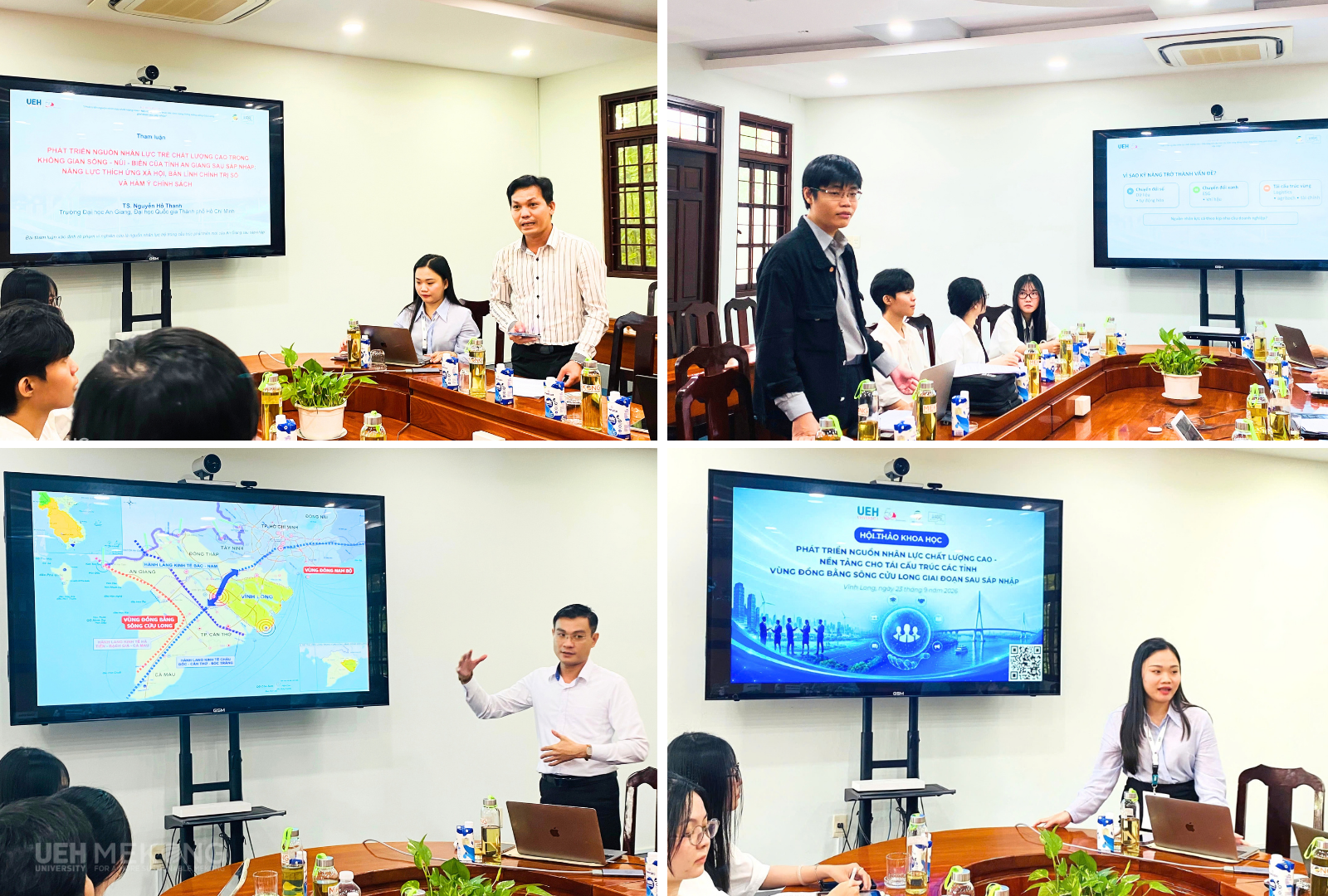
Authors present their research papers at a parallel session
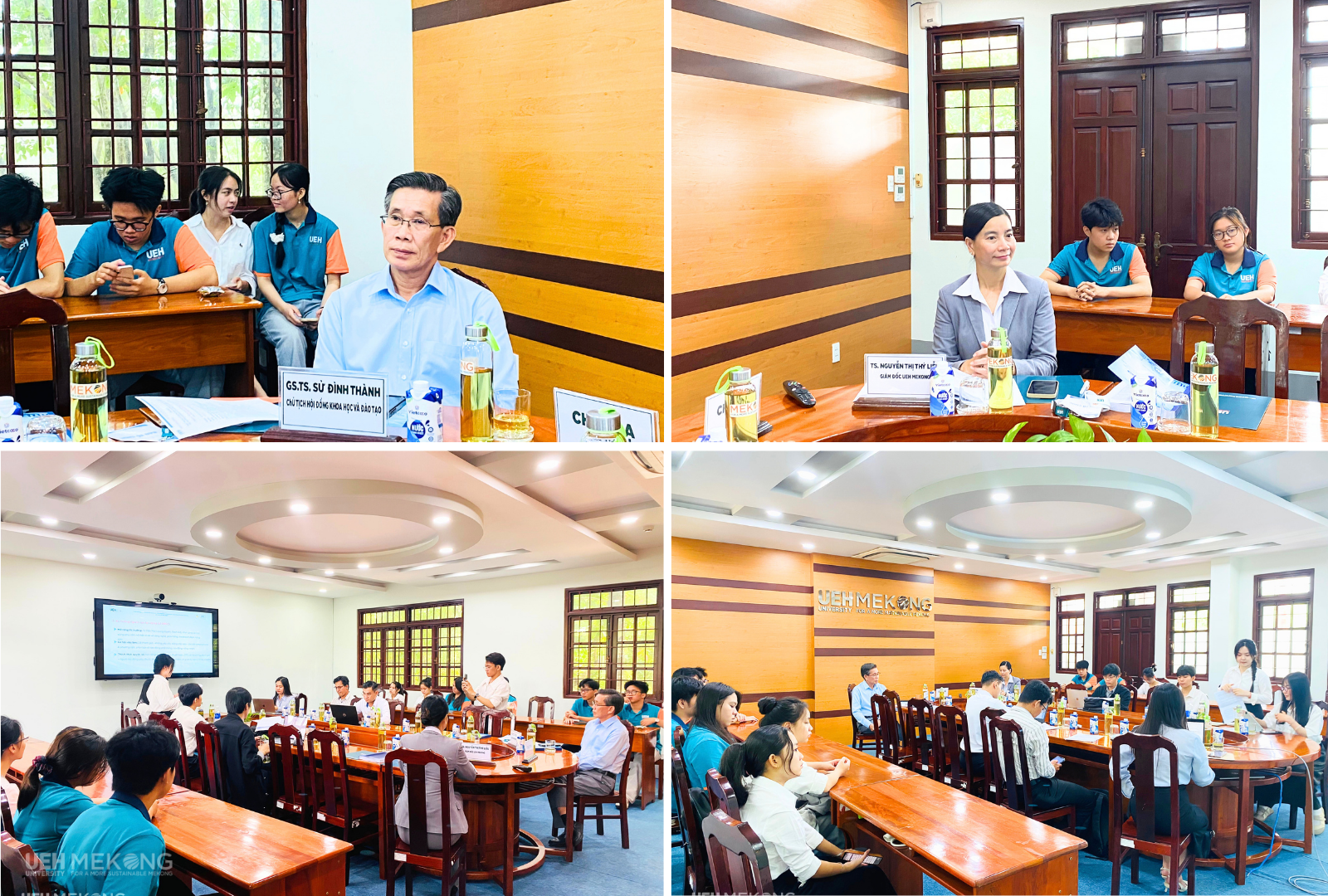
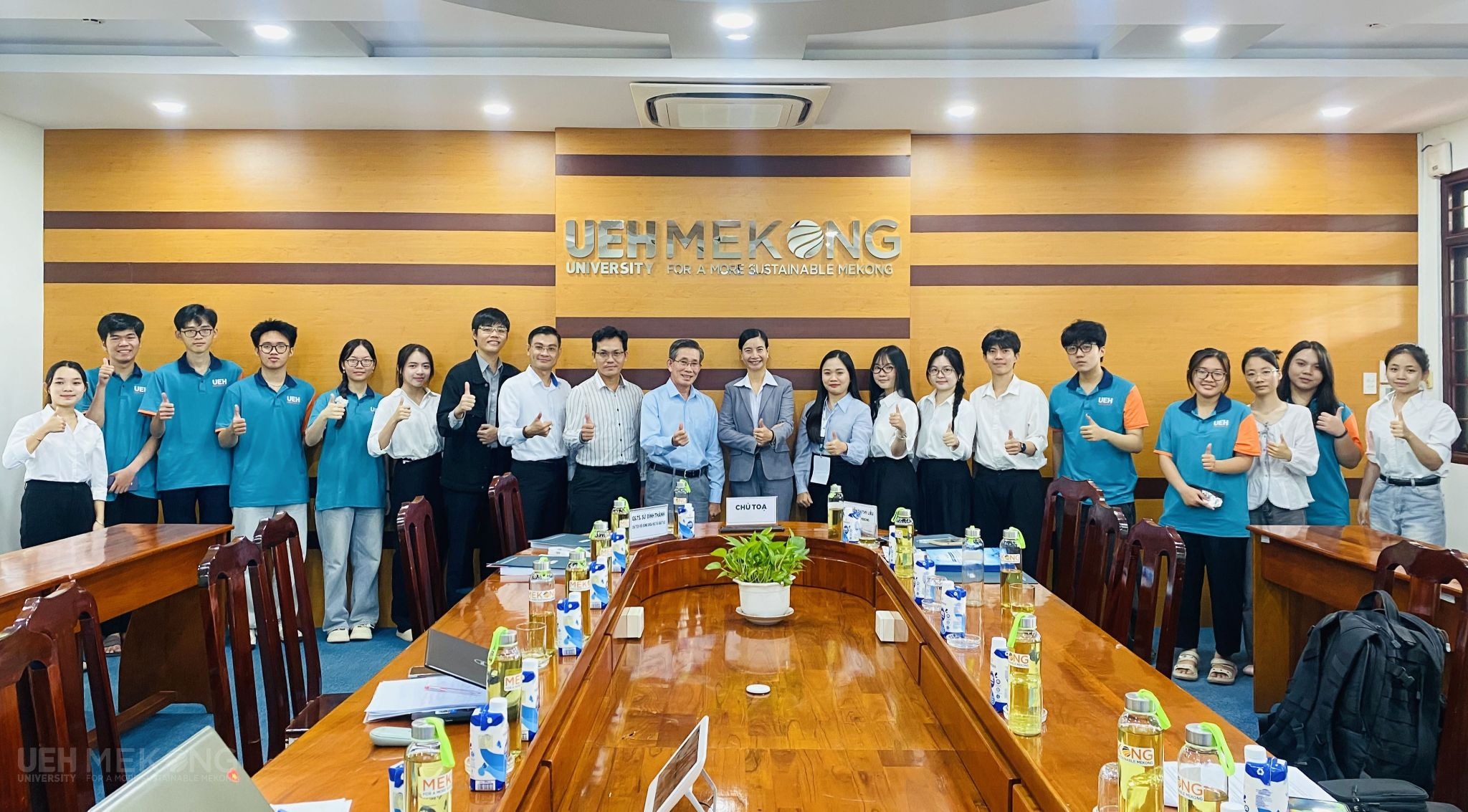
Prof. Dr. Su Dinh Thanh, Chairman of the UEH Academic and Training Council and former President of UEH, and Dr. Nguyen Thi Thuy Lieu, Director of UEH Mekong, co-chair Parallel Session C1
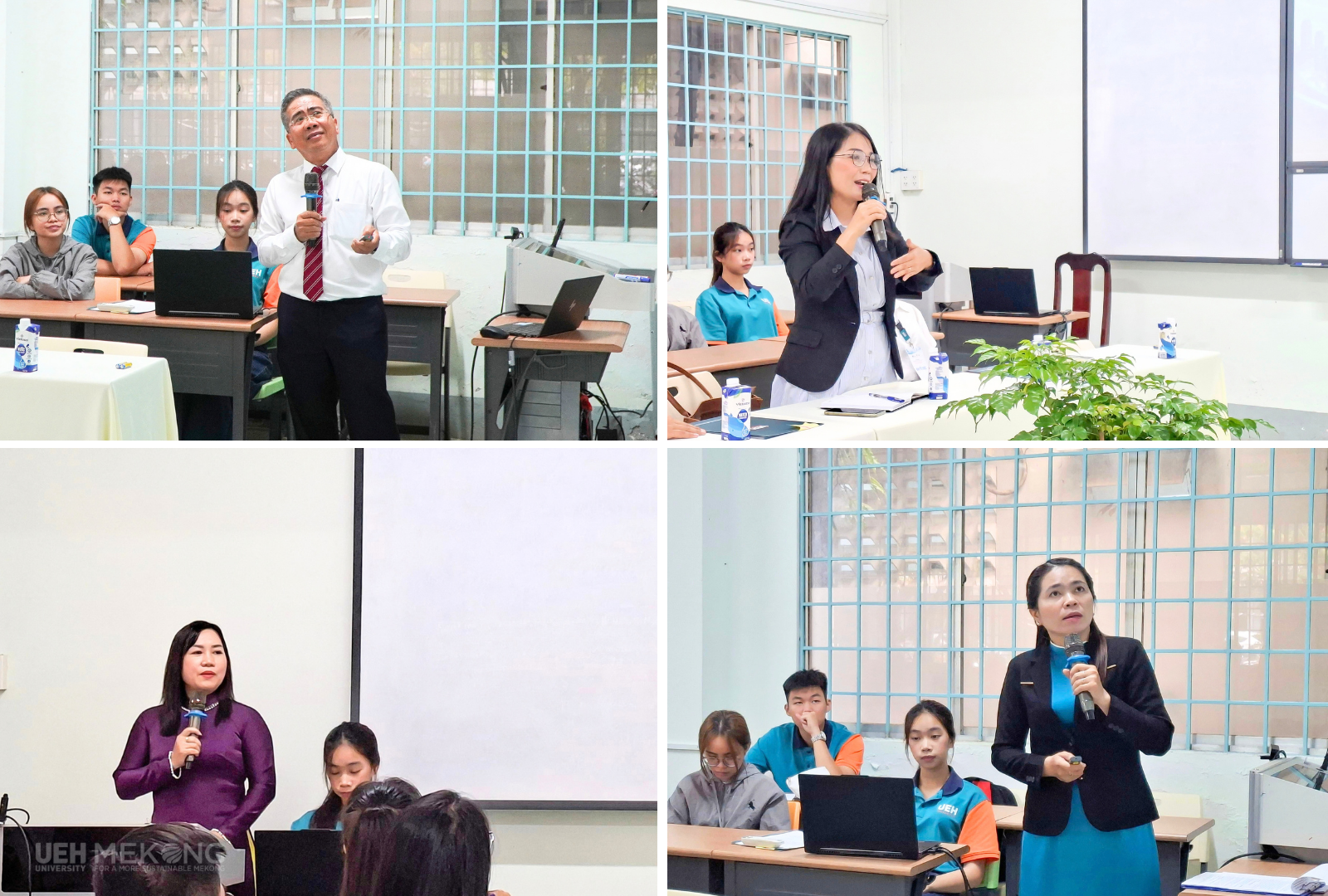
Authors present their research papers at a parallel session
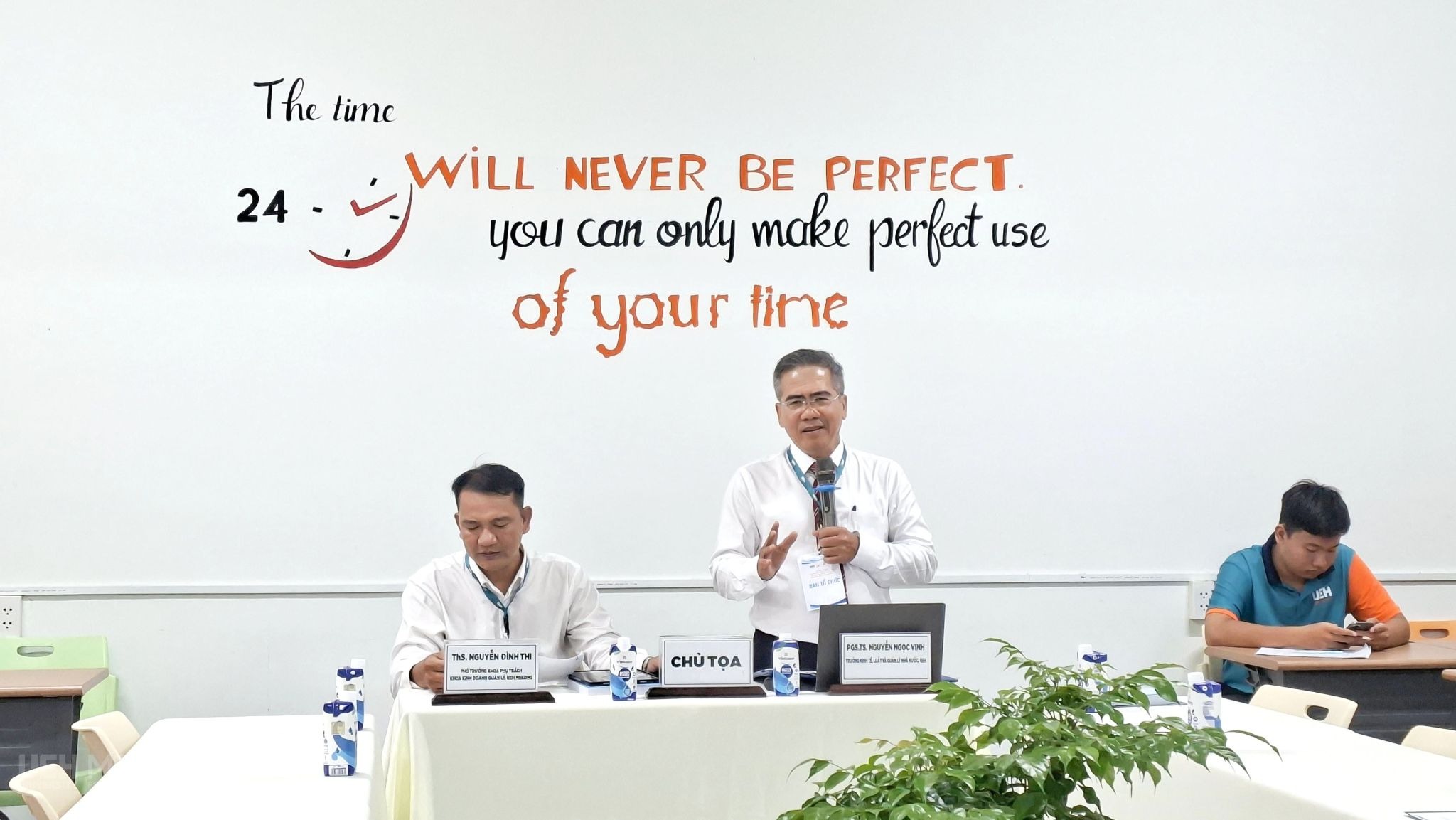
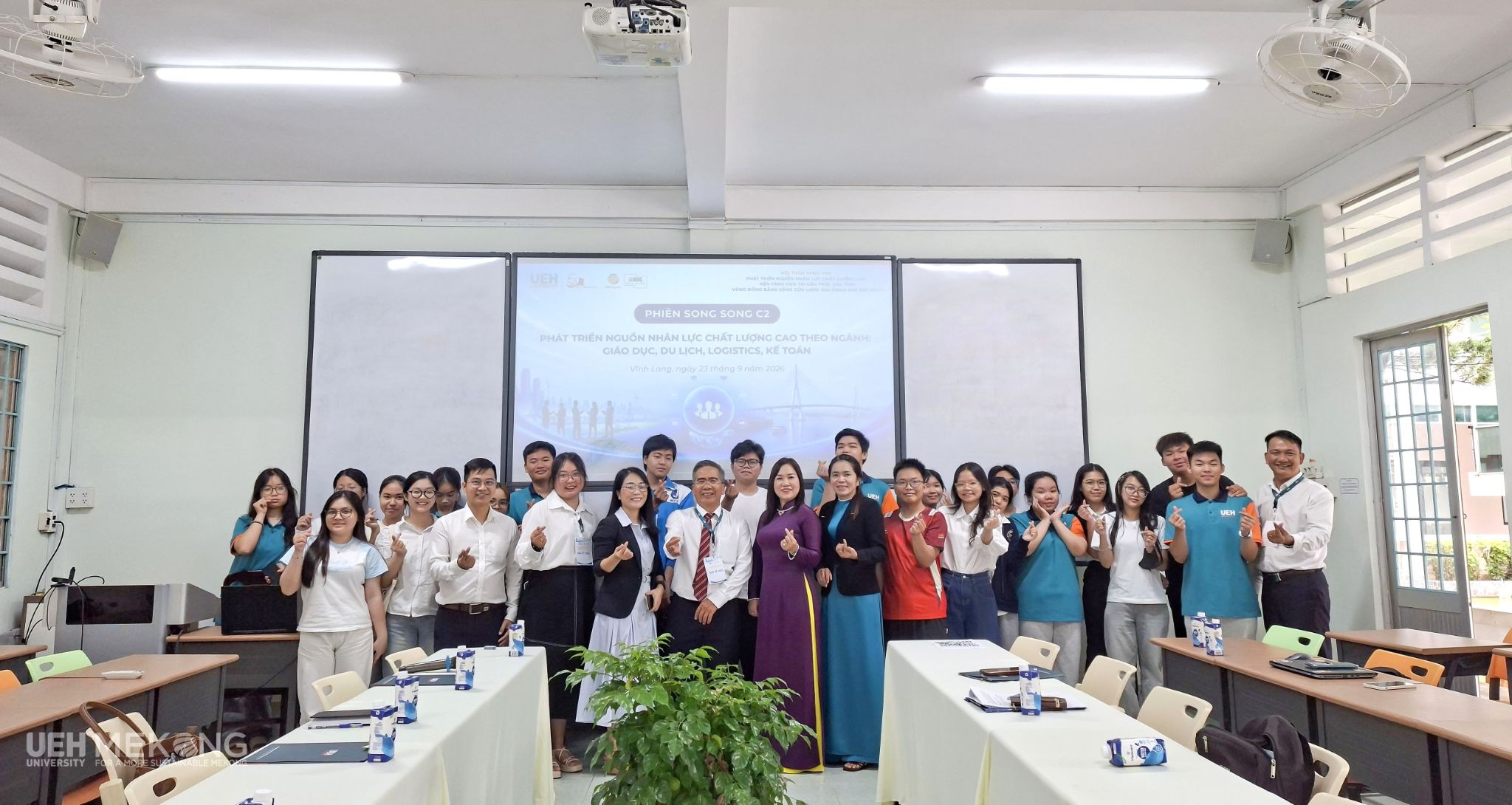
Assoc. Prof. Dr. Nguyen Ngoc Vinh, UEH College of Economics, Law and Government, and Mr. Nguyen Dinh Thi, MA, Deputy Dean in charge of the Faculty of Business and Management at UEH Mekong, co-chair Parallel Session C2
Theme 4 – Solutions, Models, and Policies for Human Resource Development to Support Regional Restructuring
Two sessions on “Institutions, Financial Mechanisms, and Experiences in Public-Sector Human Resource Development Following Administrative Mergers” and “Multi-Stakeholder Collaboration Models and Effective Public-Sector Human Resource Governance” shifted the focus from identifying challenges to developing implementation mechanisms.
The presentations examined the roles of institutional frameworks, financial instruments, and coordination mechanisms among government, universities, and businesses in human resource development. These discussions also provided a foundation for assessing how multi-stakeholder collaboration models could be adapted to the practical conditions of localities across the region.
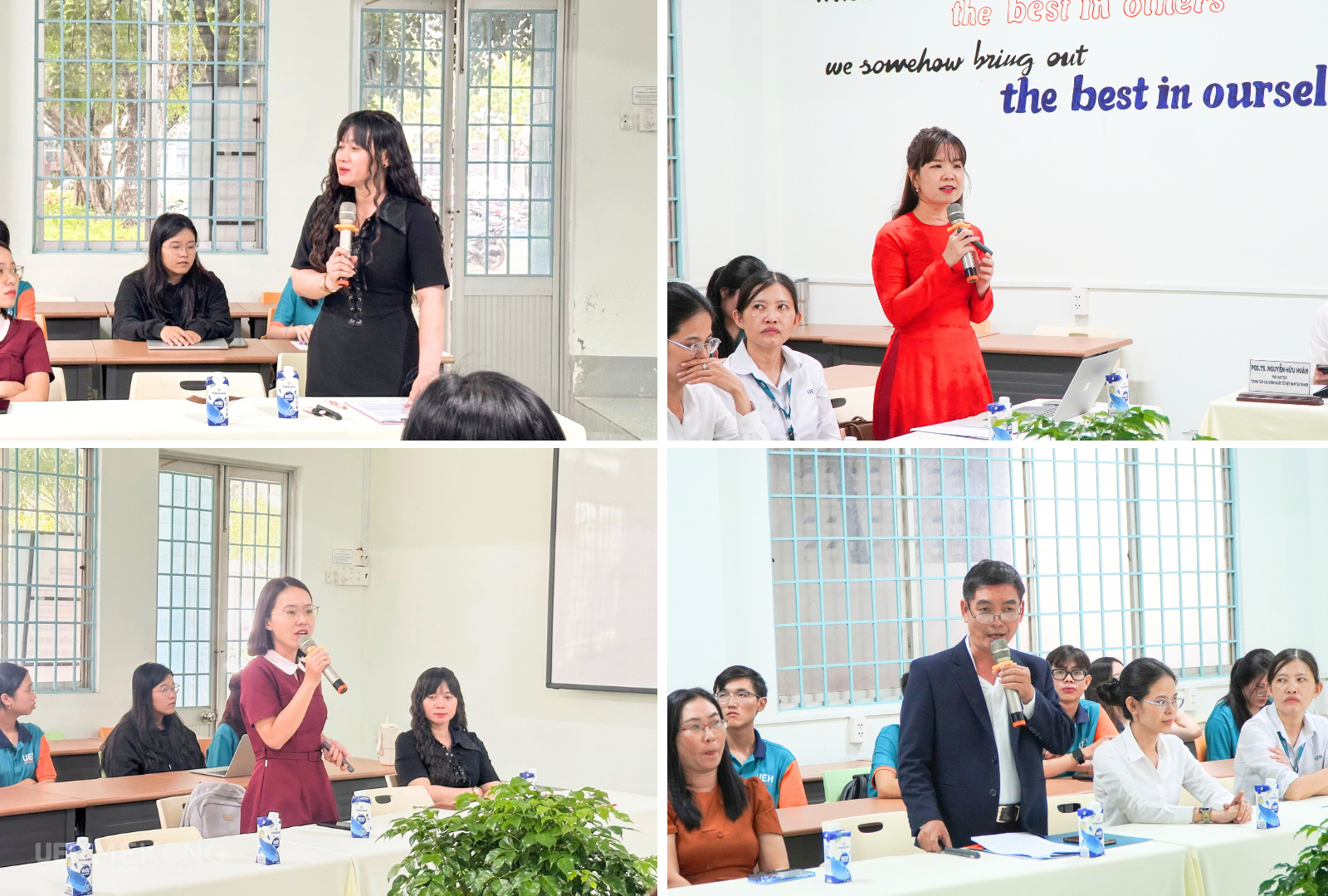
Authors present their research papers at a parallel session
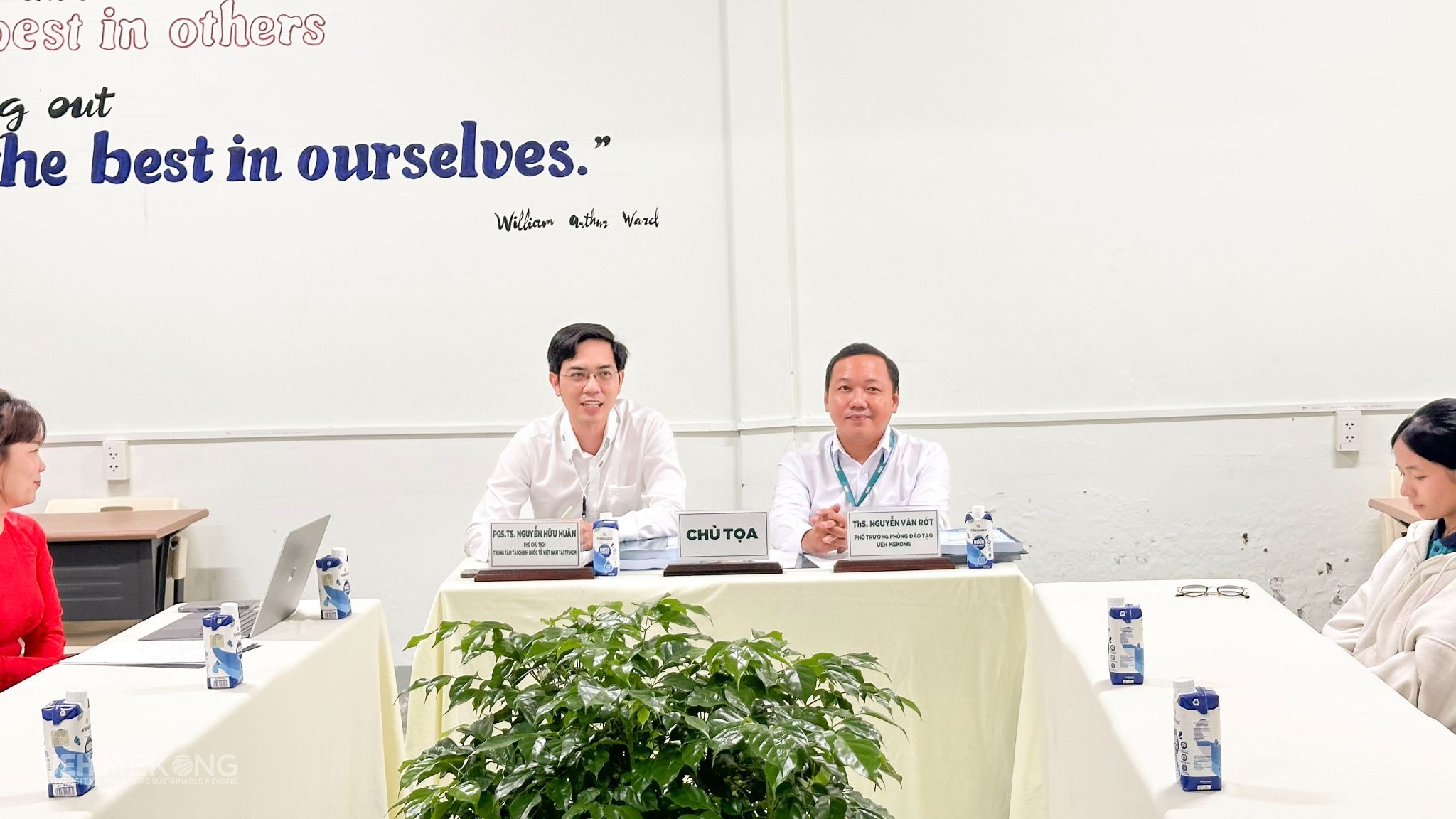
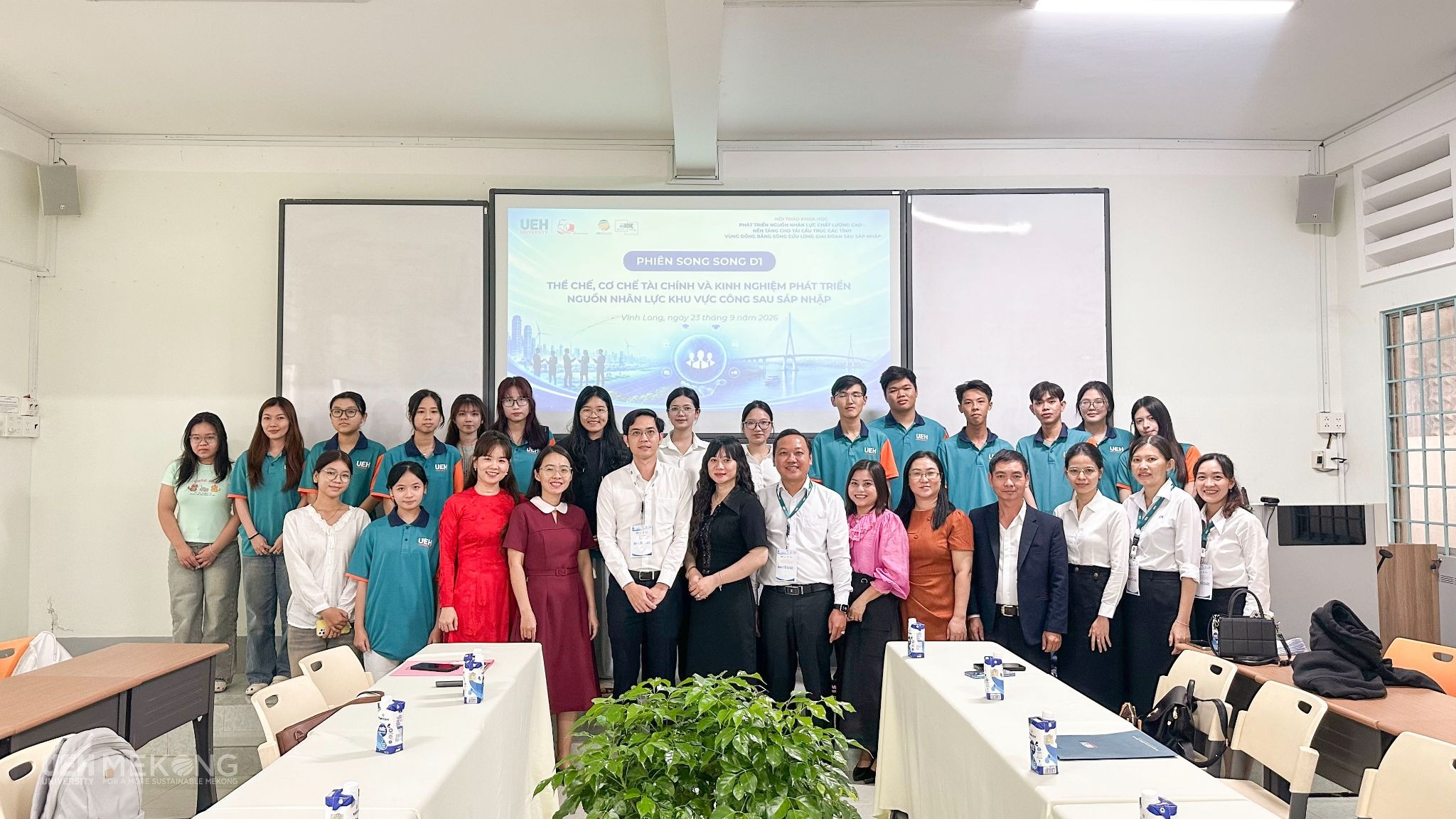
Assoc. Prof. Dr. Nguyen Huu Huan, Vice Chairman of VIFC in Ho Chi Minh City, and Mr. Nguyen Van Rot, MA, Deputy Head of the Department of Academic Affairs at UEH Mekong, co-chair Parallel Session D1
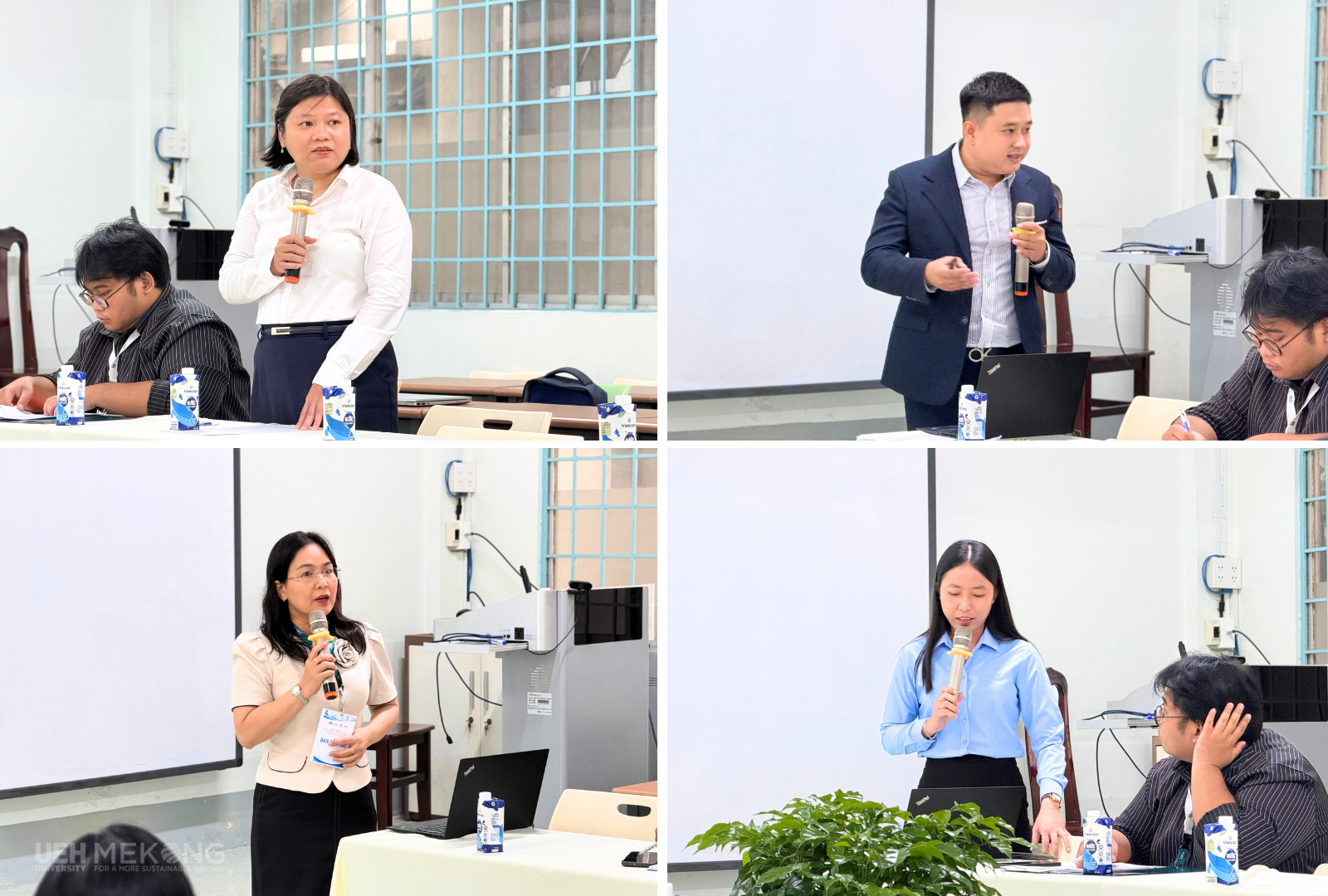
Authors present their research papers at a parallel session
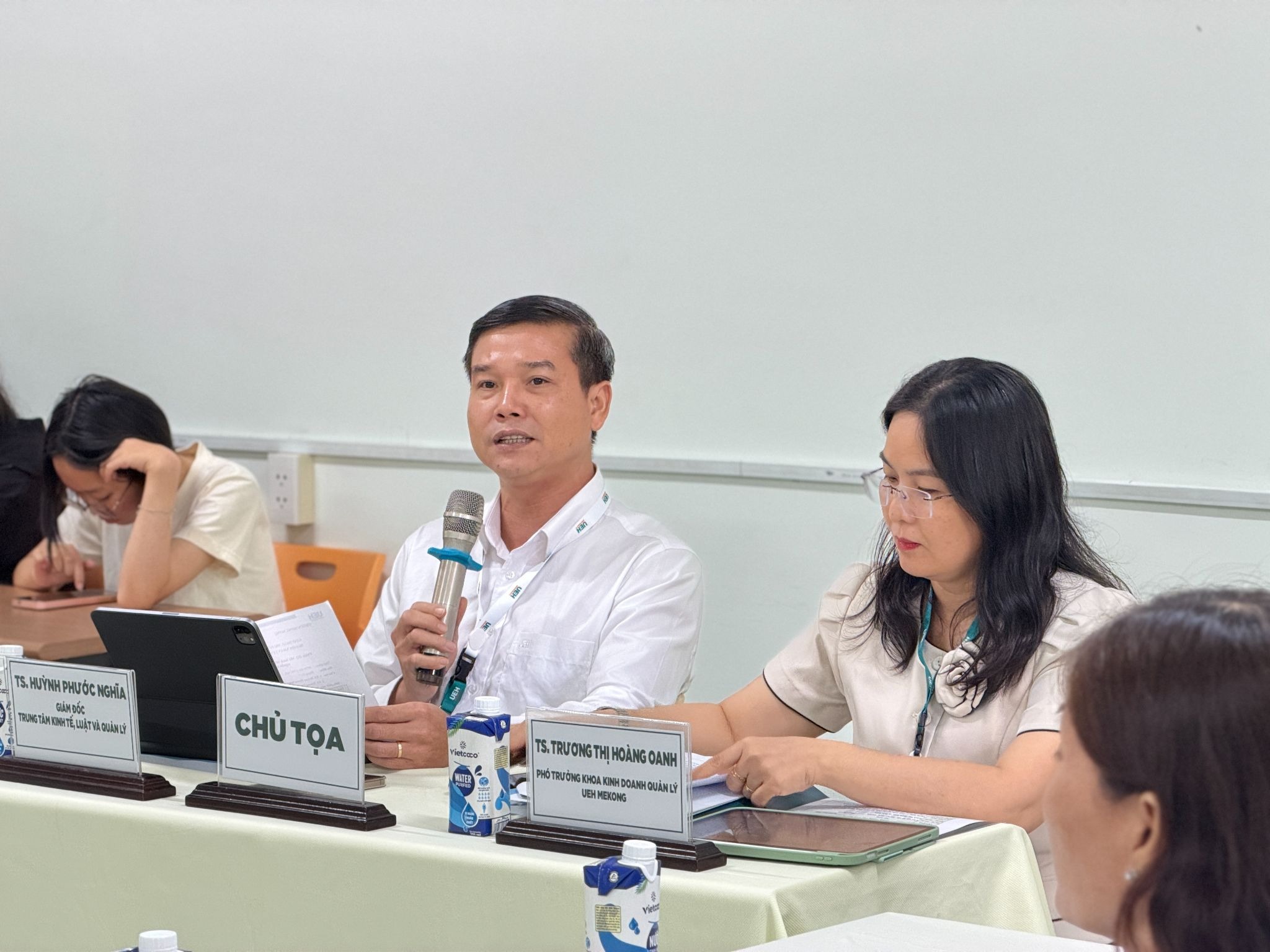
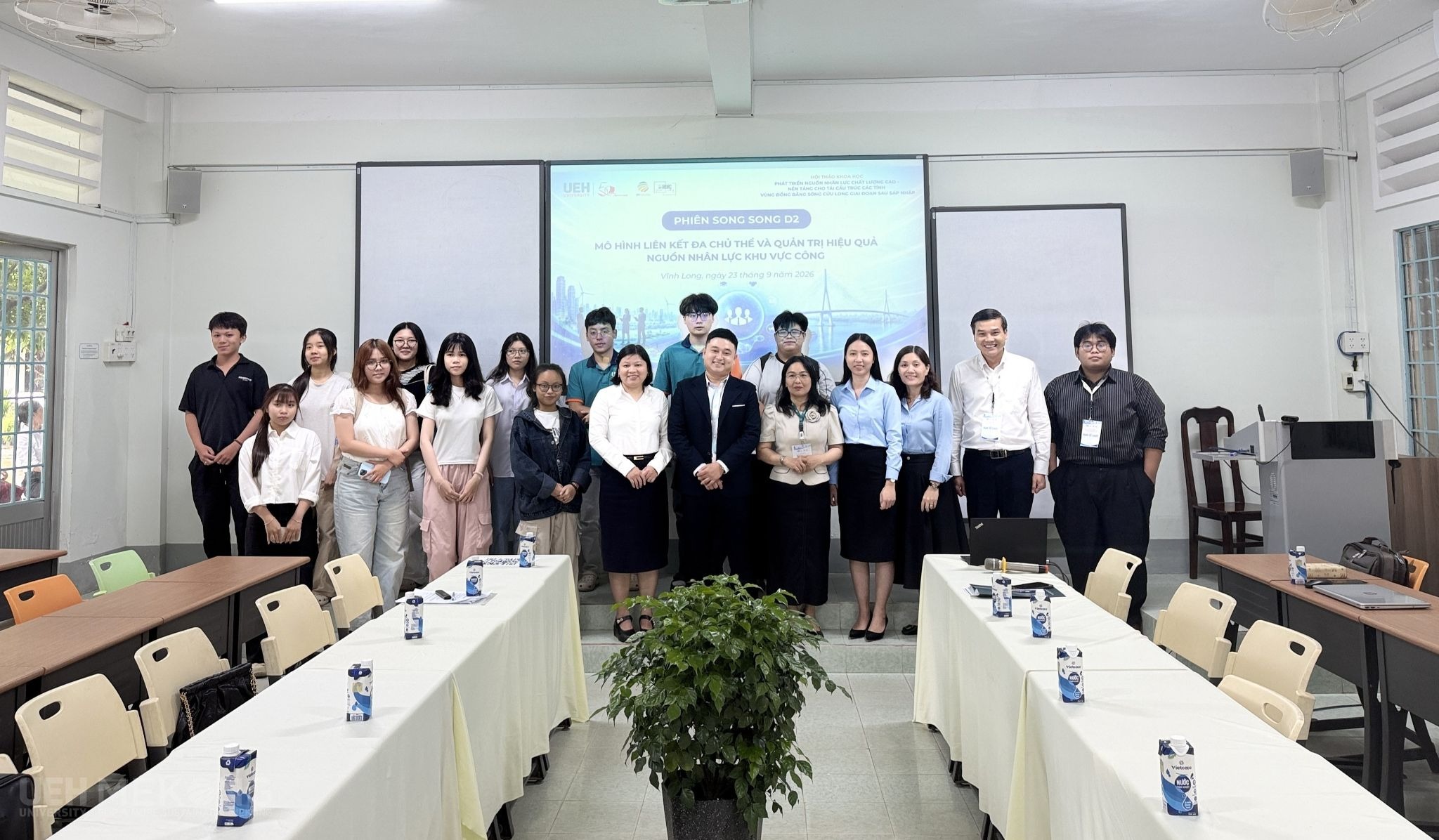
Dr. Huynh Phuoc Nghia, Director of the Center for Economics, Law and Management, and Dr. Truong Thi Hoang Oanh, Deputy Dean of the Faculty of Business and Management at UEH Mekong, co-chair Parallel Session D2
Six Policy Recommendations for Human Resource Development in the Mekong Delta
Drawing on the presentations and discussions, the conference proposed six policy and implementation directions for developing high-quality human resources in the Mekong Delta following administrative mergers:
First, restructuring the public sector by transitioning from passive administrative management to proactive development governance, reforming recruitment and remuneration mechanisms to attract and retain talent, and developing specialized human resource development plans;
Second, establishing an operational five-stakeholder collaborative ecosystem in which government creates enabling conditions, educational institutions innovate, businesses identify and commission workforce needs, researchers conduct studies and propose solutions, and workers proactively enhance their competencies;
Third, prioritizing human resource development for key economic industries such as high-tech agriculture, logistics, processing industries, the marine economy, technology, and public administration;
Fourth, aligning education and training with labor market demand by restructuring the regional education and training system while providing upskilling and reskilling opportunities for the existing workforce;
Fifth, addressing workforce challenges at the grassroots (commune) level through proactive budget planning and coordinated workforce development strategies between local governments and universities;
Finally, improving workforce demand forecasting and strengthening regional collaboration through close coordination among higher-level authorities, local governments, educational institutions, and the business community.
From Research to Policy and Practice – UEH Accompanies the Mekong Delta
The year 2026 marks a significant milestone: the 50th anniversary of the establishment and development of the University of Economics Ho Chi Minh City (UEH). Over half a century of growth, UEH has continued to strengthen its position and strategic direction as a multidisciplinary, research-oriented, innovative, and sustainable university. The success of the conference, with 100 submitted research papers, one plenary session, and seven parallel sessions, extended beyond the organization of a prestigious scientific forum. It also demonstrated UEH's pioneering role in promoting a new approach to high-quality human resource development in the Mekong Delta following administrative mergers: shifting from a conventional education-focused mindset to competency development; from fragmented local approaches to sustainable regional collaboration; and from policies on paper to strengthened implementation capacity in practice.
Through its academic credibility, capacity to connect stakeholders, and commitment to community service, UEH reaffirmed its mission to serve as a bridge between research outcomes and practical policymaking. The University remains committed to working alongside local governments, businesses, and regional stakeholders to address development bottlenecks, create a dynamic human resource ecosystem, and make meaningful contributions to the prosperity and sustainable development of the Mekong Delta.
Additional photos:
-
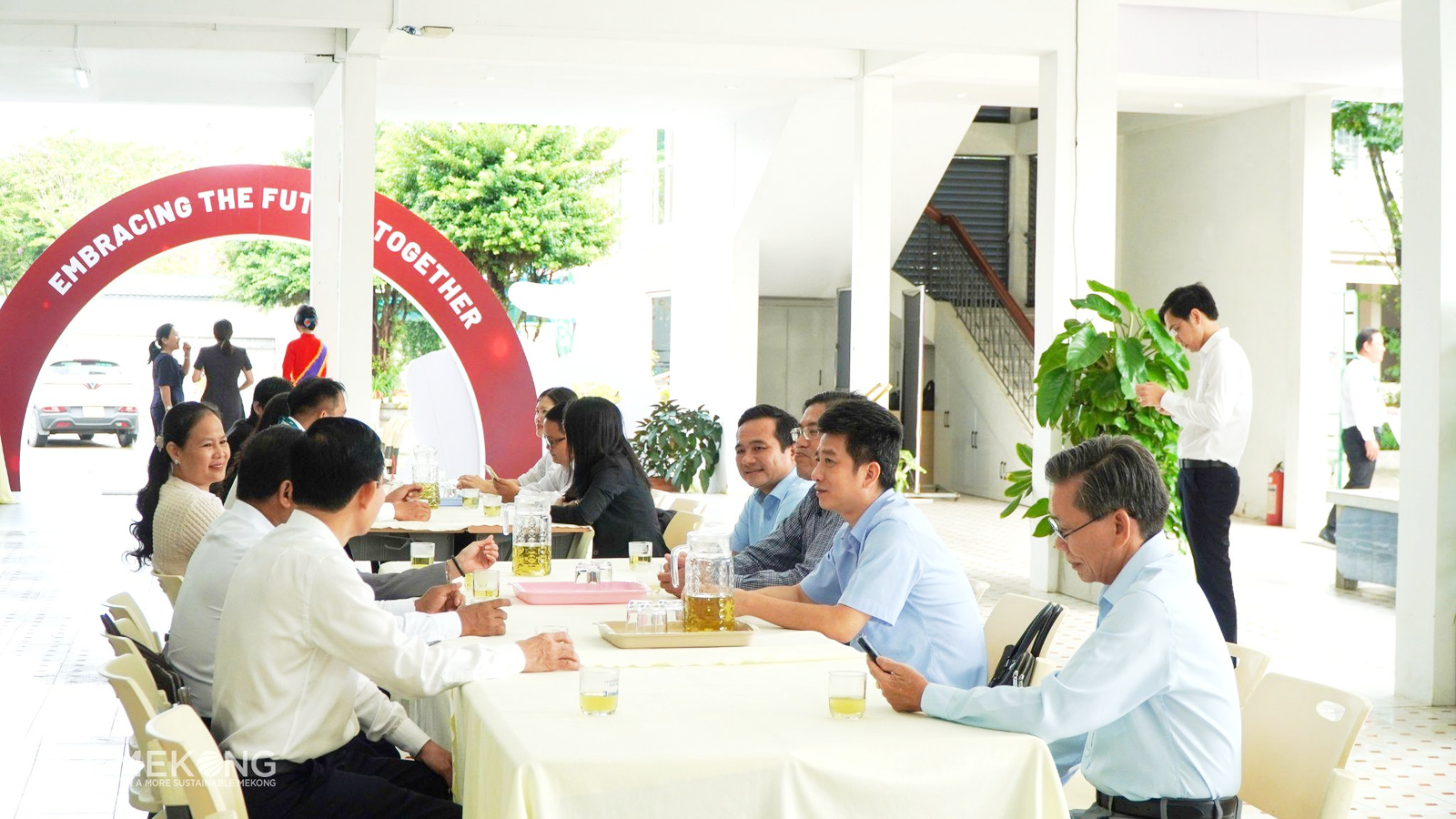
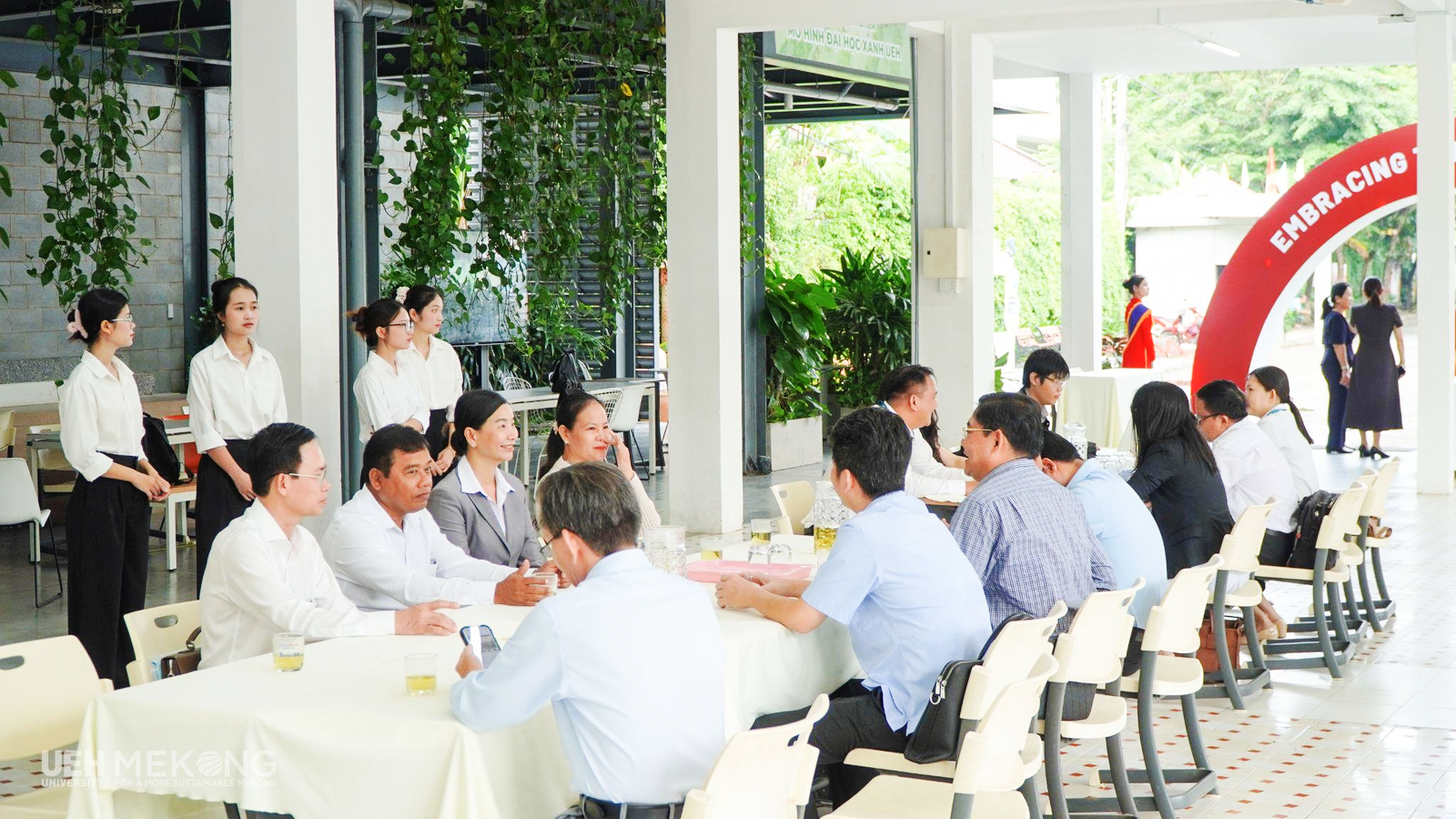
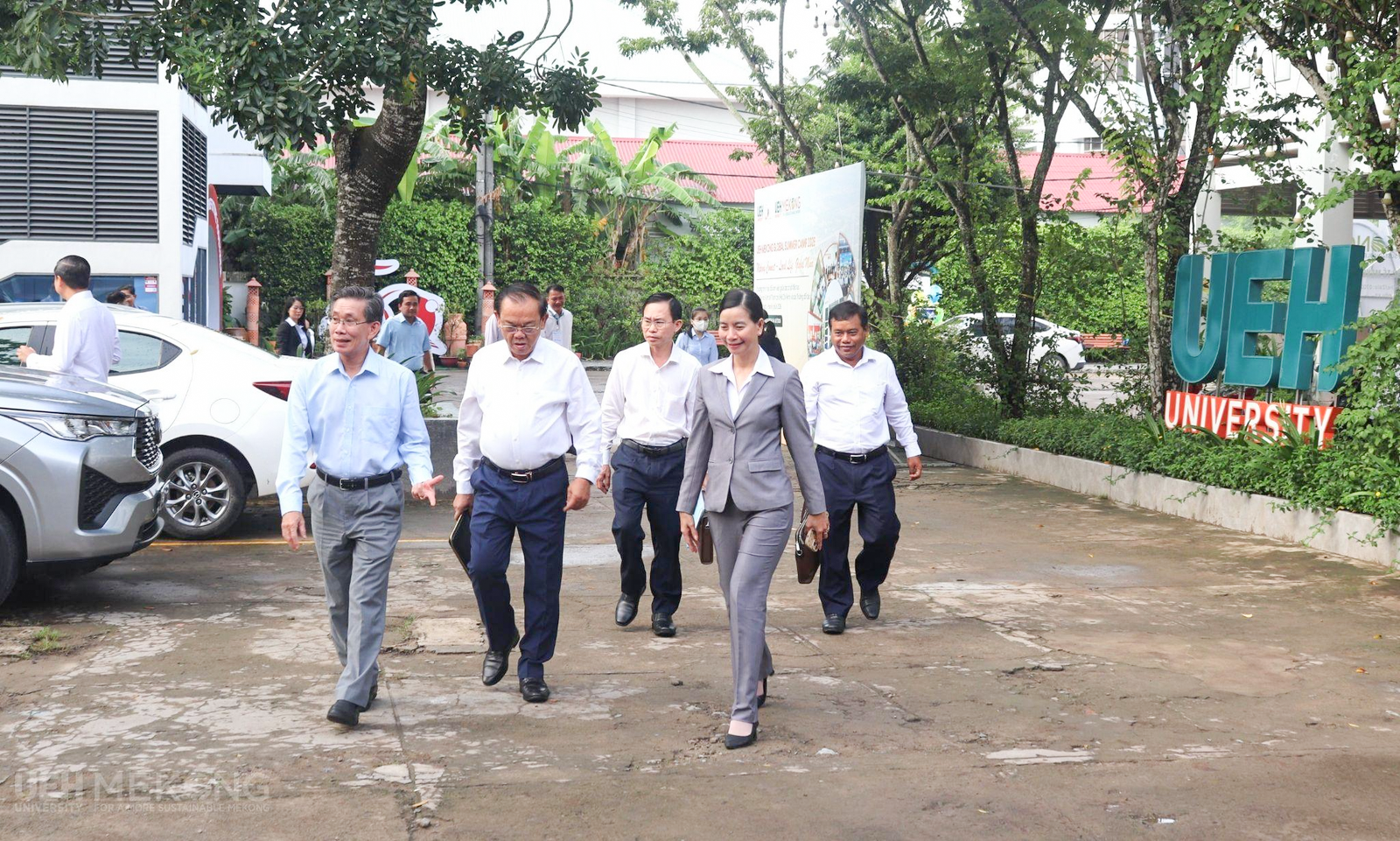
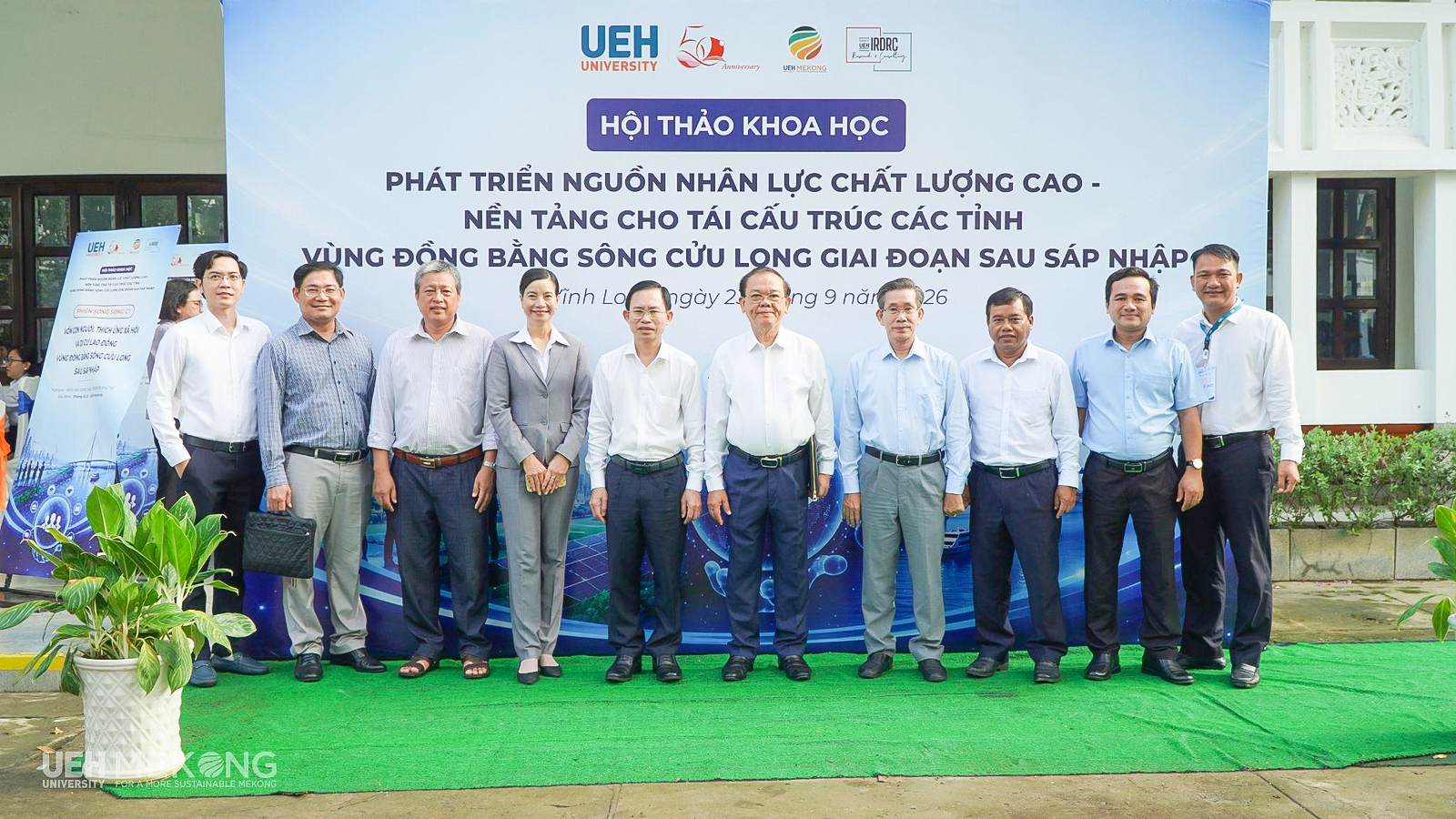
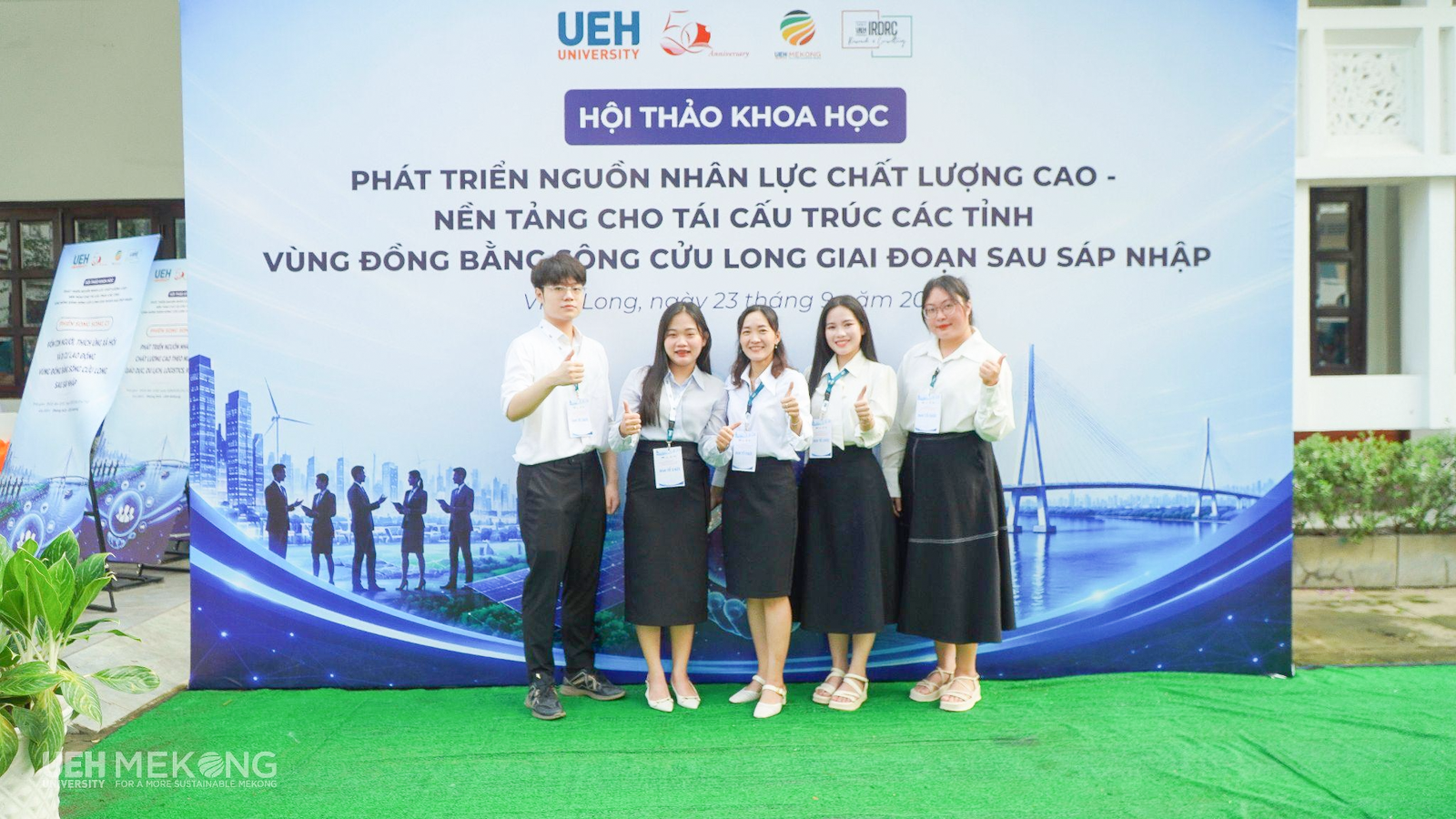
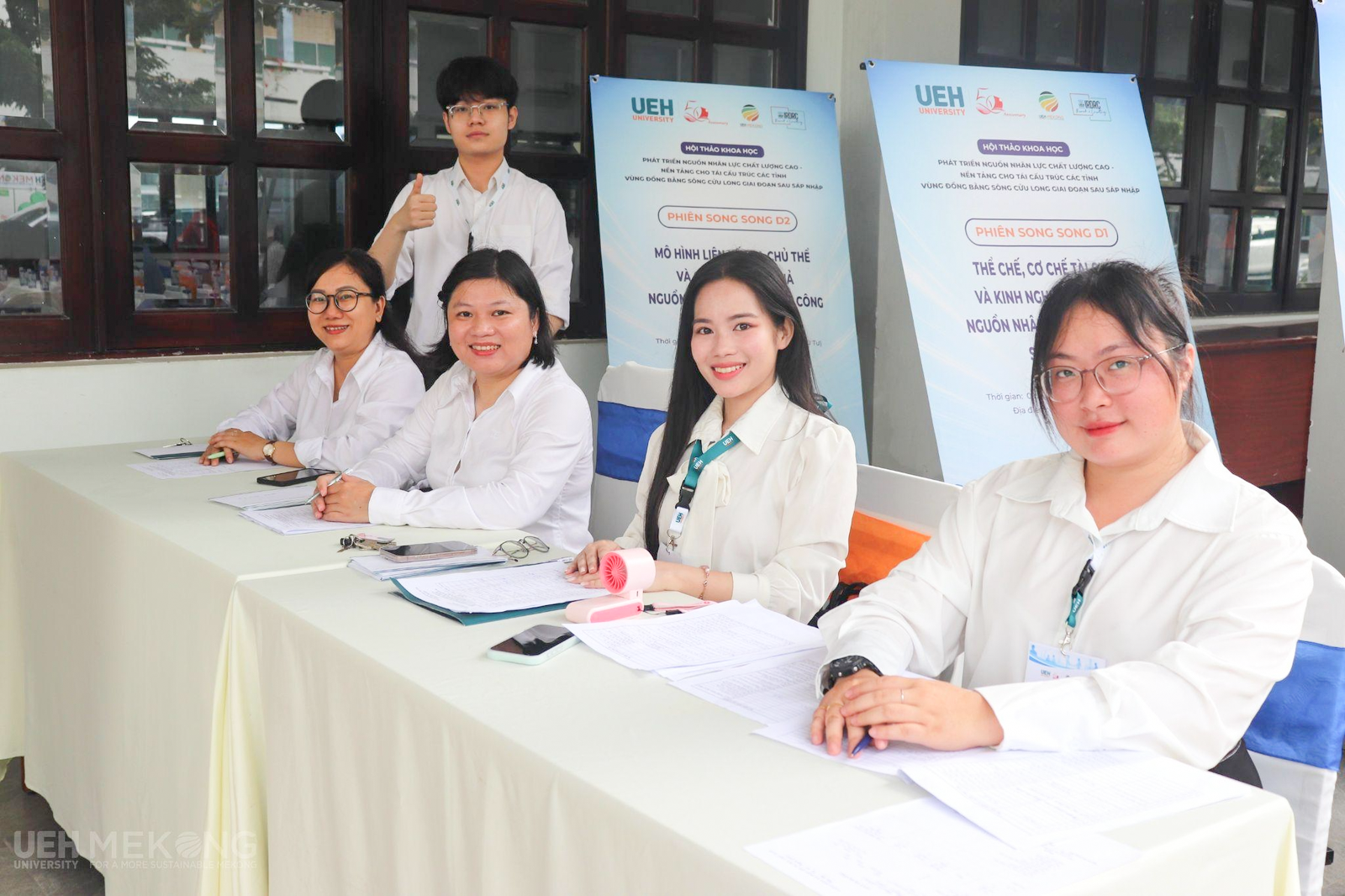
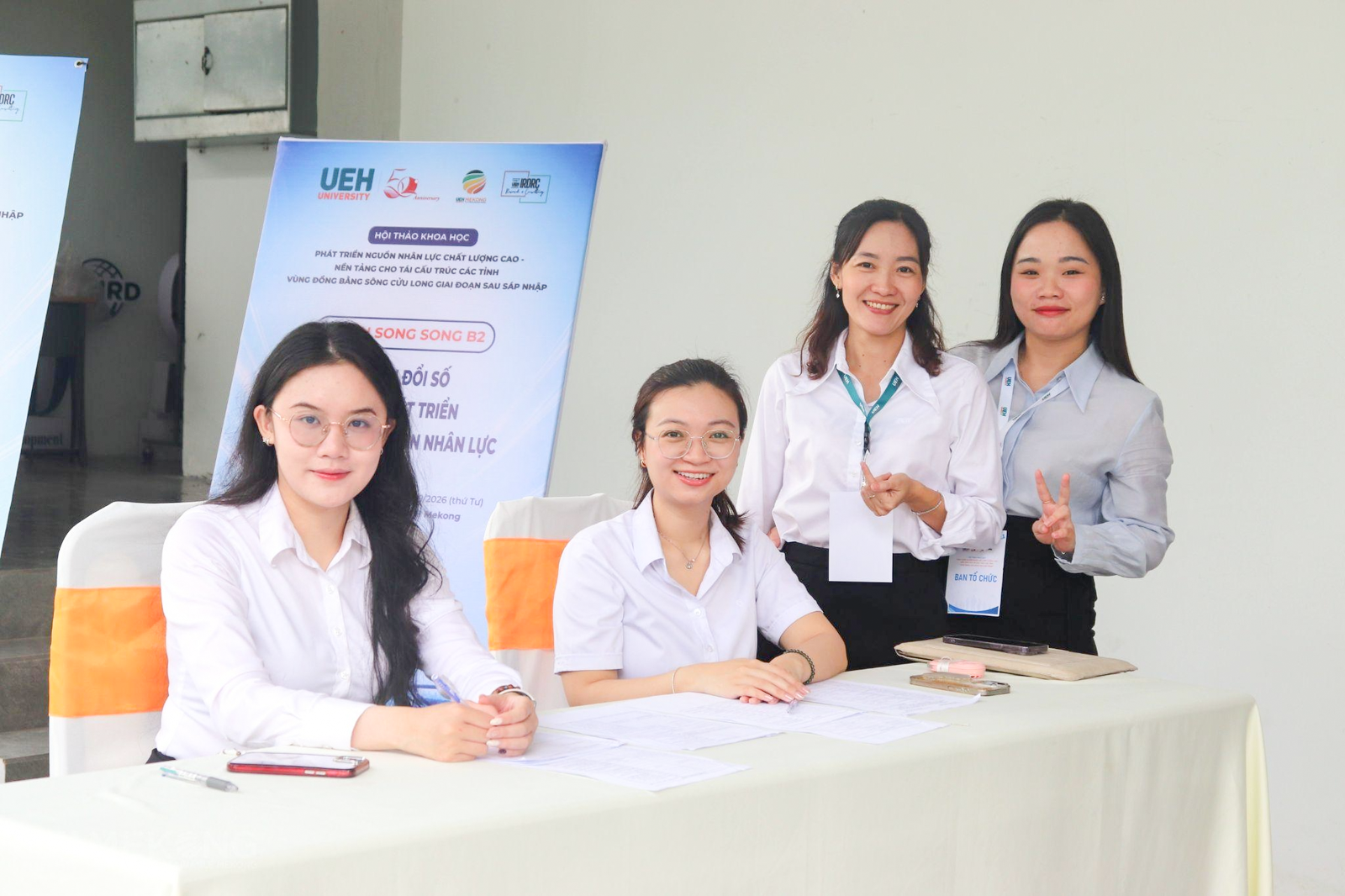
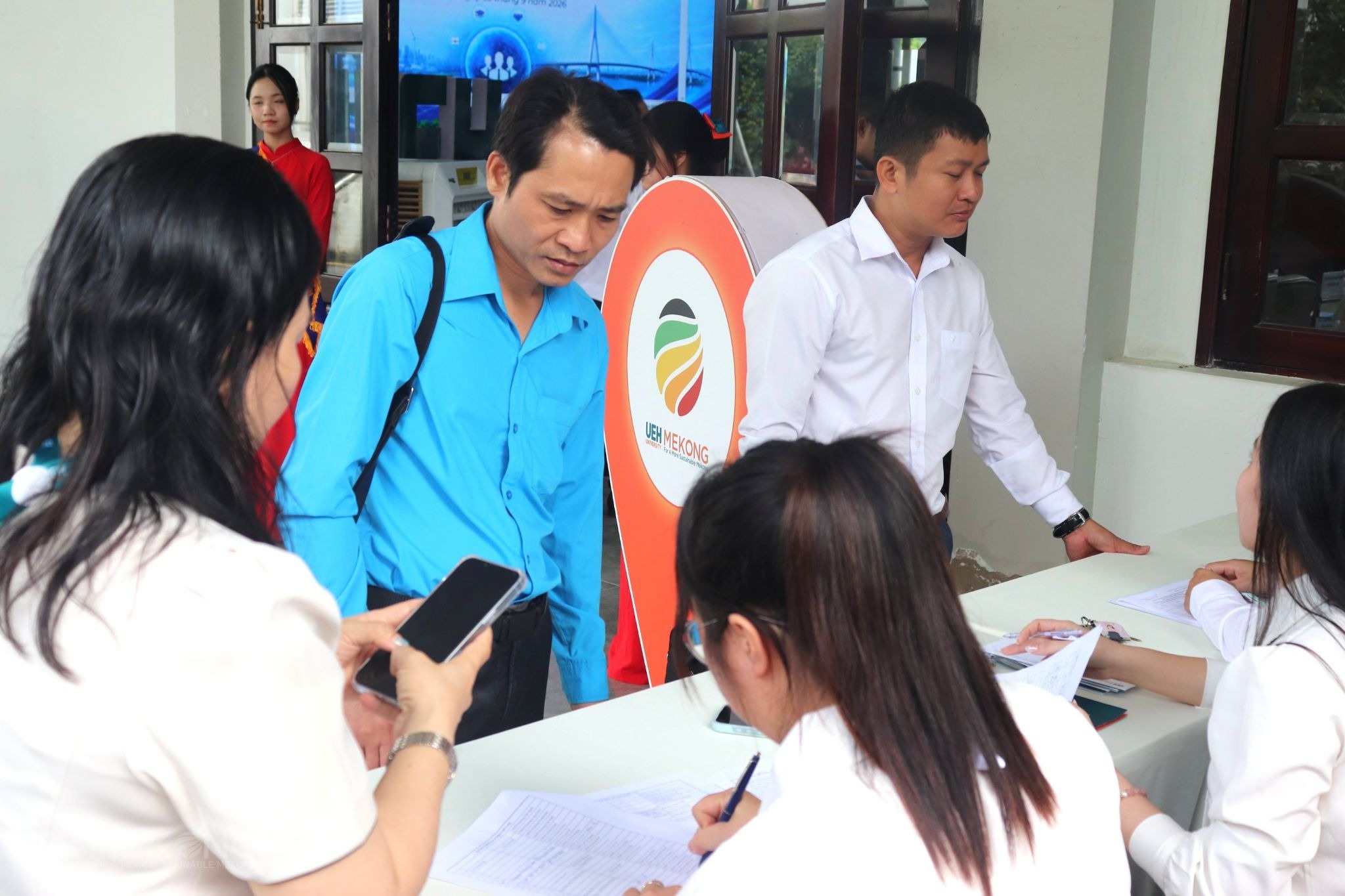
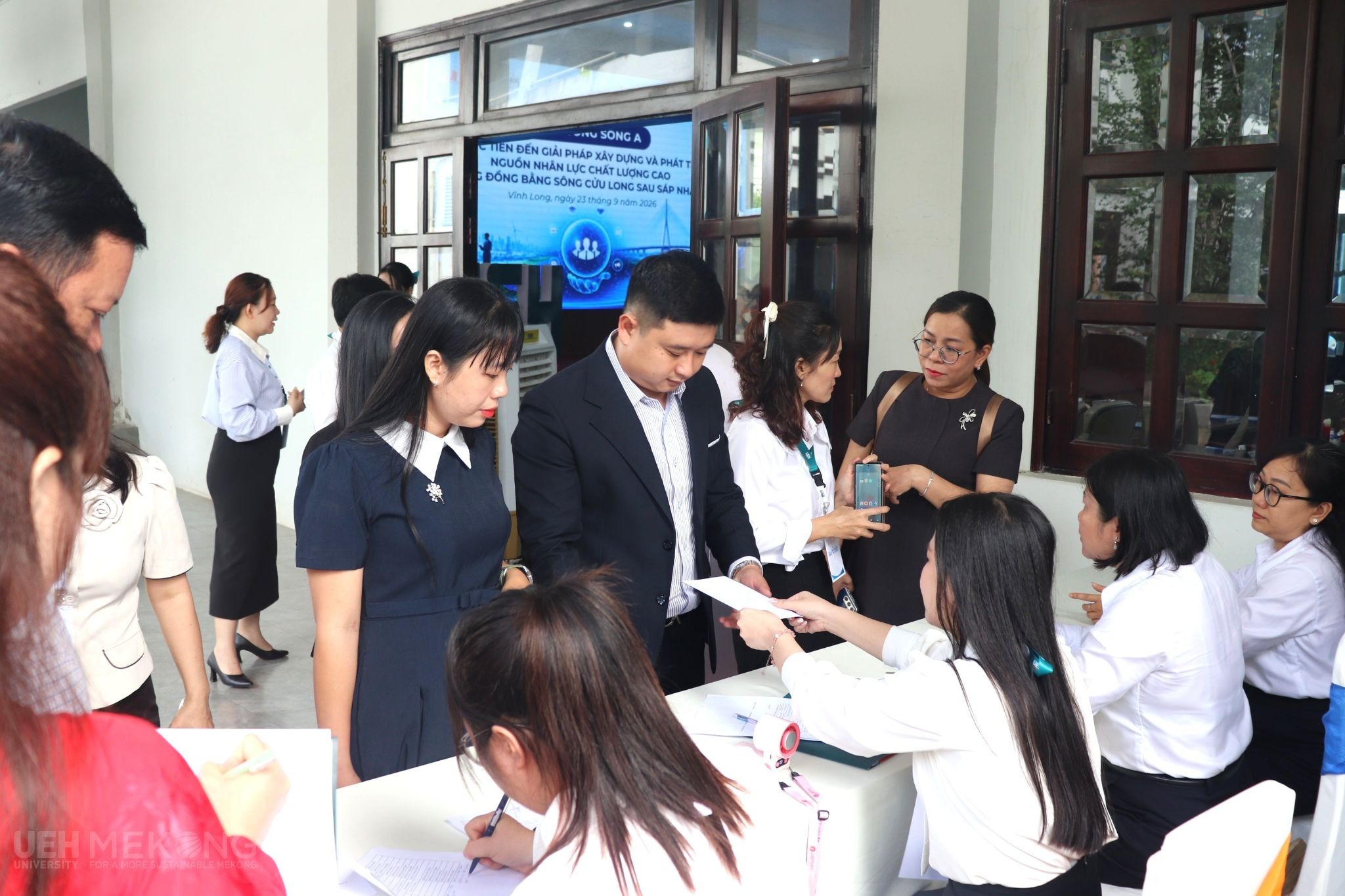
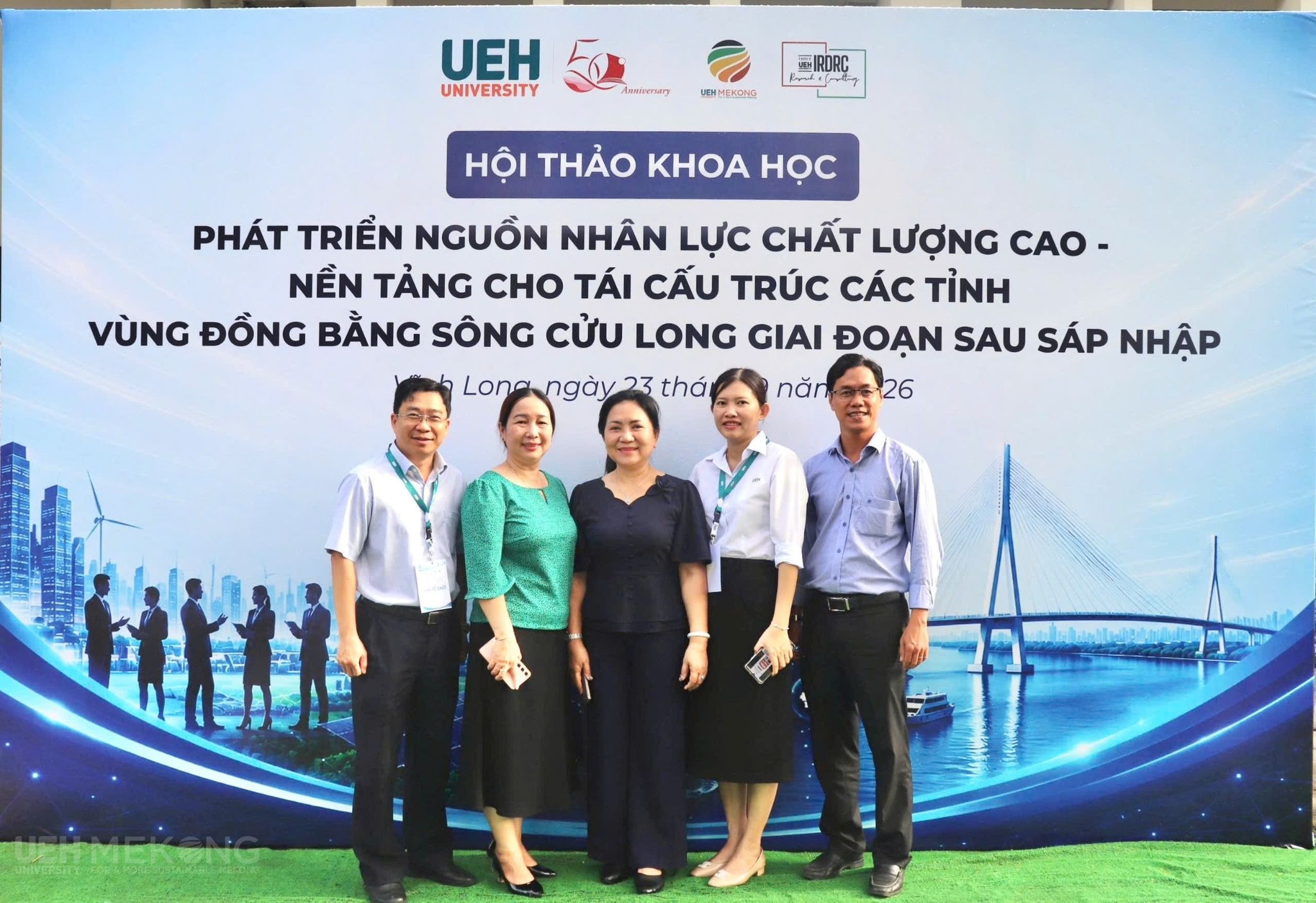
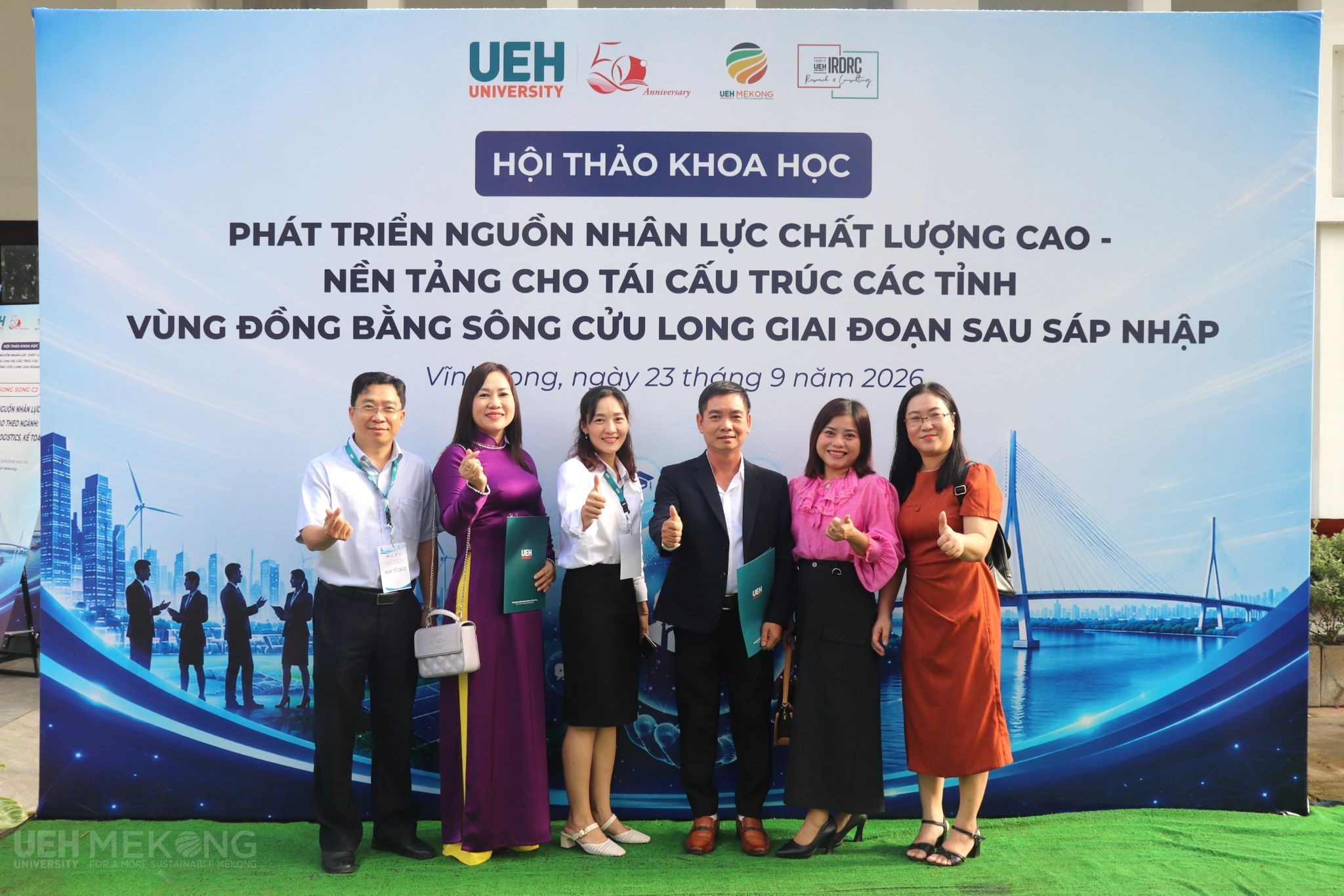
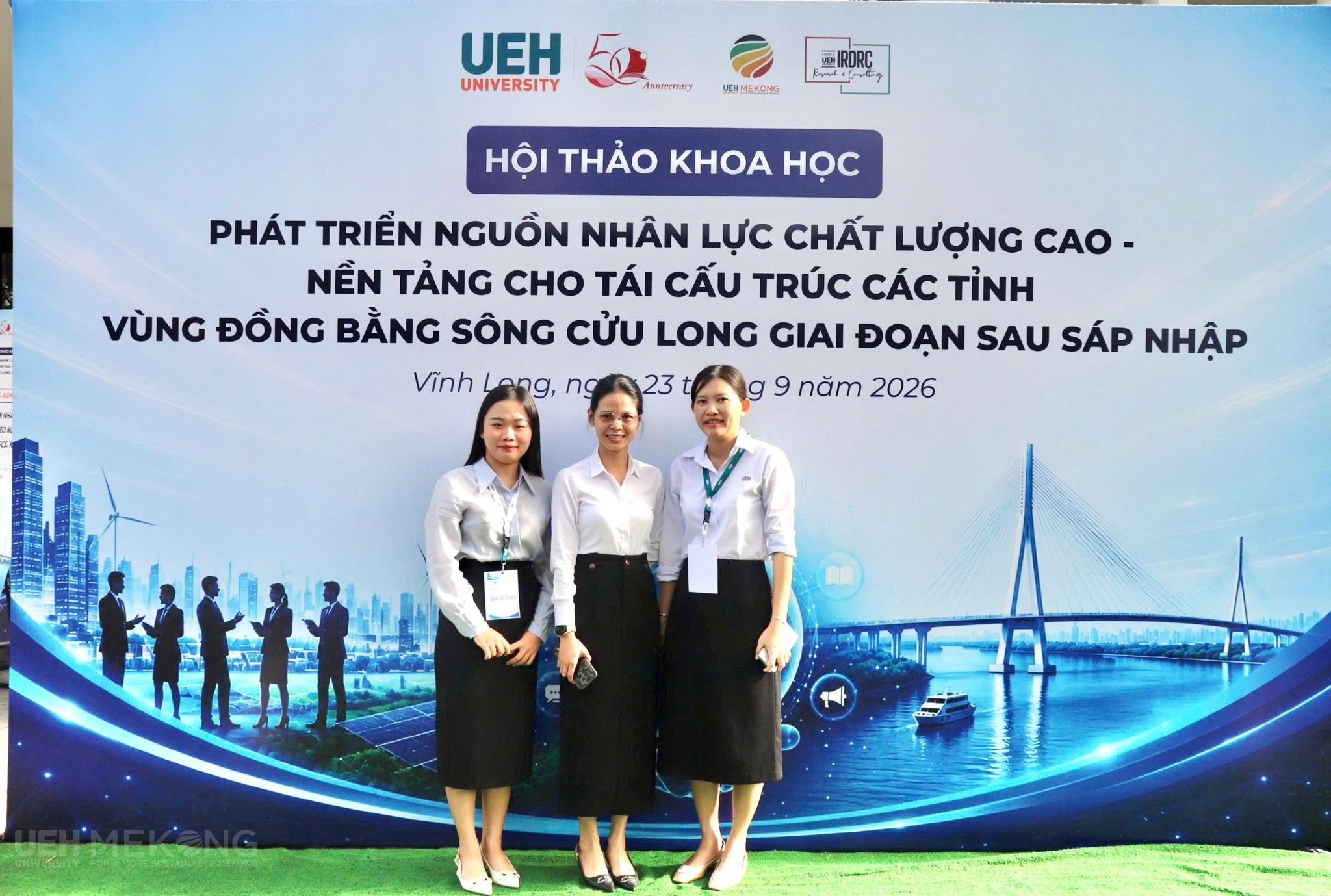
Check-in area:

-
Plenary session:
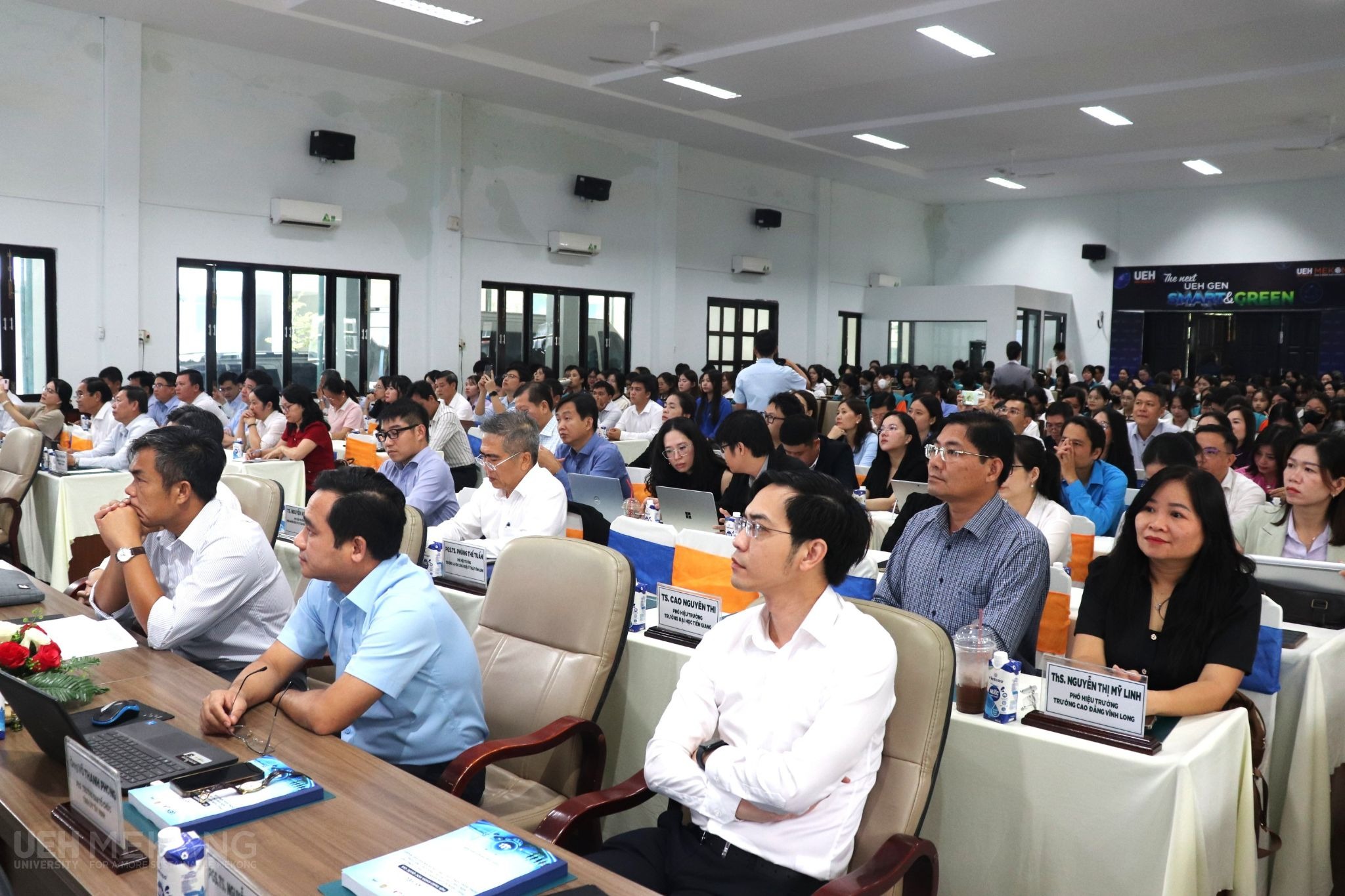
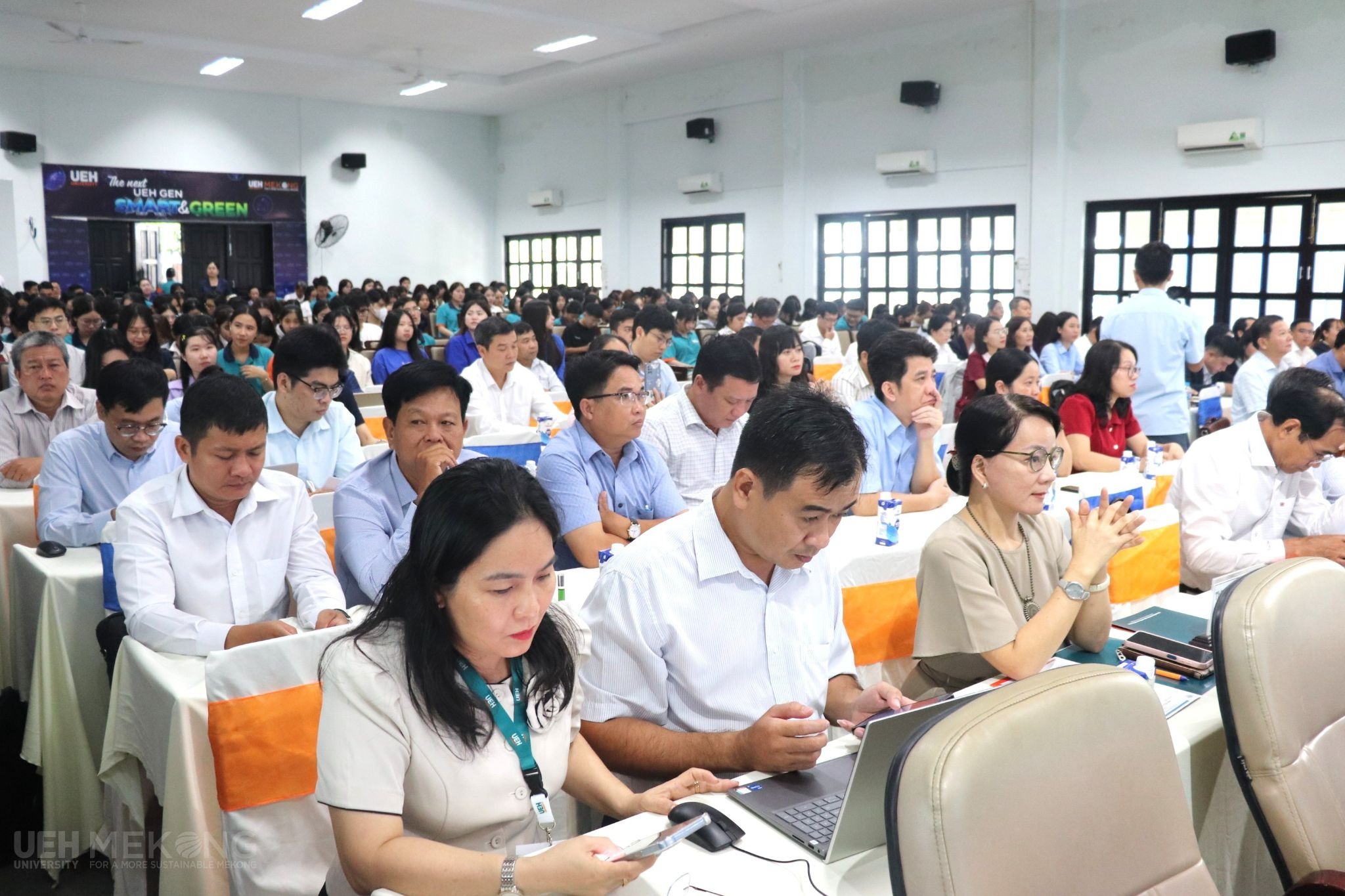
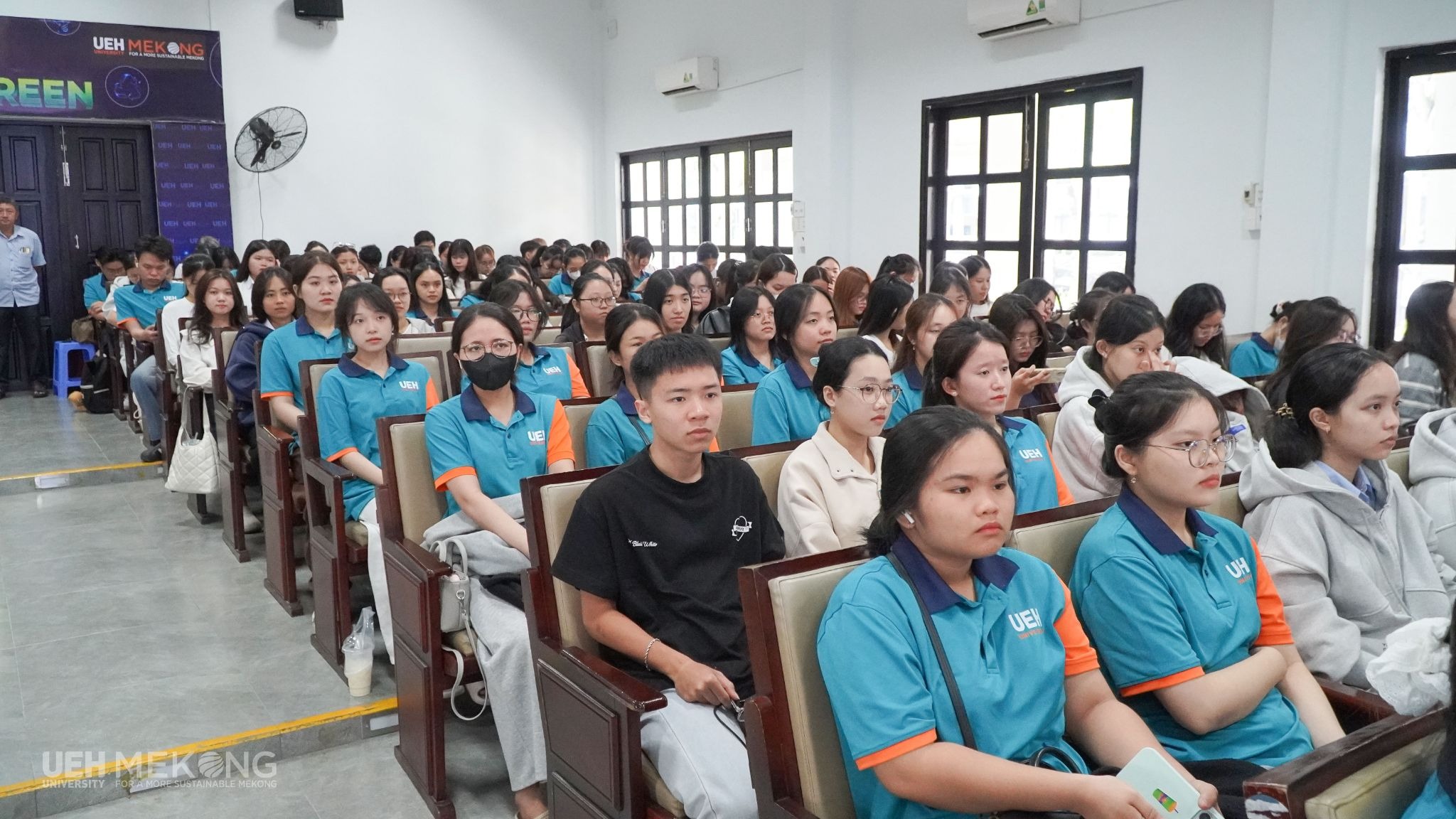
- Parallel sessions:

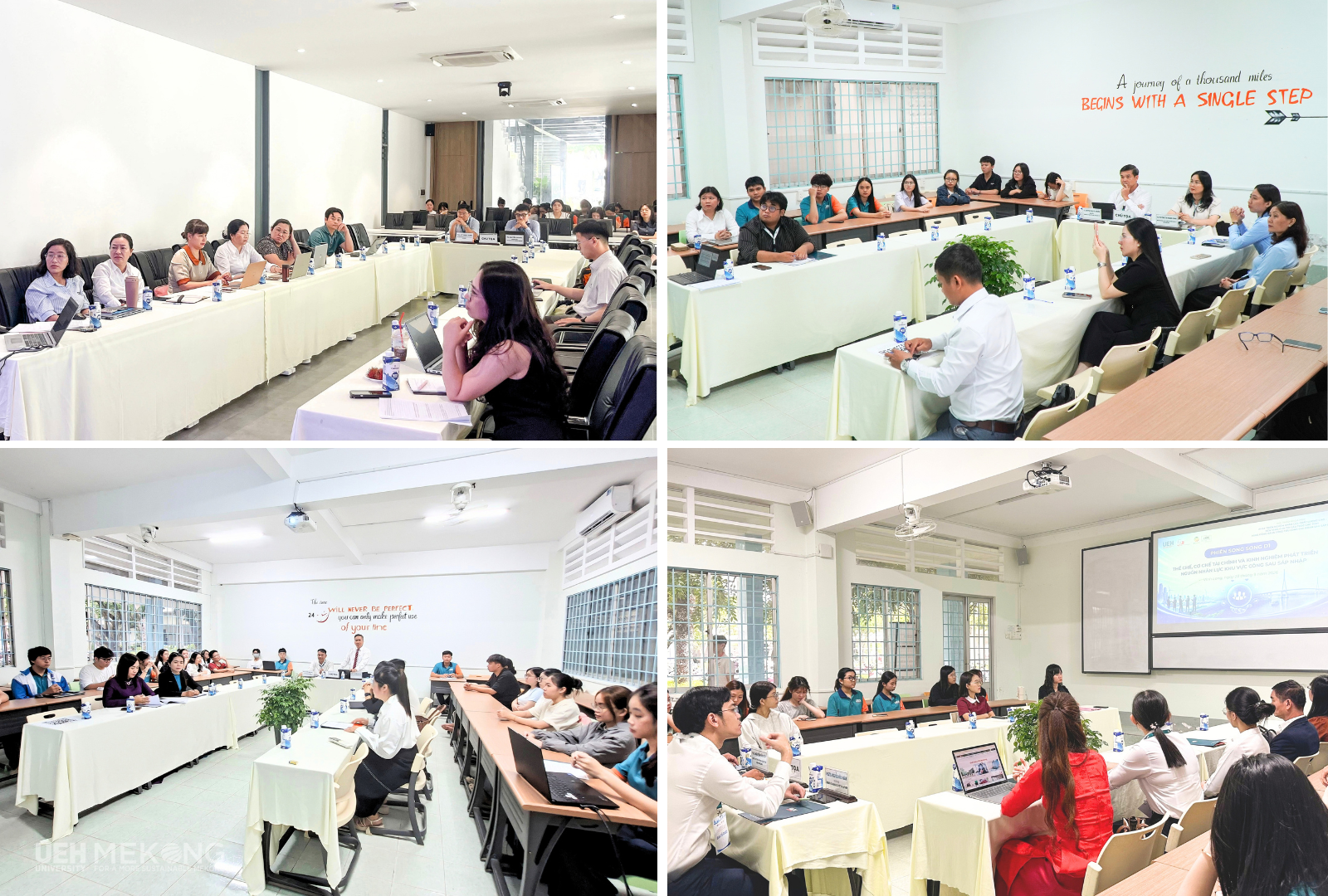
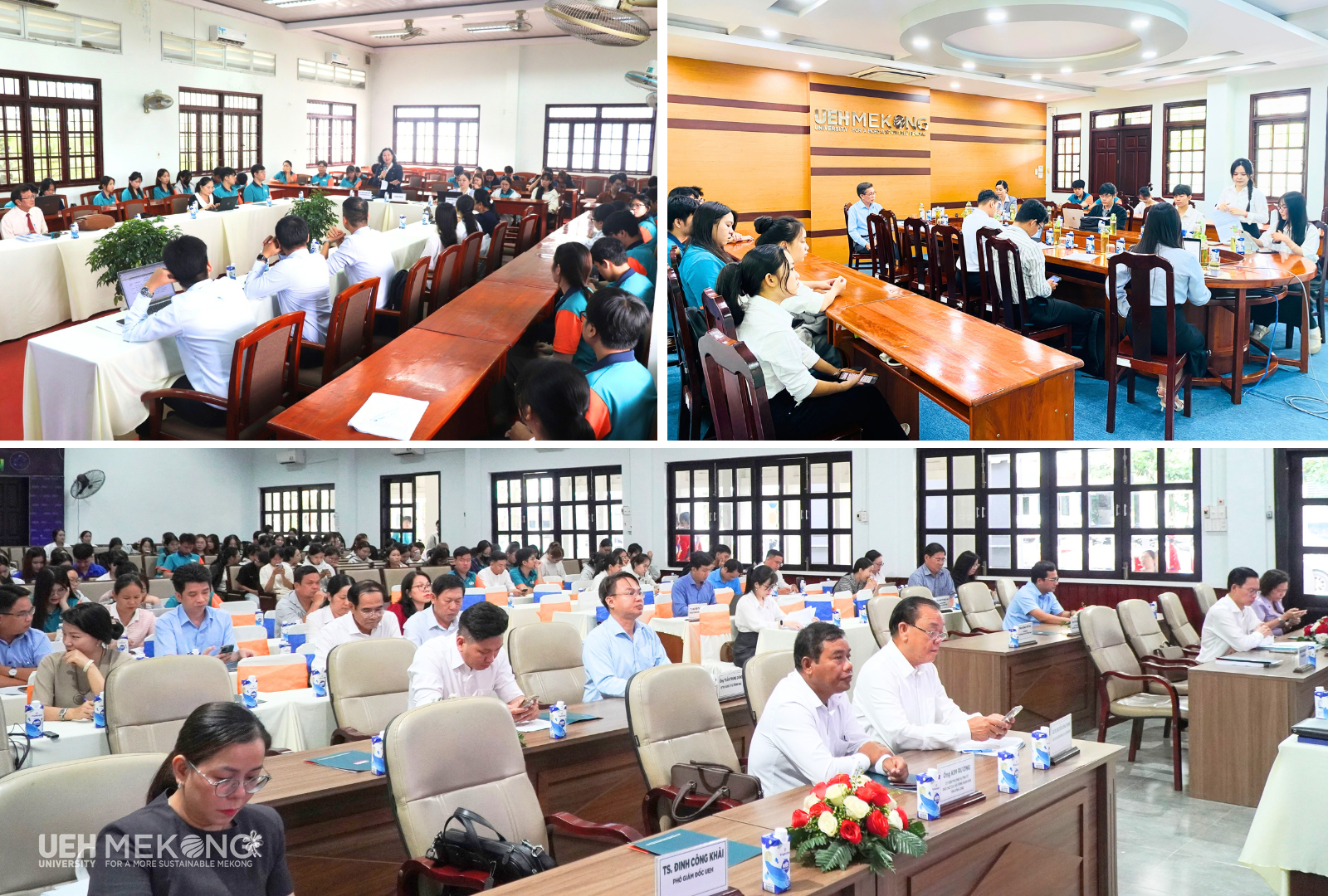
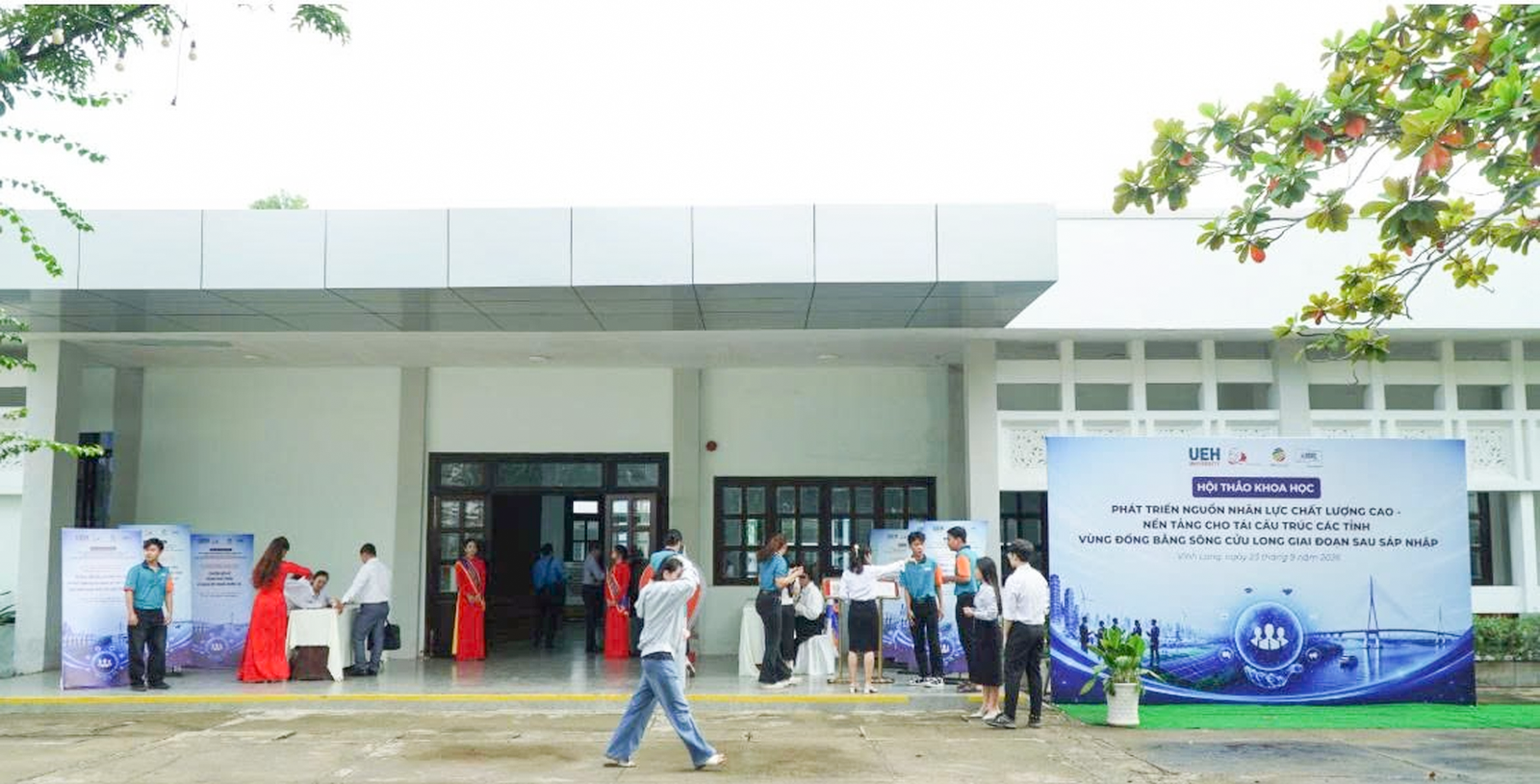
>>> View more photos from the conference: HERE
Pillars: Education, Research, Community Engagement
Article and photos: Faculty of Basic Sciences, Faculty of Business and Management, Department of Admissions and Communications, UEH Mekong
Media coverage:
- Vinh Long Provincial Electronic Information Portal: Developing High-Quality Human Resources – A Foundation for Restructuring Mekong Delta Provinces Following Administrative Mergers
- Vinh Long Newspaper and Radio–Television: Developing High-Quality Human Resources – A Foundation for Restructuring Mekong Delta Provinces Following Administrative Mergers
[THVL] Developing High-Quality Human Resources – A Foundation for Restructuring Mekong Delta Provinces Following Administrative Mergers
- Vietnam News Agency Resident Office in Vinh Long Province: Developing the Mekong Delta Through a High-Quality Human Resource Strategy
- Bnews – Vietnam News Agency: The Mekong Delta Following Administrative Mergers: The Major Challenge of Human Resources
- Bao Moi: Developing High-Quality Human Resources in the Mekong Delta
- Nhan Dan Newspaper: Developing High-Quality Human Resources in the Mekong Delta
- Education and Times Newspaper: Following Administrative Mergers, the Mekong Delta Needs the Right People, the Right Competencies, and the Right Positions
- Dai Doan Ket Newspaper – Central Organ of the Vietnam Fatherland Front: Developing High-Quality Human Resources for Restructuring the Mekong Delta
- News and Ethnic Affairs Newspaper: Developing Highly Skilled Human Resources for the Mekong Delta Under a New Strategy
- Vietnam.vn: Developing Highly Skilled Human Resources for the Mekong Delta Under a New Strategy
- Can Tho Newspaper: Developing Highly Skilled Human Resources for the Mekong Delta Under a New Strategy