[UEH 50] Scientific Conference 2026: “Financial Resources for Green Transition and Sustainable Development in the Mekong Delta Region”
29 Aug, 2026
On August 26, 2026, at Hall A, UEH Mekong (the Vinh Long Campus of the University of Economics Ho Chi Minh City), the University of Economics Ho Chi Minh City (UEH) organized the national scientific conference “Financial Resources for Green Transition and Sustainable Development in the Mekong Delta Region.” The conference was one of the key academic events in a series of activities leading up to UEH’s 50th anniversary.
The conference brought together a large number of researchers, experts, policymakers, representatives of credit institutions, businesses, and relevant stakeholders. A total of 99 research papers were submitted and discussed across one plenary session and eight in-depth parallel sessions. The scale and academic quality of the conference further reaffirmed UEH's academic reputation and capacity to mobilize intellectual resources, while demonstrating the University's consistent commitment to connecting research with policy consultation and practical regional development.
The conference aimed to address three key questions: (1) How can the costs, risks, and benefits of the green transition be shared fairly and appropriately? (2) How can stakeholders improve their access to and capacity to absorb green financing? And (3) how can financial resources be connected to establish a regional financial ecosystem for the green transition? These three questions formed the central framework of the entire conference, from the plenary session to the parallel sessions.
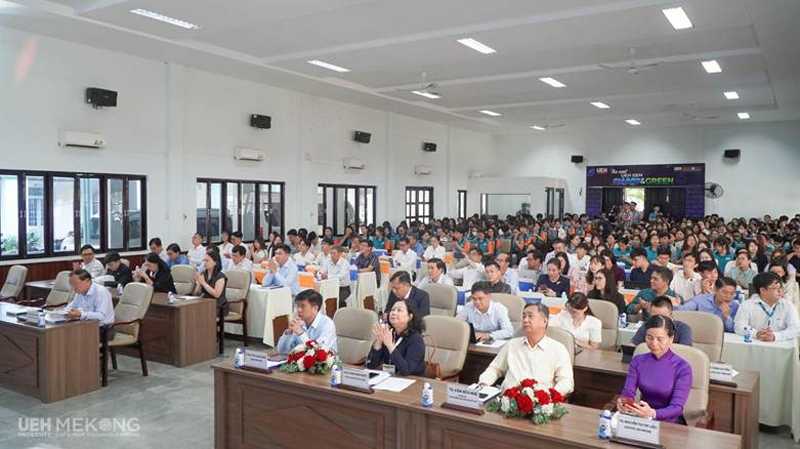
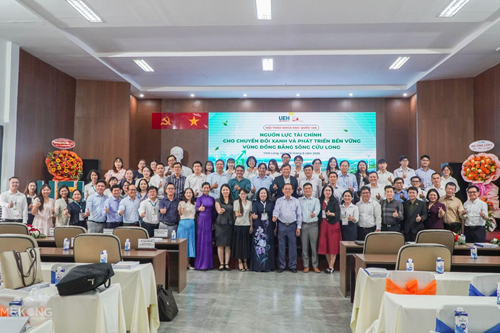
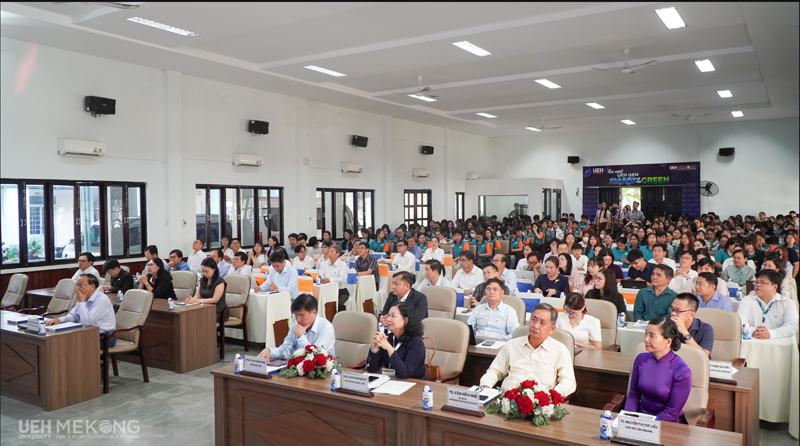
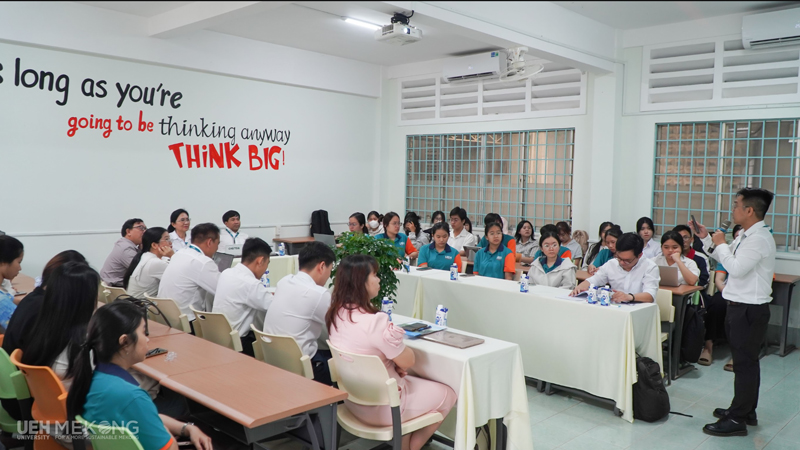
Overview of the conference opening session at Hall A, UEH Mekong
Delivering the welcoming and opening remarks, Assoc. Prof. Dr. Bui Quang Hung, President of UEH, emphasized that the strong participation of delegates not only contributed to the success of the scientific conference but also reflected a shared understanding: the sustainable development of the Mekong Delta requires collective efforts across the entire system. This includes the government's role in establishing institutional frameworks, the financial system's responsibility to design appropriate instruments, businesses' efforts to enhance their financing absorption capacity, producers' opportunities to participate in and benefit from the transition, and universities' contributions through scientific evidence and human resource development.
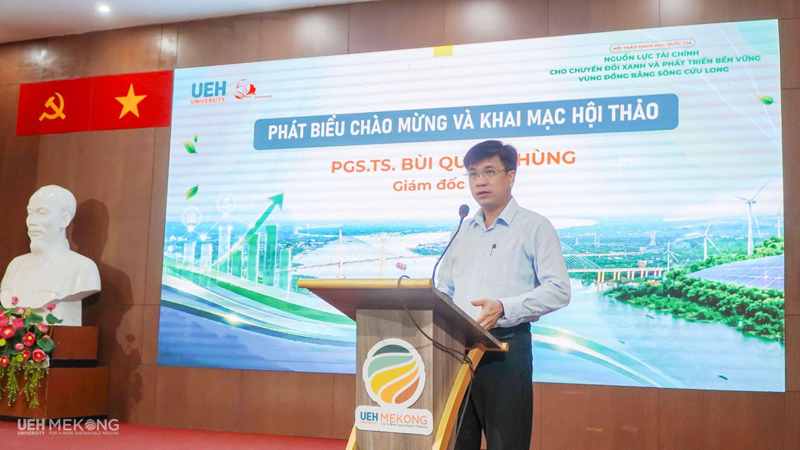
Assoc. Prof. Dr. Bui Quang Hung, President of UEH, delivers the welcoming and opening remarks at the conference

The President of UEH also affirmed that the conference took place at a significant moment as UEH entered its 50th year of development, while the Mekong Delta was embarking on a new development phase marked by changes in its economic landscape, regional connectivity, green transition, and digital transformation. Accordingly, the conference was expected to go beyond academic exchange and generate policy recommendations, collaborative models, applied research projects, and concrete initiatives benefiting businesses and communities across the Mekong Delta.
Building on this message, Assoc. Prof. Dr. Phan Thi Bich Nguyet, Chairwoman of the UEH Alumni Executive Board, delivered the conference's introductory report. She emphasized that investment in the Mekong Delta's green transition extends beyond equipment and technology to include expenditures on data, traceability, certification, training, production restructuring, value chain integration, by-product treatment, and livelihood protection during the initial transition period. Many of these costs must be incurred before the benefits of the transition can be realized.
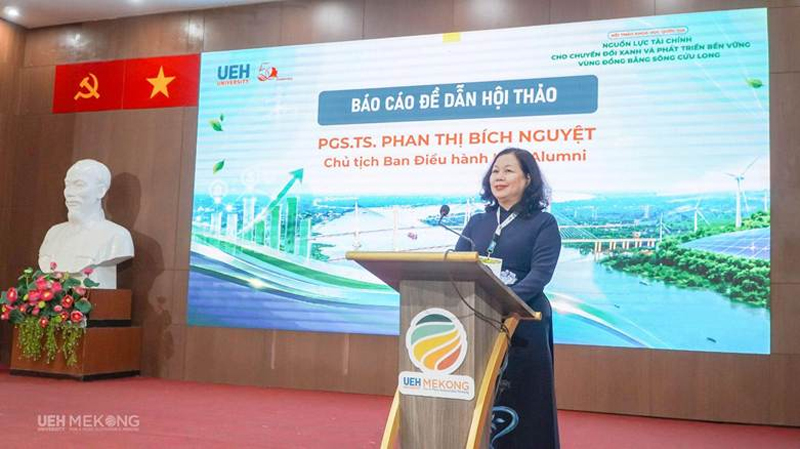
Assoc. Prof. Dr. Phan Thi Bich Nguyet, Chairwoman of the UEH Alumni Executive Board and former Vice Rector of UEH, presents the conference's introductory report
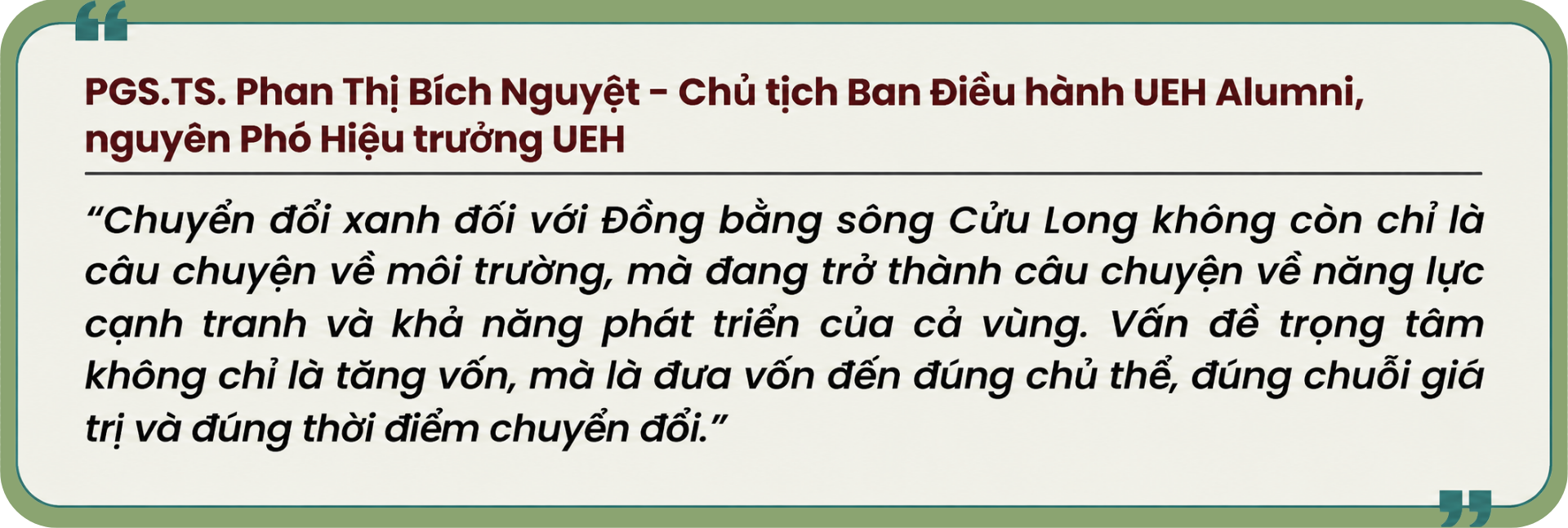
On this basis, the introductory report identified three interconnected approaches guiding the conference: understanding transition costs, strengthening financing absorption capacity, and, more broadly, connecting financial resources at the regional level. These approaches were reflected in the plenary presentations, creating a logical progression from identifying the costs and risks of the green transition to improving access to and absorption of financing, and ultimately establishing mechanisms to connect financial resources within a regional green transition financing ecosystem.
The presentations at the plenary session examined the green transition from three closely interconnected perspectives: cost-sharing mechanisms at the production level, financing absorption capacity at the business level, and blended climate finance at the regional level.
Dr. Van Huu Hue, Deputy Director of the Vinh Long Department of Agriculture and Environment, opened the session with a presentation entitled “Cost-Sharing Mechanisms for the Green Transition in Agriculture in Vinh Long Province: Perspectives from Sustainable Finance, ESG, and Just Transition.” The presentation emphasized the need for a fair and appropriate allocation of costs, benefits, and risks among government, businesses, cooperatives, and farmers. It highlighted that the green transition in agriculture must simultaneously address three dimensions: economic efficiency, environmental sustainability, and equity in participation and access to the benefits of the transition.
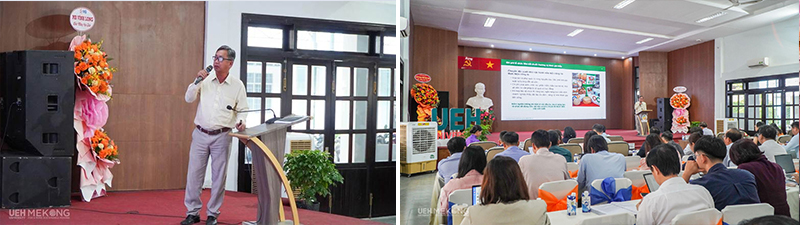
Dr. Van Huu Hue, Deputy Director of the Vinh Long Department of Agriculture and Environment, presents his paper at the plenary session
Next, Dr. Pham Minh Tri, State Bank of Vietnam – Regional Branch 14, presented a paper entitled “Digital Financial Literacy and Green Credit Access among SMEs in Vinh Long: The Moderating Roles of ESG and Greenwashing Risks.” The study demonstrated that expanding green credit depends not only on the availability of capital from credit institutions but also on businesses' digital financial capabilities, the quality of their ESG practices, information transparency, and ability to meet green financing criteria. These factors must be considered when designing support programs that help small and medium-sized enterprises access financing for the transition.
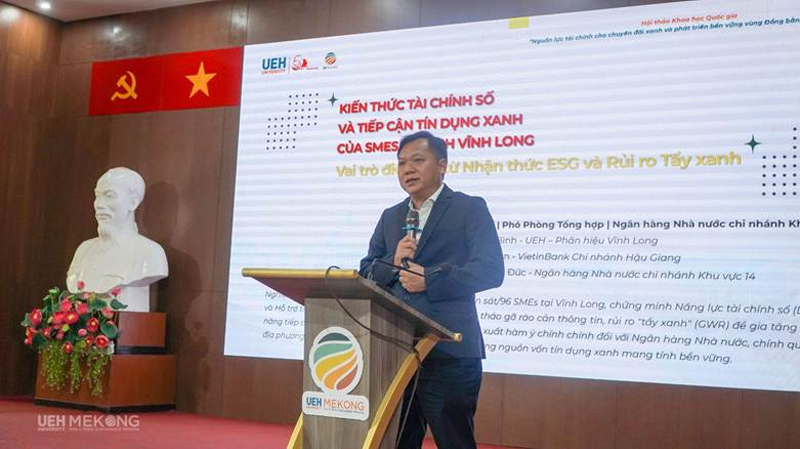
Dr. Pham Minh Tri, State Bank of Vietnam – Regional Branch 14, presents his research on digital financial literacy and green credit access among SMEs
Continuing the discussion from a financial and business perspective, Dr. Nguyen Thi Thuy Lieu, Director of UEH Mekong, presented the topic “Blended Climate Finance for the Green Transition of Agricultural and Aquaculture Value Chains in the Mekong Delta toward Net Zero.” The presentation explored how different financing sources could be combined to mitigate risks and improve capital mobilization for the green transition. Under this approach, public funding and development finance could serve as catalysts, improving project feasibility and helping attract additional private investment into the region's agricultural and aquaculture value chains.
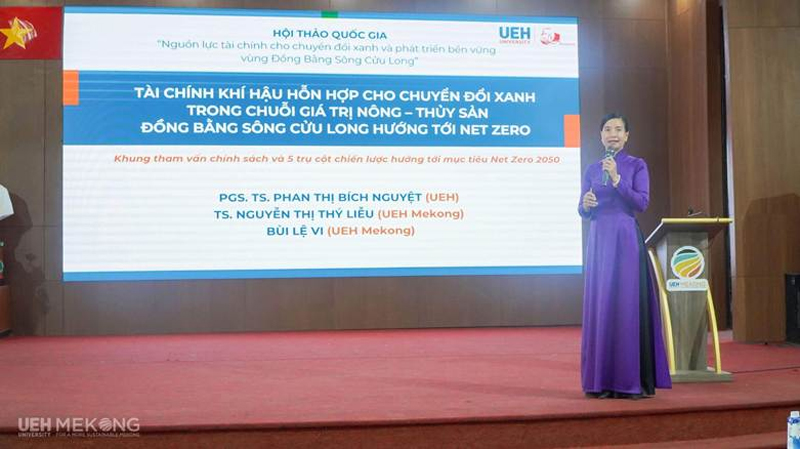
Dr. Nguyen Thi Thuy Lieu, Director of UEH Mekong, presents her paper at the plenary session
The subsequent discussion session created a platform for multilateral dialogue among researchers, government agencies, credit institutions, and practitioners. Discussions focused on businesses' and cooperatives' access to green credit, collateral requirements, criteria for identifying green projects, risk-sharing mechanisms, transparency in ESG information, and the capacity to implement and manage transition projects.
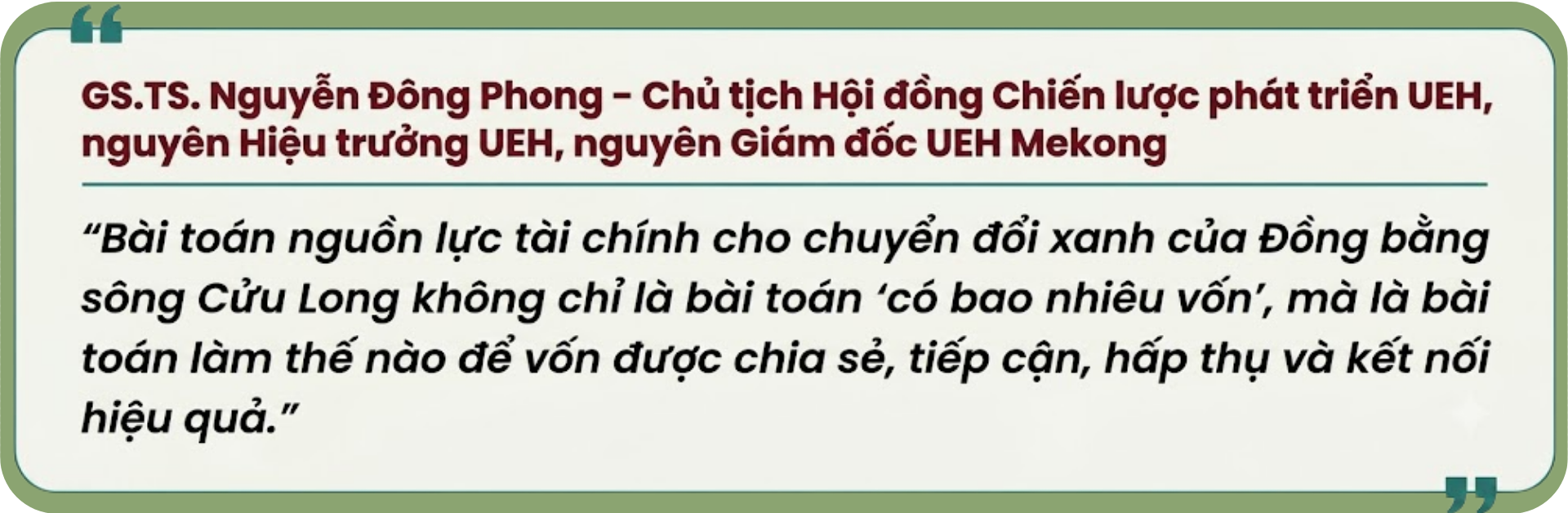
Concluding the plenary session, Prof. Dr. Nguyen Dong Phong, Chairman of the UEH Development Strategy Council, emphasized: “The challenge of mobilizing financial resources for the Mekong Delta's green transition is not simply about how much capital is available, but how that capital can be effectively shared, accessed, absorbed, and connected.” Accordingly, green finance policies must simultaneously address capital supply, project quality, data, governance capacity, and risk-sharing mechanisms among stakeholders.
Prof. Dr. Nguyen Dong Phong summarized the three presentations as a coherent progression: from fairly sharing costs and risks, to strengthening access to and absorption of financing, and finally connecting financial resources to establish a regional green transition financing ecosystem. Such an ecosystem should extend beyond banks and credit institutions to include public finance, capital markets, FinTech, international climate finance, ESG, green data, and carbon markets.
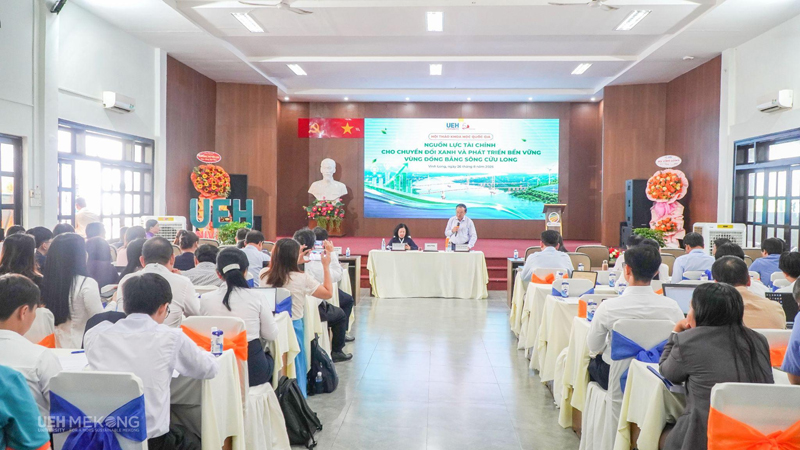
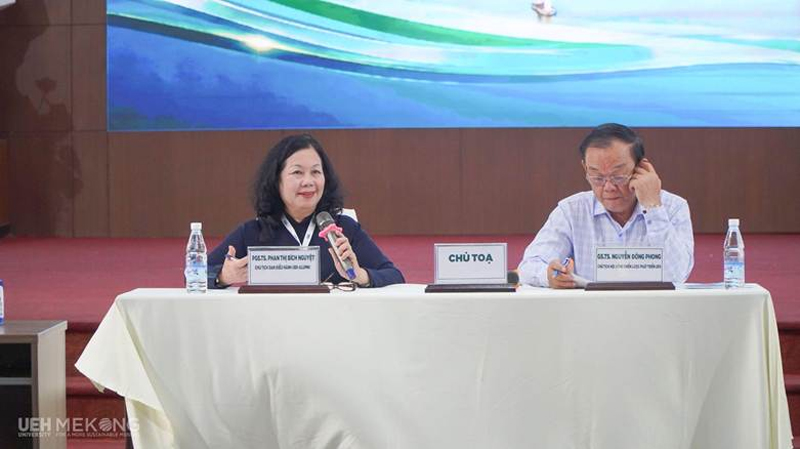
The session chairs facilitate discussions and exchanges during the plenary session
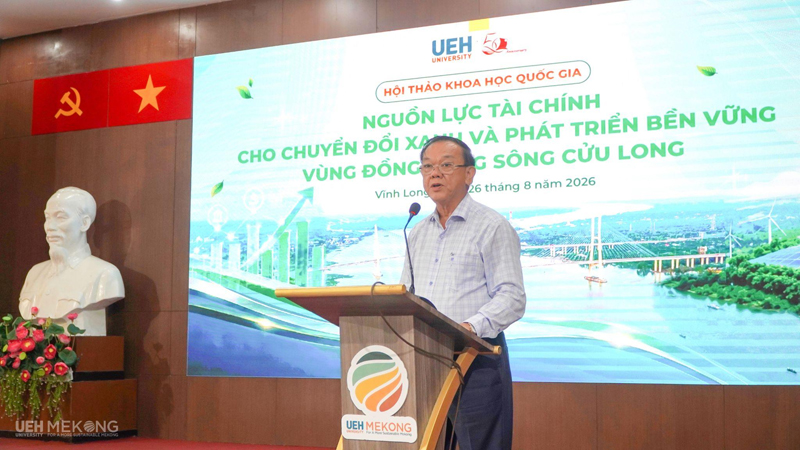
Prof. Dr. Nguyen Dong Phong, Chairman of the UEH Development Strategy Council, delivers the concluding remarks at the conference's plenary session
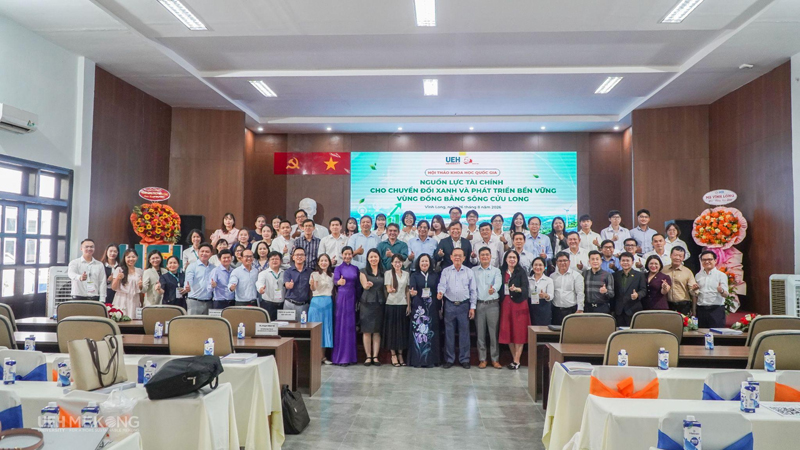
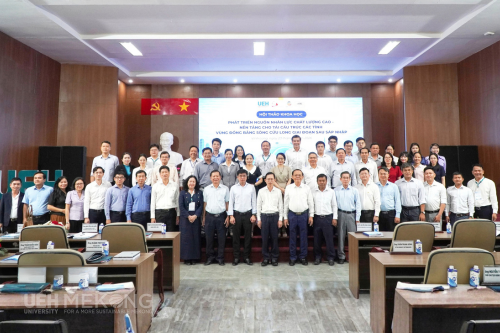
Conference delegates take commemorative group photos at the plenary session
Following the plenary session, the conference proceeded with eight parallel sessions organized under four themes. Discussions expanded from institutional frameworks and public finance to financial markets, businesses, agricultural value chains, ESG, and just transition, forming an interconnected framework supporting the region's green finance ecosystem.
Theme 1 – Institutional Frameworks and Public Finance Instruments for the Green Transition
This theme comprised two parallel sessions examining the role of government from multiple perspectives, including public investment efficiency, land finance, local fiscal autonomy, environmental governance, international climate finance, official development assistance (ODA), and access to the Green Climate Fund. Notably, the discussions moved beyond the question of “how much capital is needed” toward “how institutions should be designed to mobilize and effectively utilize financial resources.” This is particularly important because access to international financing depends on legal frameworks, project development capacity, and governance mechanisms.
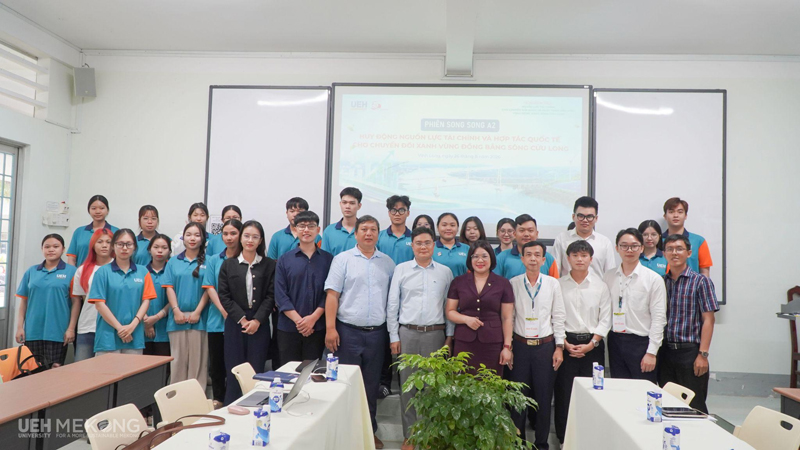
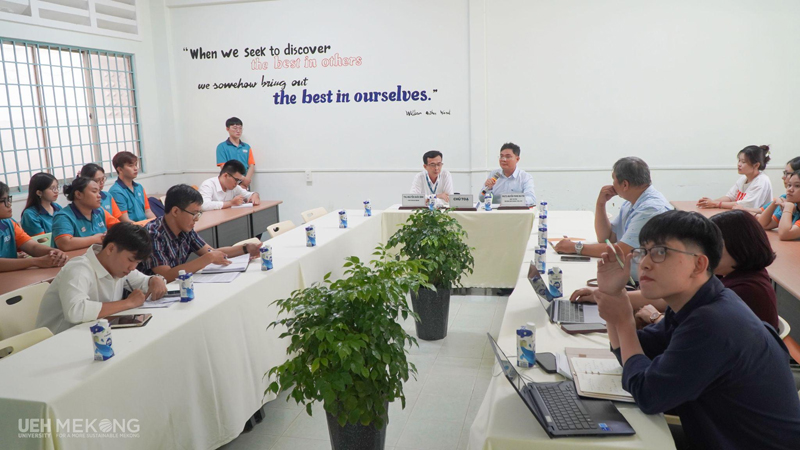
Assoc. Prof. Dr. Nguyen Phong Nguyen, Rector of the UEH College of Business, and Mr. Nguyen Quoc Binh, MA, UEH Mekong, co-chair a parallel session on financial resource mobilization and international cooperation for the green transition in the Mekong Delta
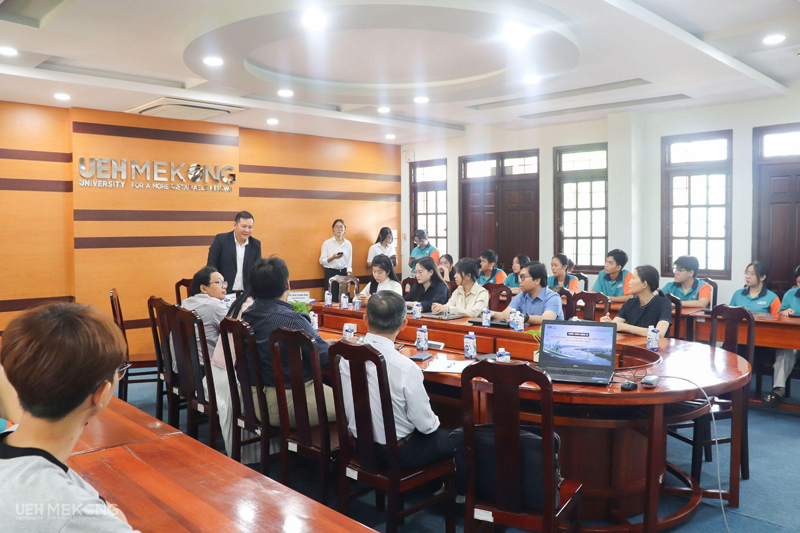
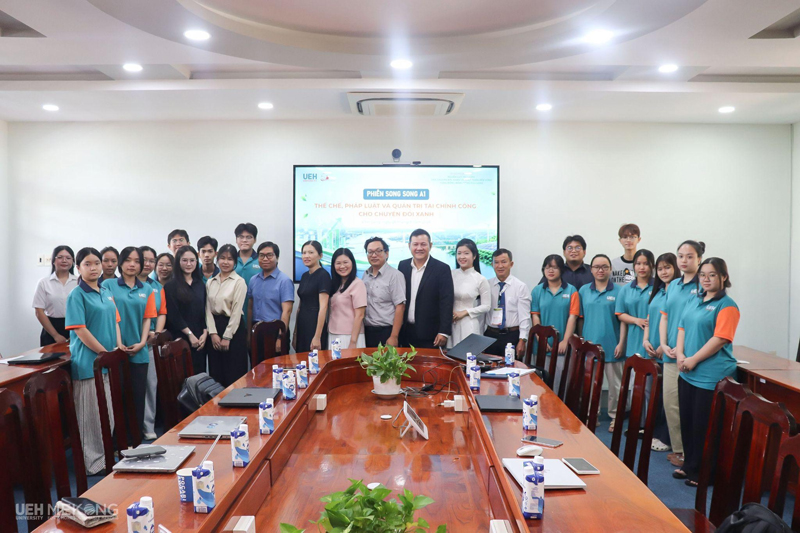
Dr. Tran Trung Kien, Director of the Taxation Undergraduate Program at the School of Public Finance, UEH College of Economics, Law and Government, and Ms. Tran Thi Anh Hong, MA, UEH Mekong, co-chair a parallel session on institutional frameworks and public financial governance for the green transition
Importantly, the discussions did not focus solely on how much capital was required. Instead, they emphasized how institutional frameworks should be designed to mobilize and effectively utilize financing. This issue is particularly relevant to international financial resources, where access depends on legal frameworks, project development capabilities, governance mechanisms, and compliance with funding requirements.
Theme 2 – Finance, Banking, FinTech, and Capital Markets for the Green Transition
This theme comprised two parallel sessions: “Risk Management and Enhancing Corporate Financial Resilience” and “Green Credit, Digital Transformation, and Financial Resources for the Green Transition.” Research presented in the first session examined the relationships among financial flexibility, financial constraints, policy uncertainty, market discipline, and risk-taking behavior among businesses and banks. Financial resilience was therefore considered an essential condition for businesses to maintain their investment capacity and adapt throughout the transition.
Meanwhile, the second session expanded the discussion to green credit, carbon credit markets, FinTech, and digital transformation. Presentations examined green credit in commercial banking, barriers and development pathways for carbon credits in the Mekong Delta, FinTech applications in green finance and financial inclusion, and the relationship between digital transformation and local economic development.
These discussions demonstrated that technology should be viewed not only as a tool for improving transaction efficiency but also as a means of supporting data collection, increasing transparency, reducing information asymmetry, and expanding access to green financial products.
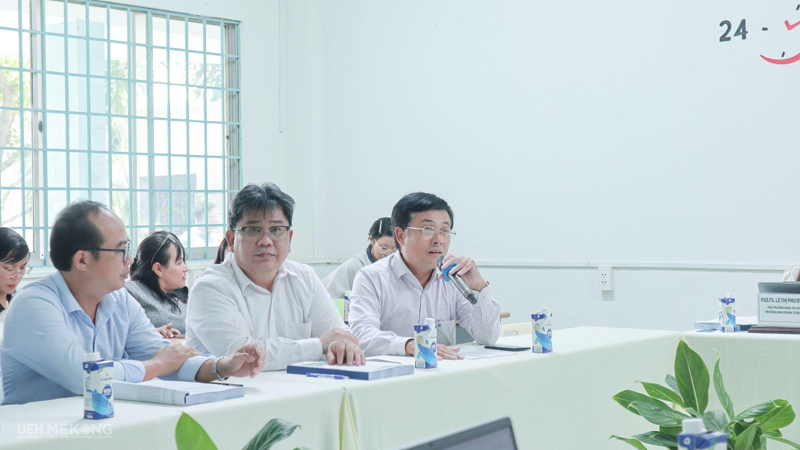
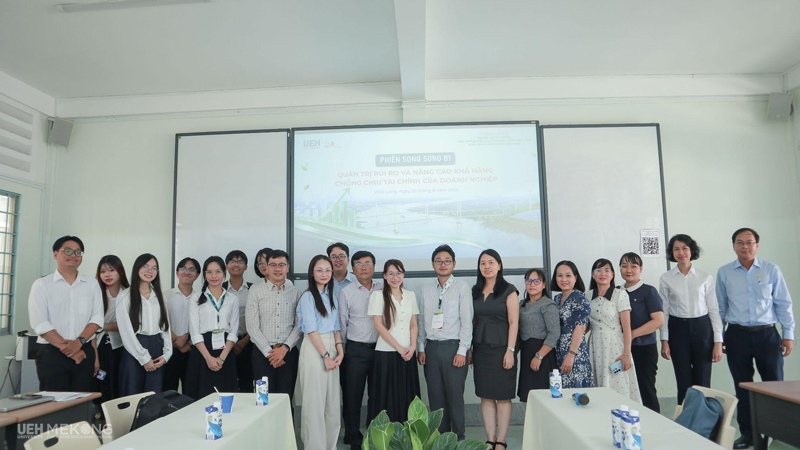
Assoc. Prof. Dr. Le Thi Phuong Vy, Deputy Dean of the School of Finance, UEH College of Business, and Mr. Nguyen Hoang Long, MA, UEH Mekong, co-chair a parallel session on risk management and enhancing corporate financial resilience
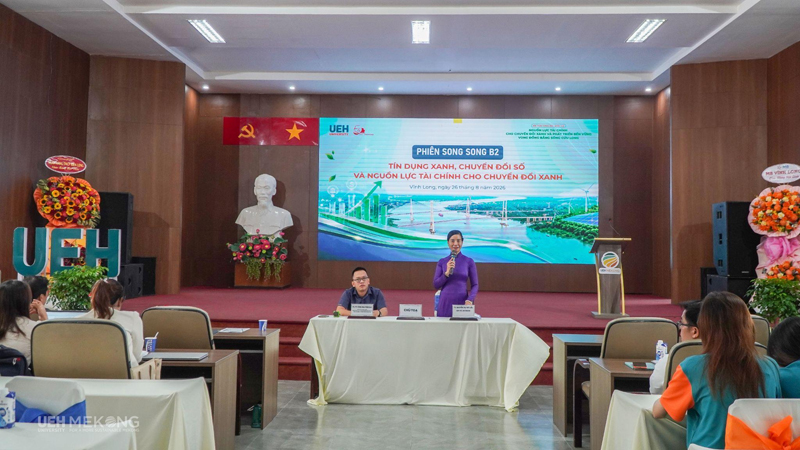
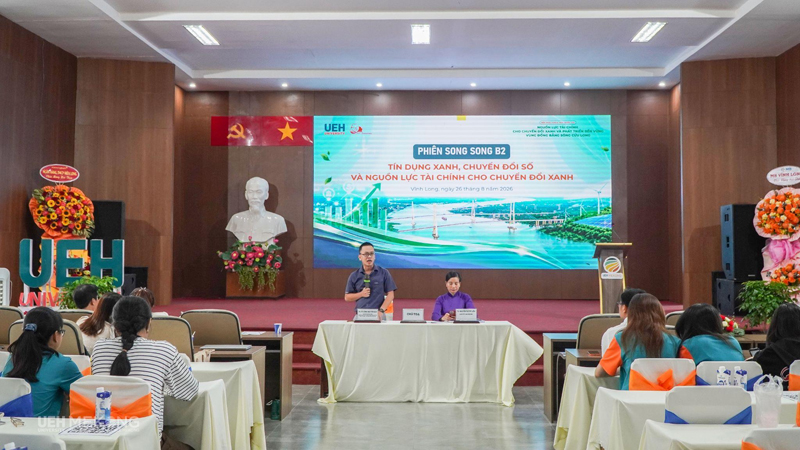
Dr. To Cong Nguyen Bao, Director of the International Dual-Degree Undergraduate Program, and Dr. Nguyen Thi Thuy Lieu, Director of UEH Mekong, co-chair a parallel session featuring in-depth discussions on green credit, carbon credits, digital transformation, and FinTech
Theme 3 – Financing Economic Transformation and Sustainable Agriculture
The two parallel sessions under Theme 3 focused on “Green Finance and Financial Mechanisms for Transforming the Mekong Delta toward a Sustainable Economic Model” and “Green Finance for Agriculture and Sustainable Value Chains in the Mekong Delta.”
Presentations directly addressed financial mechanisms supporting businesses' transition toward circular economic models, the role of green finance in sustainable growth, resource mobilization for industries with development potential in the region, green investment among small and medium-sized enterprises, FinTech applications in climate-adaptive agriculture, and factors affecting the adoption of green economic models by businesses.
One notable direction emerging from these studies was the need to gradually shift from financing individual projects toward value chain- and ecosystem-based financing. In the Mekong Delta, this approach would connect production, processing, logistics, trade, and consumption within an integrated transition process, thereby enhancing value creation and strengthening the competitiveness of the region's agricultural and aquaculture products.
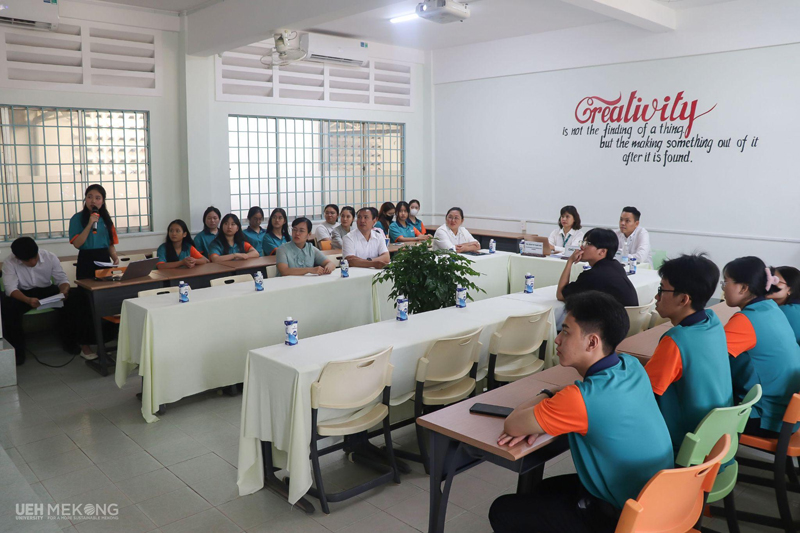
Ms. Doan Thi Thanh Hoa, MA, Deputy Head in charge of the Course Module Group, and Mr. Nguyen Dang Khoa, MA, UEH Mekong, co-chair a parallel session on financial mechanisms and the role of finance in transforming the Mekong Delta toward a sustainable economic model
Ms. Truong Thi Nhi, MA, Deputy Dean in charge of the Faculty, and Dr. Le Hoang Phuc, Faculty of Finance and Accounting, UEH Mekong, co-chair a parallel session on green finance for agriculture, the circular economy, and sustainable value chains
Theme 4 – Sustainable Finance, ESG, and Just Transition
This theme comprised two parallel sessions: “Strengthening Green Accounting Frameworks and Financial Mechanisms for Sustainable Agricultural Development” and “Just Transition, Resource Mobilization, and Regional Development Drivers.”
Presentations focused on substantive ESG practices, green accounting, digital transformation in accounting, the cost of capital, ESG data systems, sustainability information verification, and public financial resources for achieving Net Zero. Particular attention was given to the practical implementation of ESG in mobilizing green finance, the role of accounting digitalization in supporting ESG and green finance, and the impact of ESG on business performance and the cost of capital in the region's agricultural and aquaculture sectors.
The discussions also extended to public financing for Net Zero objectives, businesses' access to financial resources, and ESG data systems supporting the verification of sustainability information.
These exchanges highlighted that data quality, transparency, and verifiability are becoming increasingly important conditions for sustainable financial markets. At the same time, the green transition must be inclusive, ensuring that small businesses, cooperatives, producers, and groups particularly vulnerable to its impacts have opportunities to access resources and participate in new development models.
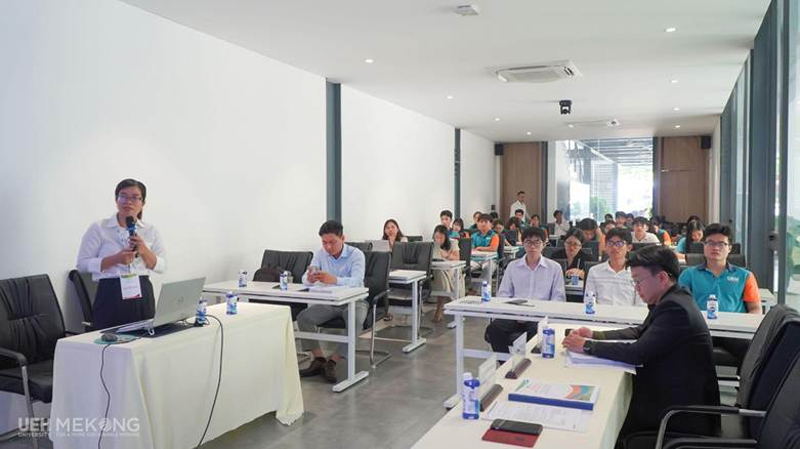
Assoc. Prof. Dr. Trinh Hiep Thien, Director of the Corporate Accounting Program at the School of Accounting, UEH College of Business, and Ms. Nguyen Hong Nga, MA, UEH Mekong, co-chair a parallel session on green accounting frameworks and accounting digitalization to promote ESG practices
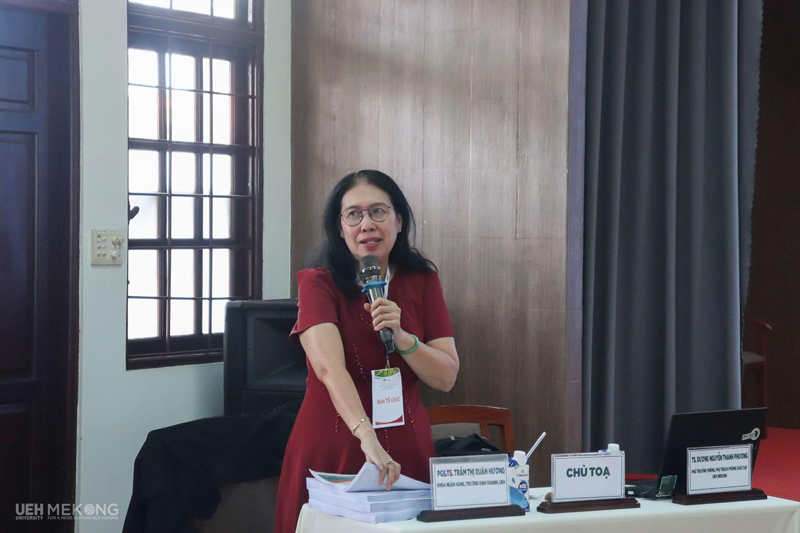
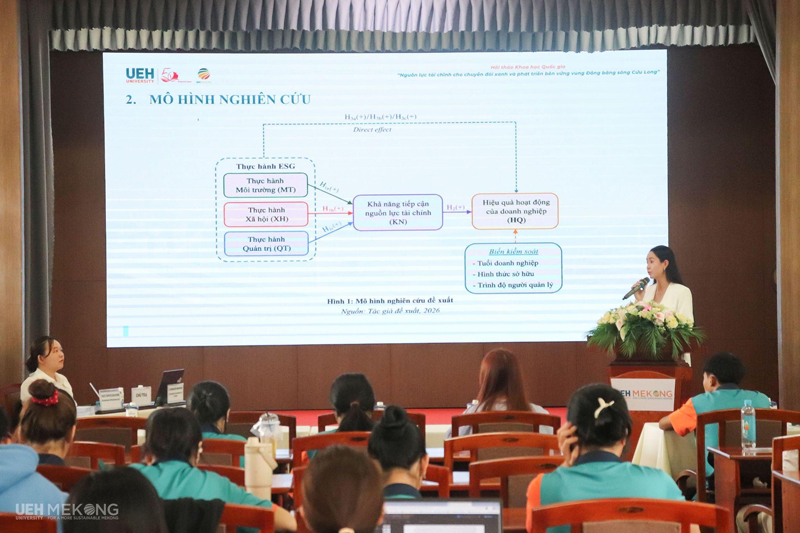
Assoc. Prof. Dr. Tram Thi Xuan Huong and Dr. Duong Nguyen Thanh Phuong co-chair a session discussing research on ESG, green accounting, sustainability data, and just transition
FOUR POLICY RECOMMENDATIONS FOR THE MEKONG DELTA
Drawing on the presentations and discussions, the conference identified four key policy directions for mobilizing financial resources to support the Mekong Delta's green transition.
First, strengthening institutional frameworks and financing absorption capacity. Expanding financial resources must go hand in hand with improving legal frameworks, green criteria, project development capabilities, information transparency, and coordination mechanisms across different levels of government.
Second, utilizing public resources effectively to guide and mobilize private investment. Rather than relying solely on government budgets, public investment, official development assistance (ODA), and climate finance should play a catalytic role in gradually sharing risks and creating favorable conditions for attracting commercial capital into sectors that generate positive environmental and social impacts.
Third, developing a data- and technology-driven green finance ecosystem. Green credit, FinTech, digital transformation, carbon credit markets, ESG data, and measurement and verification tools should be developed in a coordinated manner to reduce information asymmetry and improve transparency in financial flows.
Fourth, ensuring an inclusive and equitable transition. The costs of the transition must not fall disproportionately on any single stakeholder group. Financial mechanisms should enable businesses, cooperatives, farming households, and affected communities to develop the capacity to participate, adapt, and benefit from emerging economic opportunities.
FROM KNOWLEDGE TO POLICY IMPACT AND PRACTICAL APPLICATION – UEH CONTRIBUTES TO THE SUSTAINABLE DEVELOPMENT OF THE MEKONG DELTA
The year 2026 holds special significance for UEH as the University celebrates 50 years of establishment and development. From an institution specializing in economics, UEH has evolved into a multidisciplinary university committed to research, innovation, international integration, and sustainable development, having educated nearly 300,000 learners across generations. UEH's international standing has continued to strengthen. In 2025, the University was ranked among the world's Top 301–400 institutions in the Times Higher Education Impact Rankings for its contributions to the United Nations Sustainable Development Goals (SDGs), ranking first in Vietnam and among the world's Top 9 for SDG 8 – Decent Work and Economic Growth. In 2026, UEH maintained its position among the Top 15 universities in Southeast Asia, achieving the highest ranking among Vietnamese representatives. These achievements represent not only a source of pride but also a greater responsibility: ensuring that knowledge creates meaningful value and real-world impact for society.
Within this strategy, UEH Mekong plays a particularly important role. Established in late 2019 and officially repositioned as UEH Mekong in 2025, the institution is envisioned as a reputable regional center for education and research, connecting government agencies, experts, researchers, businesses, and communities in collective action “For a Sustainable Mekong Delta.” UEH Mekong not only brings UEH's academic programs closer to learners in the region but also aims to become a regional knowledge hub, a platform connecting stakeholders, a center for researching practical challenges facing the Mekong Delta, a bridge between global knowledge and local action, and, most importantly, a trusted partner accompanying governments, businesses, and communities throughout the region's development.
This conference provided a concrete demonstration of that role. With 99 research papers, one plenary session, and eight in-depth parallel sessions, it helped identify institutional, financial, and governance bottlenecks affecting the Mekong Delta's green transition, including limitations in access to and absorption of financing, risk management, data, technology, and implementation capacity. More importantly, the value of the conference extended beyond the number of research papers presented. It also lay in its ability to foster connections among Government – Researchers – Businesses – Financial Institutions, creating opportunities to translate research findings into evidence-based policy recommendations and practically applicable initiatives.
As part of UEH's 50-year development journey, the conference further reaffirmed the University's position as a reputable institution committed to creating meaningful impact, while highlighting UEH Mekong's role as a bridge connecting knowledge, policy, markets, and communities in southwestern Vietnam. The conference outcomes are expected to generate impact in four specific areas: translating research into policy recommendations; promoting applied research and pilot models; enhancing governance, data, digital finance, and ESG capabilities among businesses and cooperatives; and connecting experts, financial institutions, and partners to mobilize resources for the region's green initiatives. These efforts represent meaningful contributions from UEH and UEH Mekong during the University's 50th anniversary year, accompanying the Mekong Delta toward a future that is greener, more resilient, and more inclusive.
Additional photos from the conference
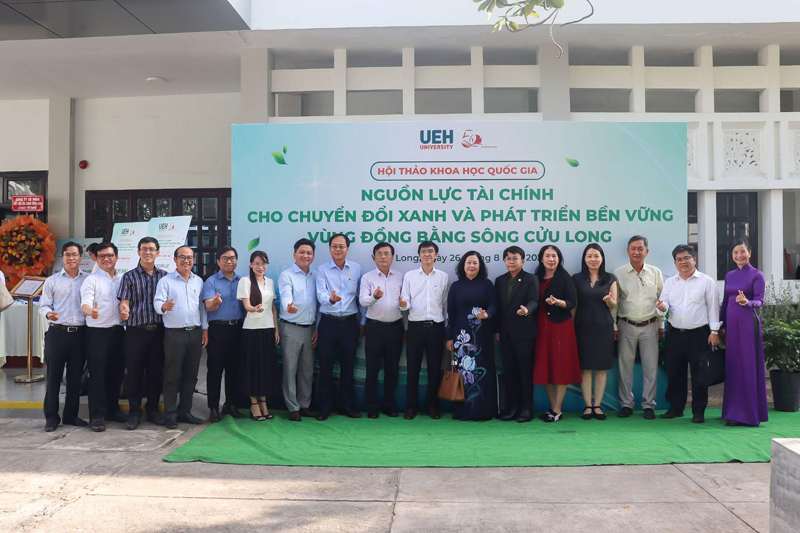
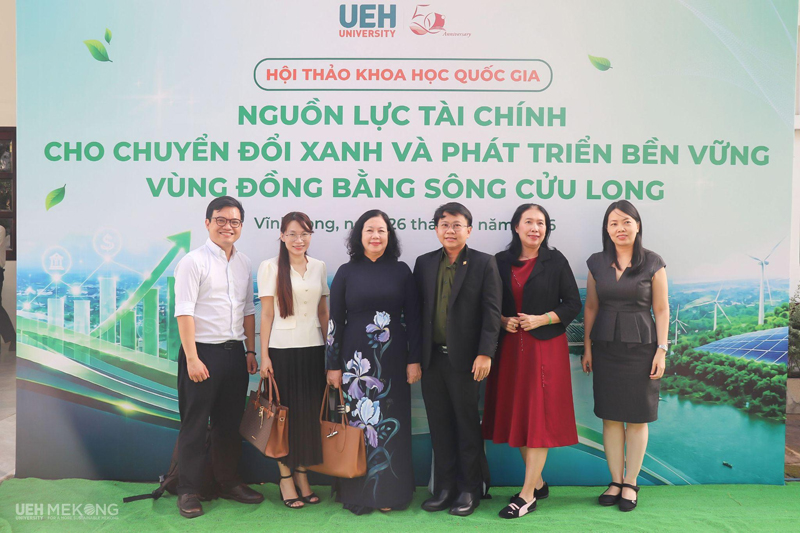
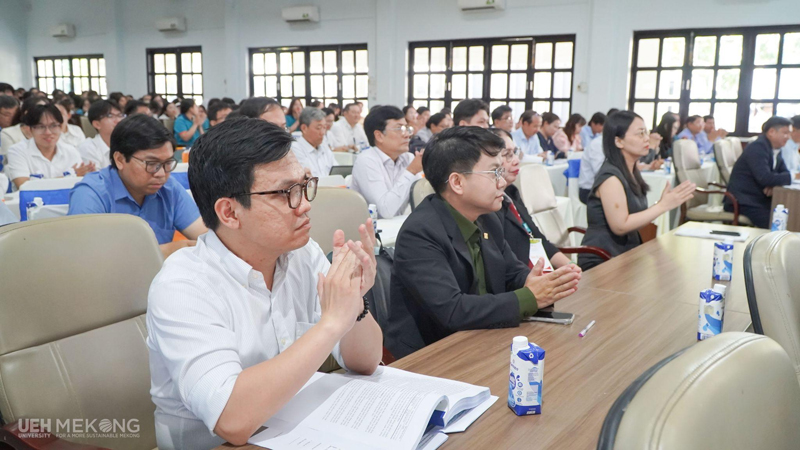
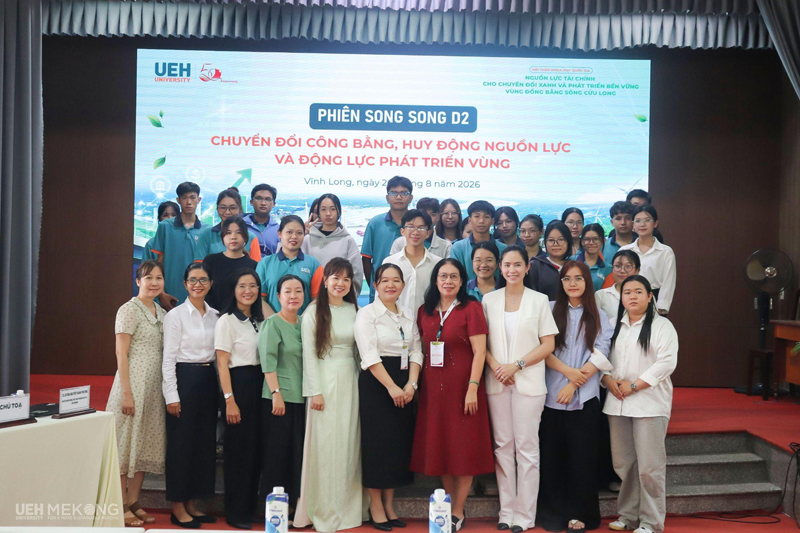
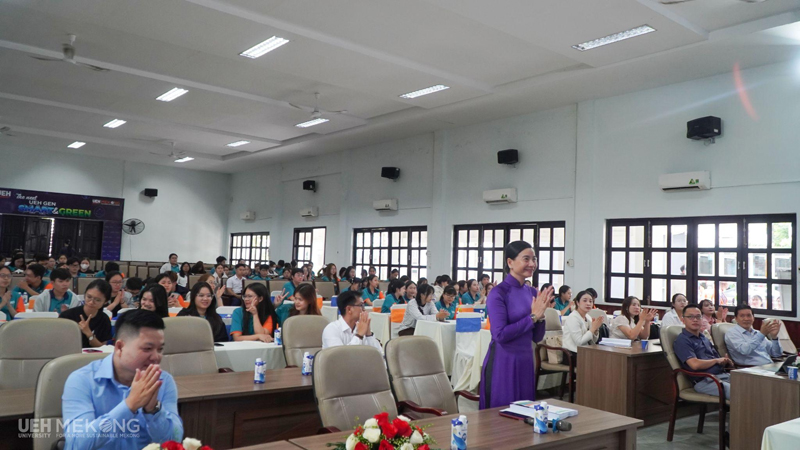
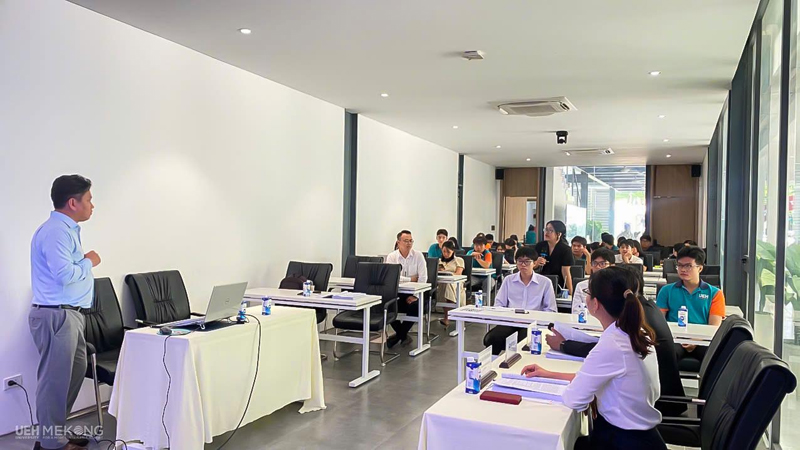
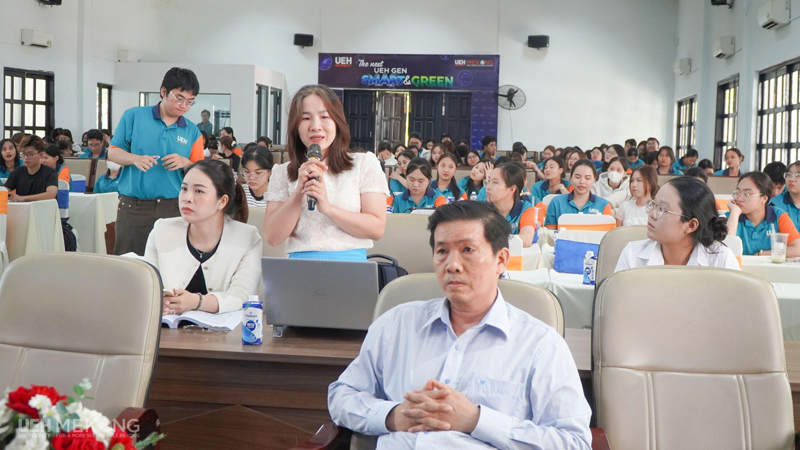
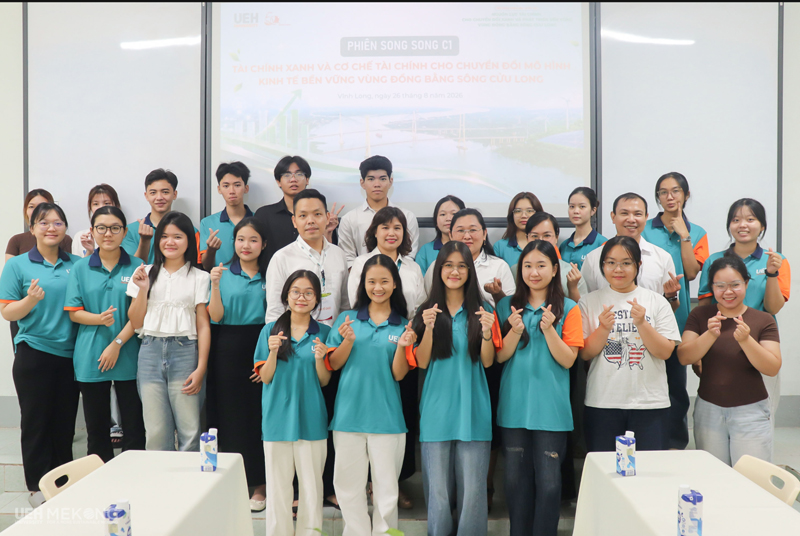
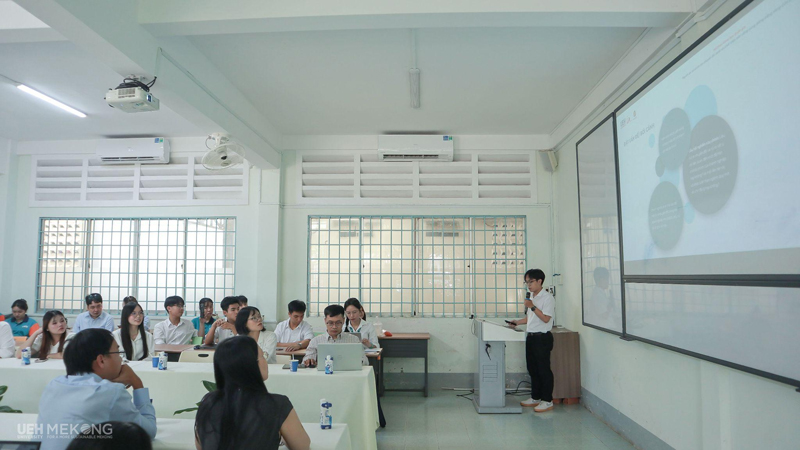
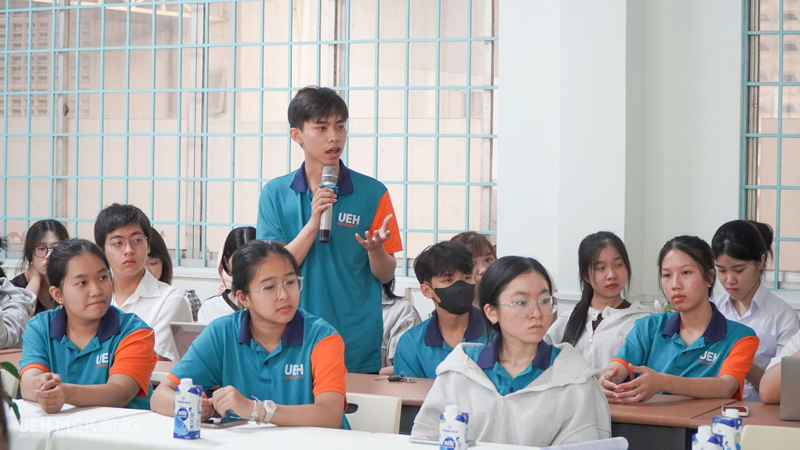
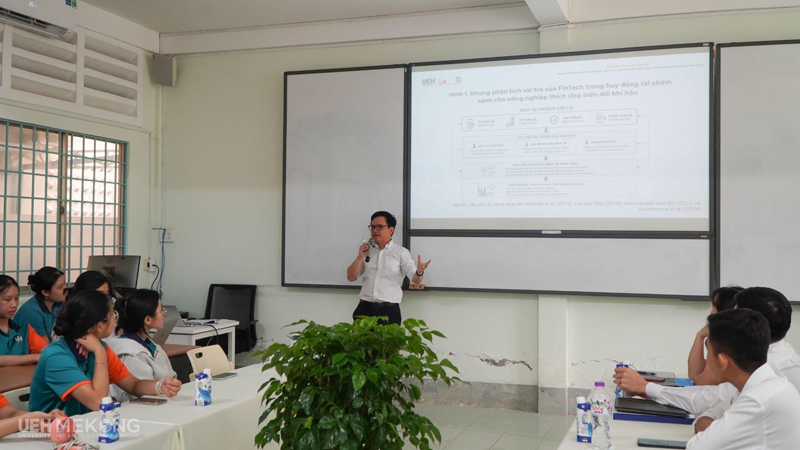
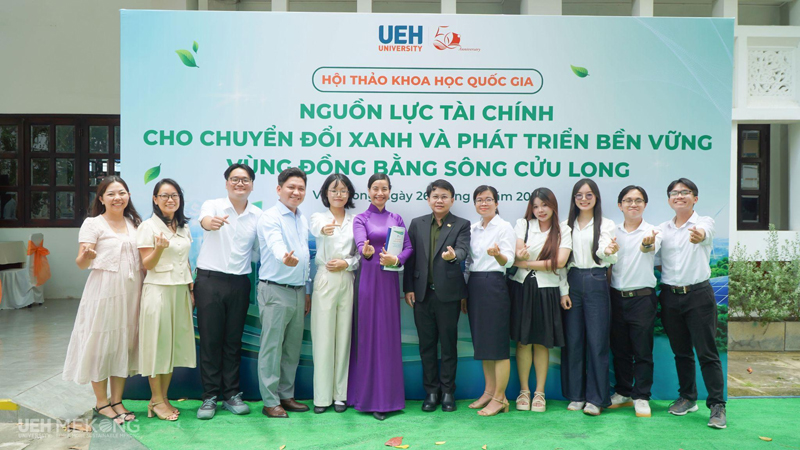
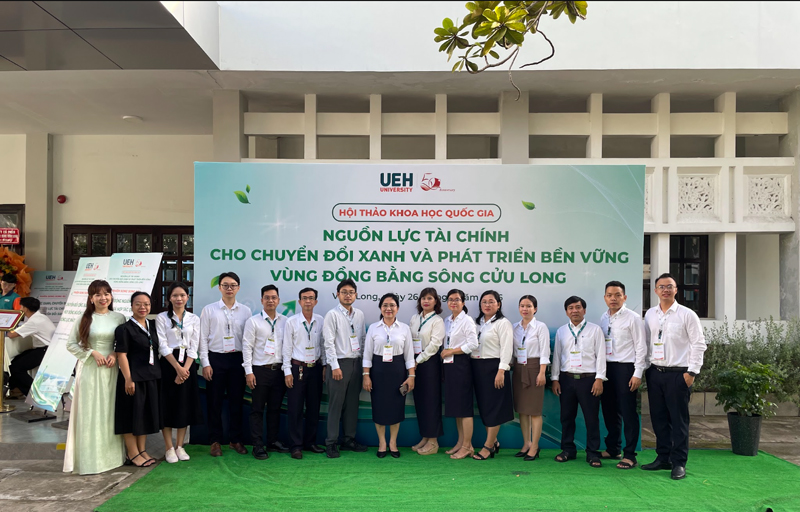
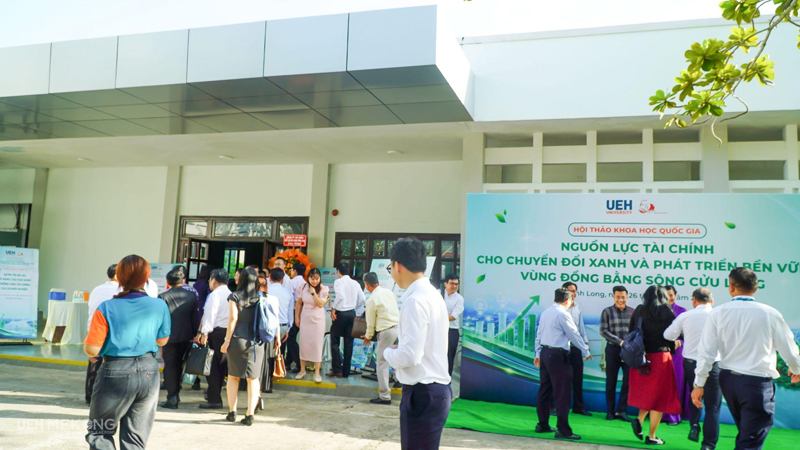

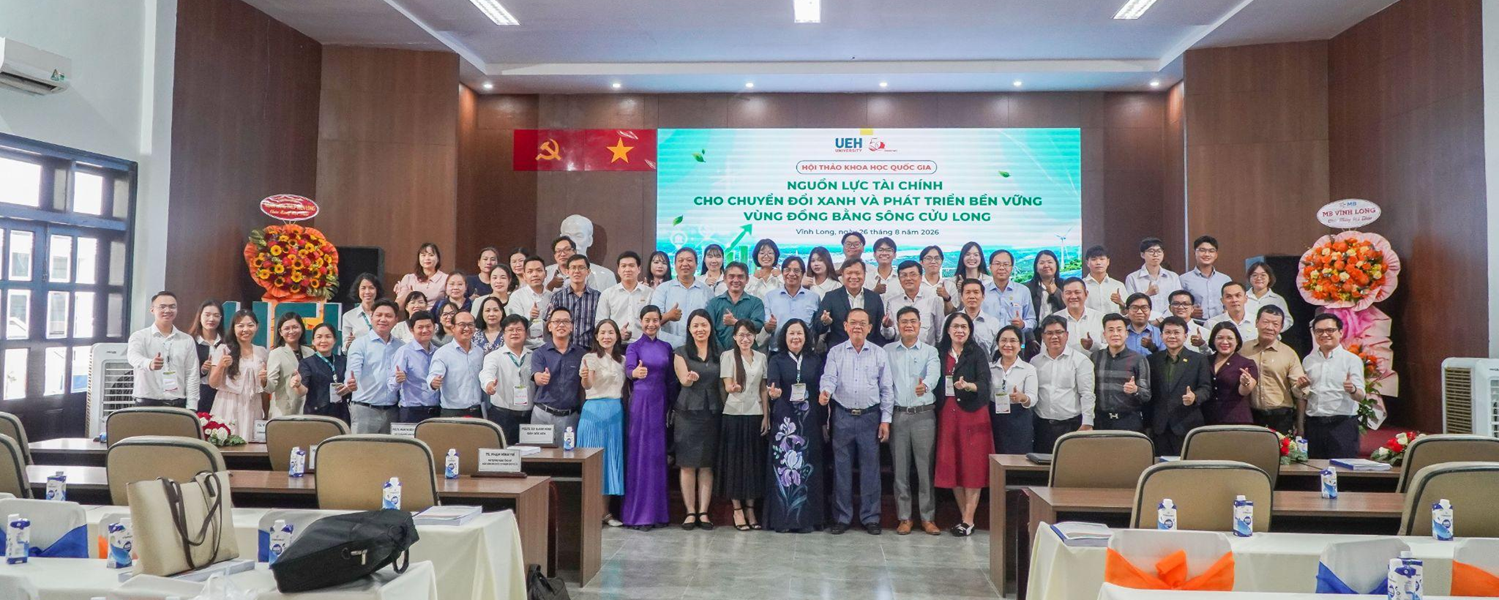
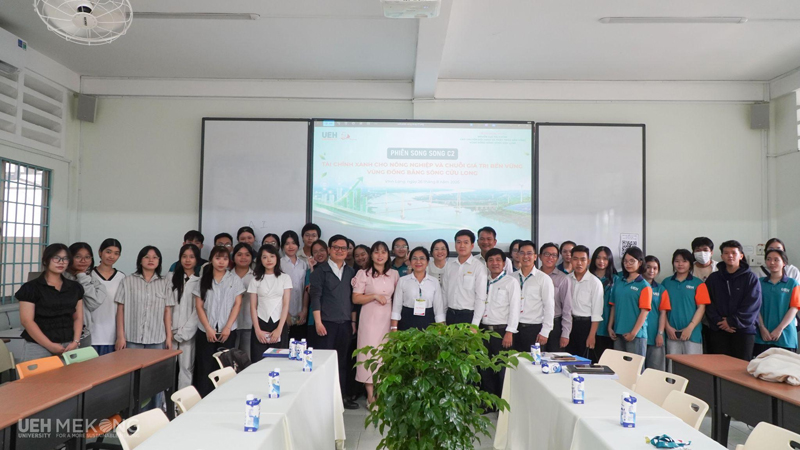
The Organizing Committee, speakers, researchers, and conference delegates take commemorative group photos
Article and photos: UEH College of Business (School of Finance, School of Banking, School of Accounting, School of Public Finance); UEH Mekong (Faculty of Finance and Accounting, Department of Admissions and Communications)
Media coverage:
- Vinh Long Newspaper and Radio–Television: Financial Resources for Green Transition and Sustainable Development in the Mekong Delta
- Vietnam News Agency: Unlocking Financial Resources for the Green Transition in the Mekong Delta
- Education and Times Newspaper: Removing Financial Bottlenecks to Accelerate the Green Transition in the Mekong Delta