![[UEH 50 Global Partners] A New Connection Between the Institute of Smart City and Management, Tokyo University of Science (Japan), and Yuan Ze University (Taiwan)](/images/upload/img_background/ueh-background-639150360599251839.png)
[UEH 50 Global Partners] A New Connection Between the Institute of Smart City and Management, Tokyo University of Science (Japan), and Yuan Ze University (Taiwan)
18 May, 2026
Within the framework of the "UEH 50 Years - 50 Partners in 5 Continents" program series, from May 5, 2026 to May 8, 2026, the Institute of Smart City and Management (ISCM) - UEH College of Technology and Design (UEH CTD), in collaboration with Tokyo University of Science (TUS), Japan, and Yuan Ze University (YZU), Taiwan, organized an international workshop titled "Reading our Cities: Through Architectural Elements and Urban Experience" in Ho Chi Minh City.
From Tokyo University of Science, Japan, the workshop featured Prof. Kaon Ko – Faculty of Architecture. From Yuan Ze University, Taiwan, the participants included Prof. Chor Kheng Lim – Dean of the College of Arts and Design; Prof. Nico Chia Hui Lo – Faculty of Arts and Design.
From UEH, the participants included Assoc. Prof. Dr. Trinh Tu Anh – Director of the Institute of Smart City and Management; Dr. Arch. Huynh Van Khang – ISCM Lecturer, Founder of the Passive Design Laboratory.
The workshop posed a central question: "How do architectural elements such as façades, windows, balconies, canopies, small spaces, non-canonical spaces, and decorative details shape local architectural character and everyday urban experience? And more importantly, how can these seemingly small components become a source of inspiration for innovative design strategies – that are both locally rooted and in dialogue with contemporary global architectural trends?"
The program gathered nearly 85 learners, from undergraduate to postgraduate levels, from domestic and international universities: Tokyo University of Science, Japan; Yuan Ze University, Taiwan; Institute of Smart City and Management - UEH CTD; Ho Chi Minh City University of Architecture; Vietnamese-German University; Ho Chi Minh City University of Technology - VNU-HCM; and Ton Duc Thang University.
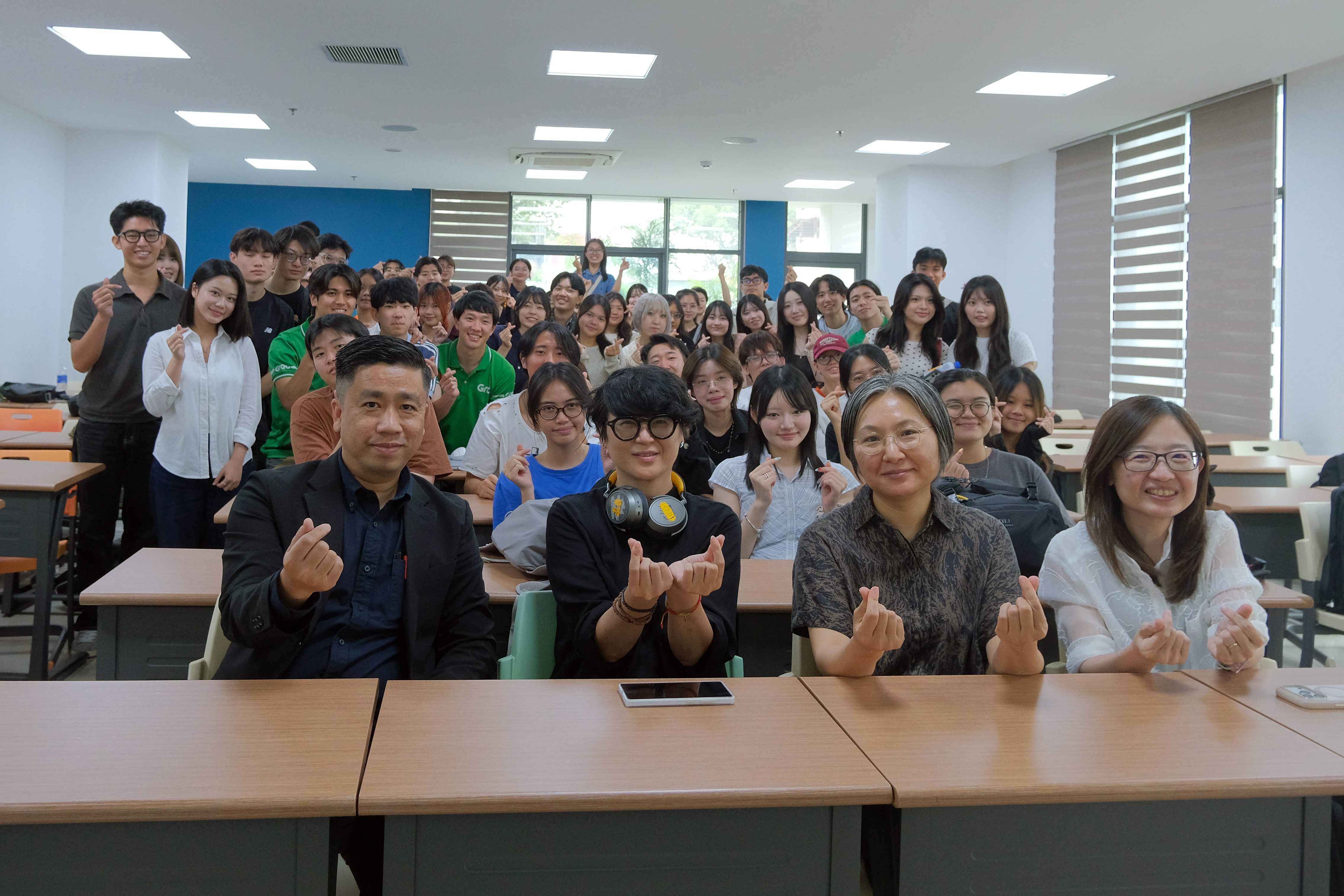
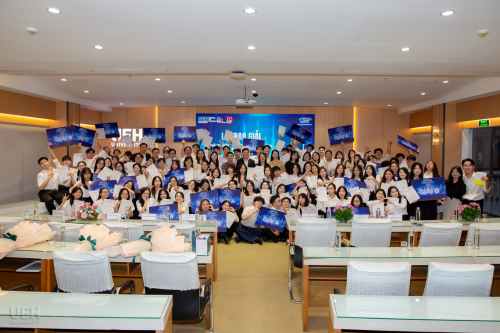
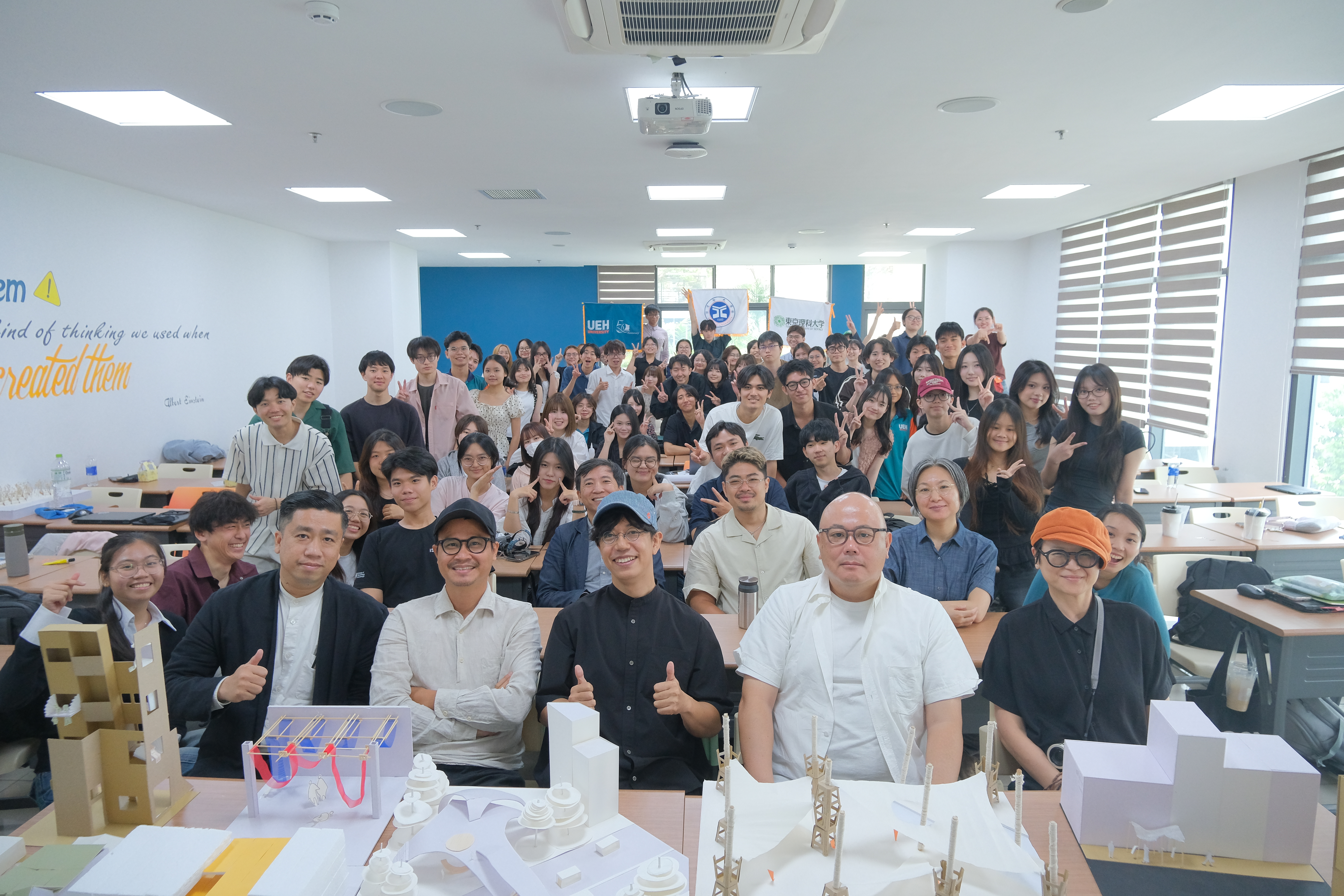
The lively atmosphere of the lecture session, gathering nearly 85 students from universities in Japan, Taiwan, and Vietnam
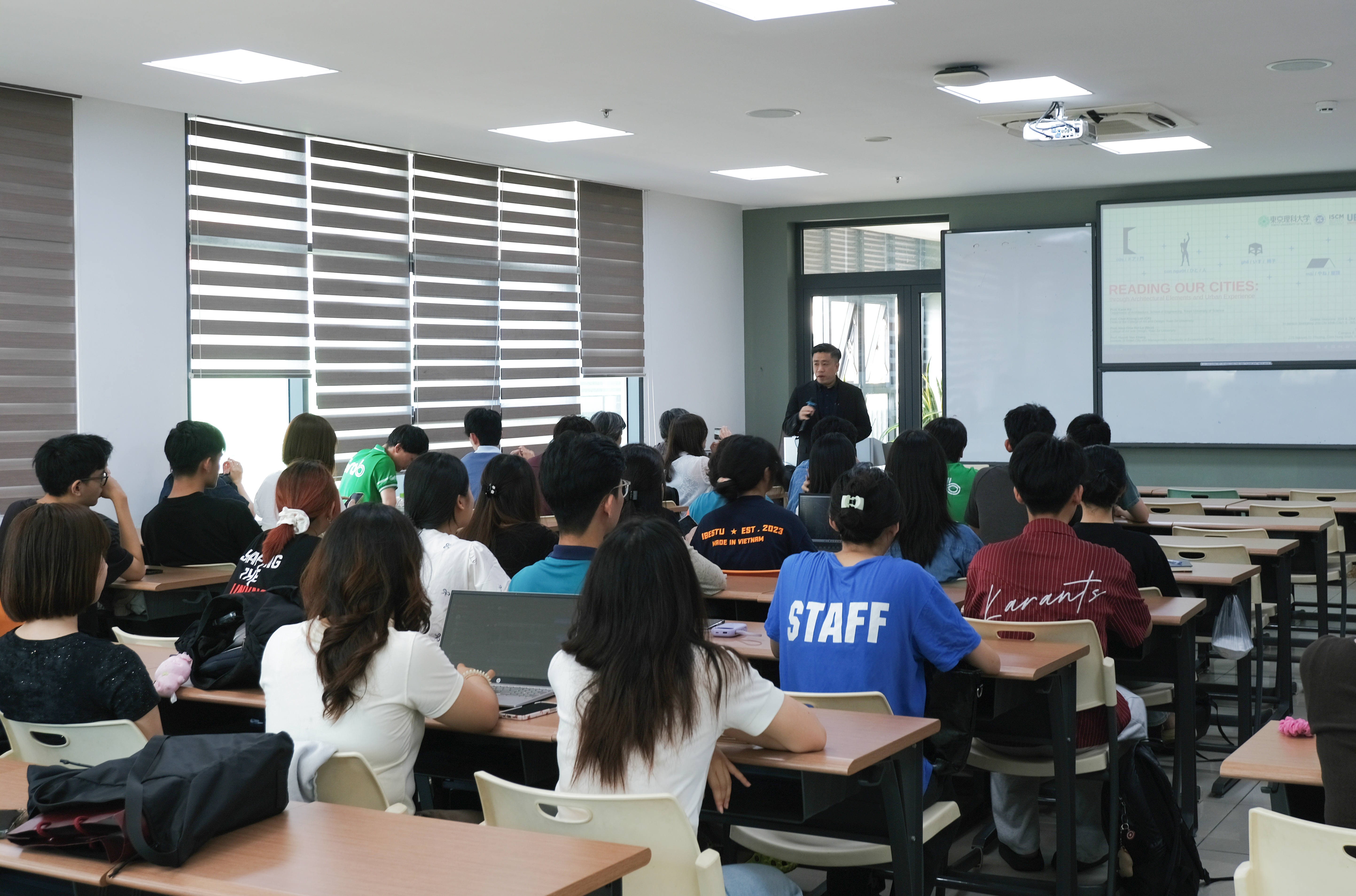
Dr. Arch. Huynh Van Khang delivering the lecture and explaining the workshop content
Prof. Kaon Ko presented on the topic "For A City: Interventions and Imaginations," addressing the transformations in Japan's urban history, thereby drawing lessons on how to inherit traditional values within contemporary urban solutions.
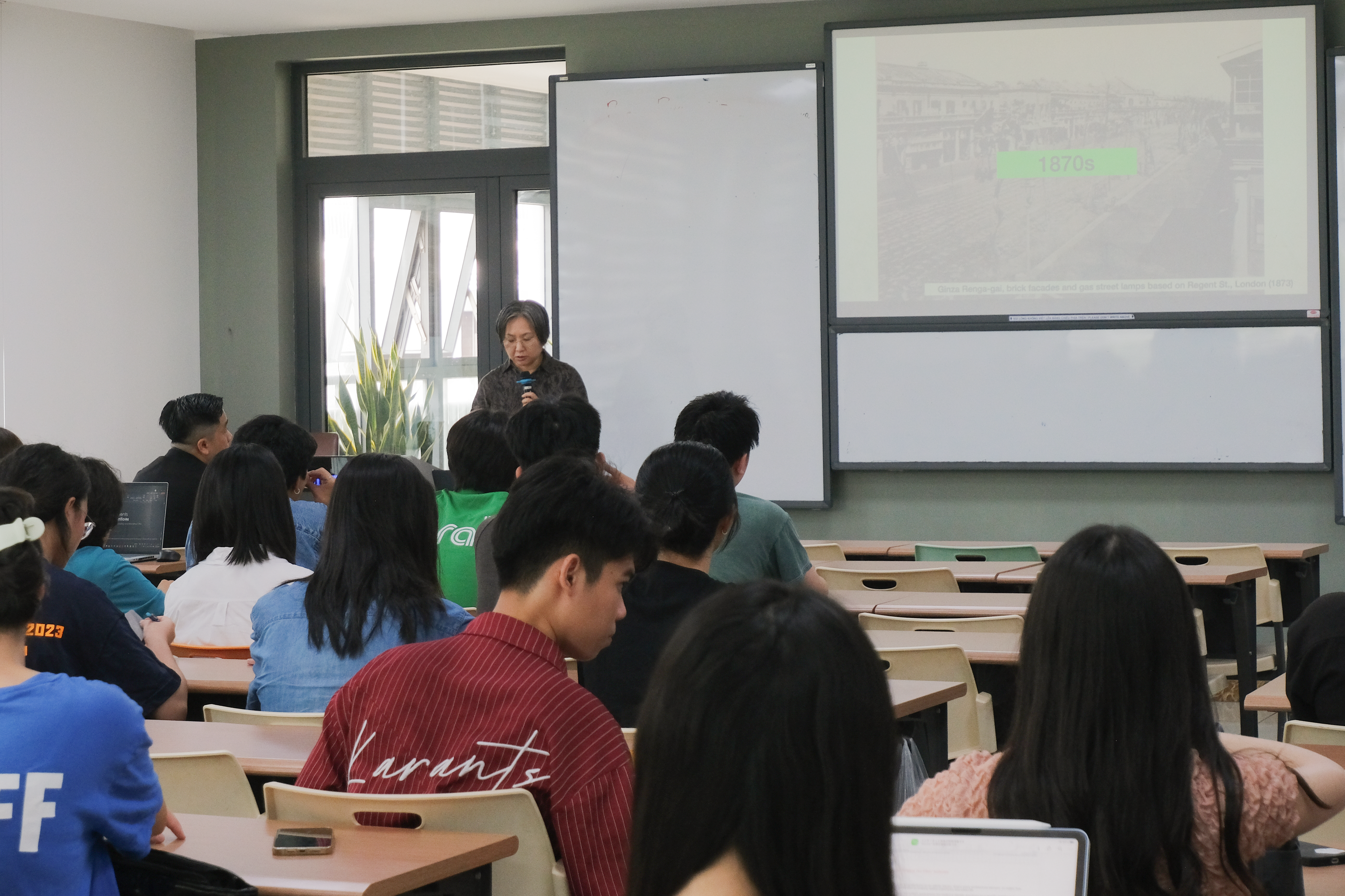
Prof. Kaon Ko presenting on "For A City: Interventions and Imaginations"
Prof. Chor-Kheng Lim shared his lecture "From Elements to Interventions: Generative Tools for Reading and Remaking Cities," discussing the applications of artificial intelligence as a creative tool – a new method for reading, analyzing, and reimagining urban space, opening up creative approaches that student groups could directly apply in their design processes.
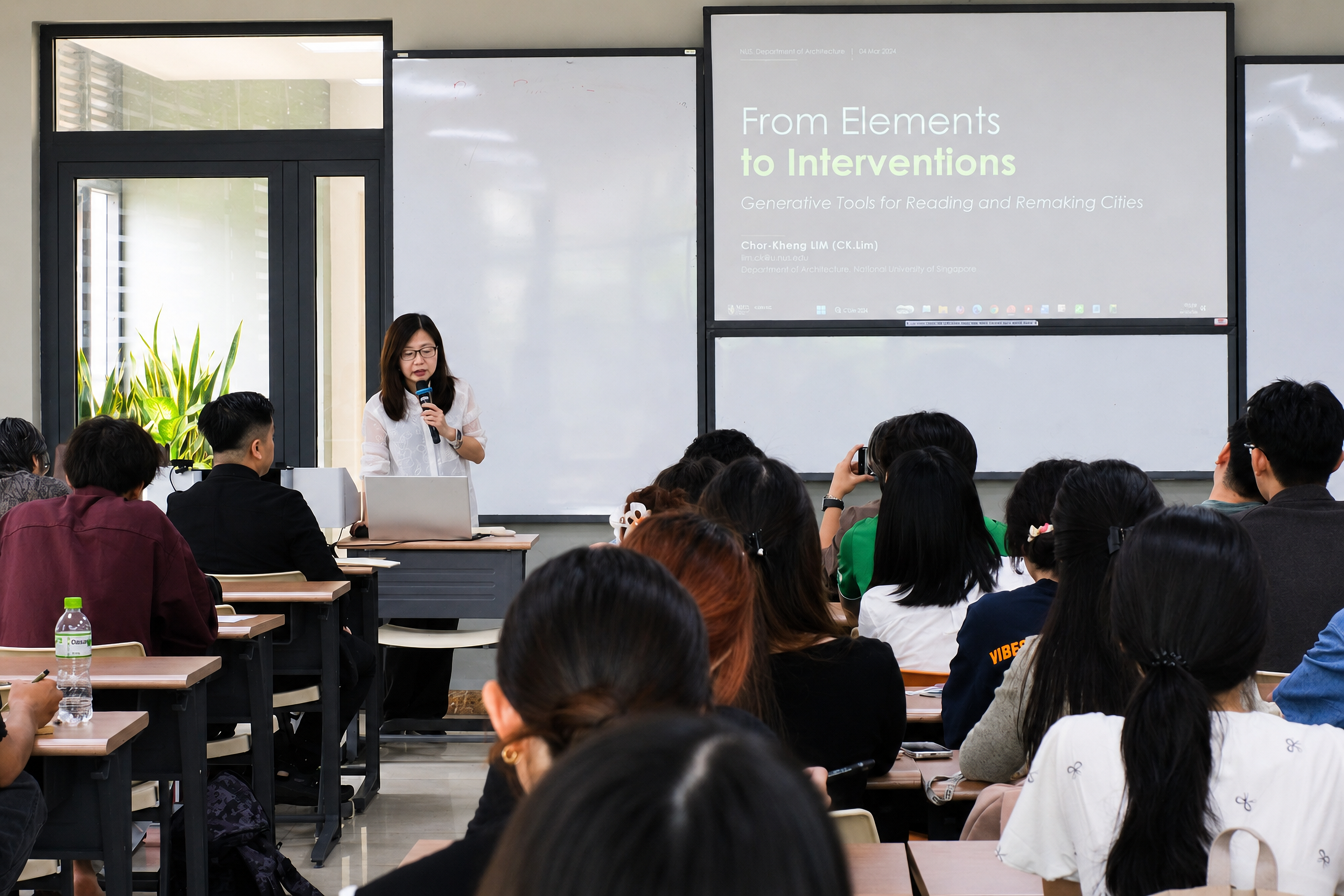
Prof. Chor-Kheng Lim presenting on "From Elements to Interventions: Generative Tools for Reading and Remaking Cities"
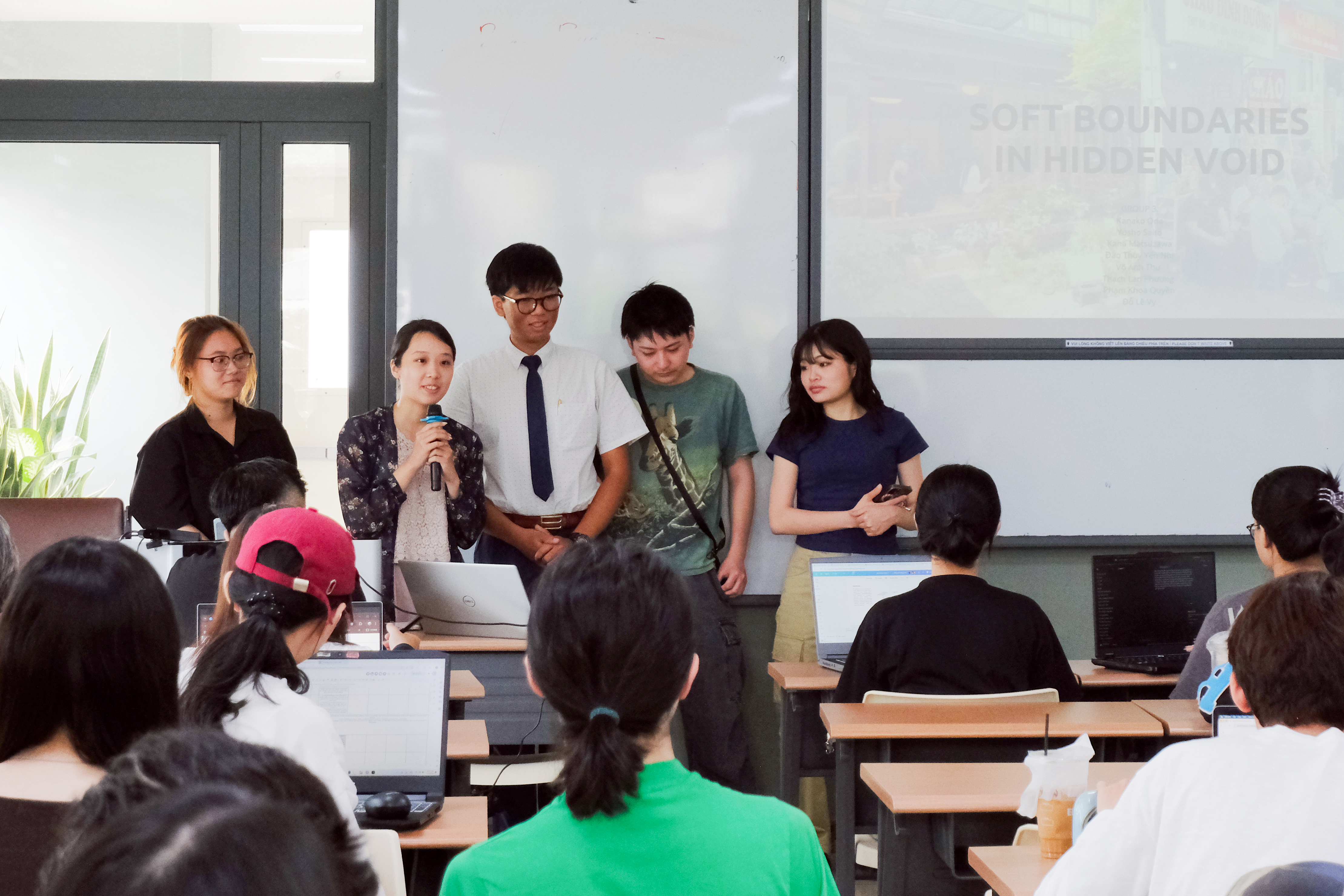
International student groups collaborating and presenting their urban observations
The students were divided into 11 cross-institutional groups and worked together for 04 days in Ho Chi Minh City. Each group selected a characteristic architectural or urban element to research through four stages: field survey, comparative analysis (Vietnam - Taiwan - Japan), design proposal development, and professional critique presentation.
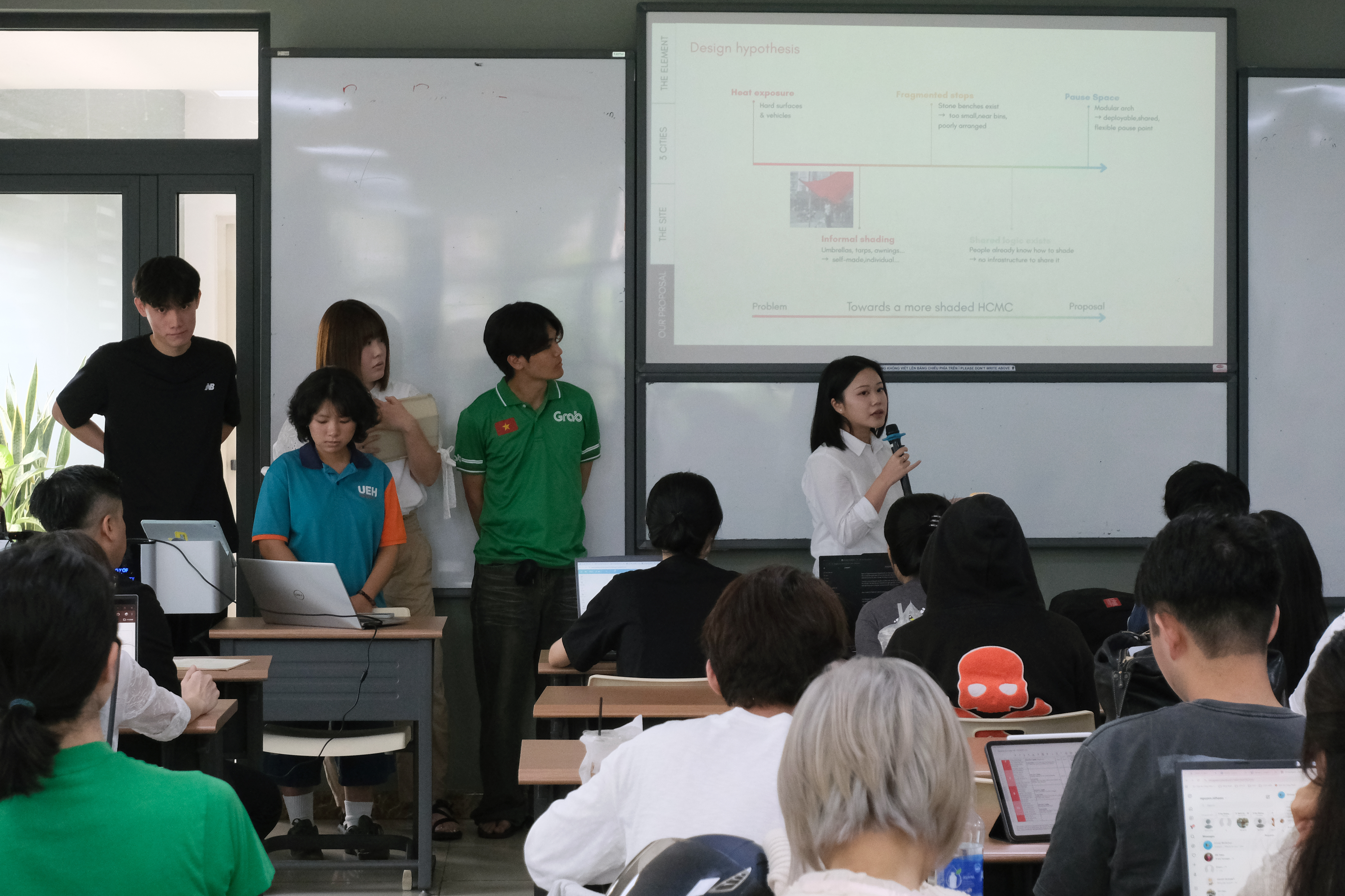
The vibrant group work atmosphere throughout the workshop
The research topics reflected the breadth of Ho Chi Minh City's urban life: greenery along major roads, canopy and pavement seating systems, rest spaces around Cho Ray Hospital, public waste bin design, multi-function pedestrian bridges, Saigon's "cafe bệt" (sidewalk sitting) culture, interactive signage, bus stop renovation, and riverside transitional spaces along the Saigon River.
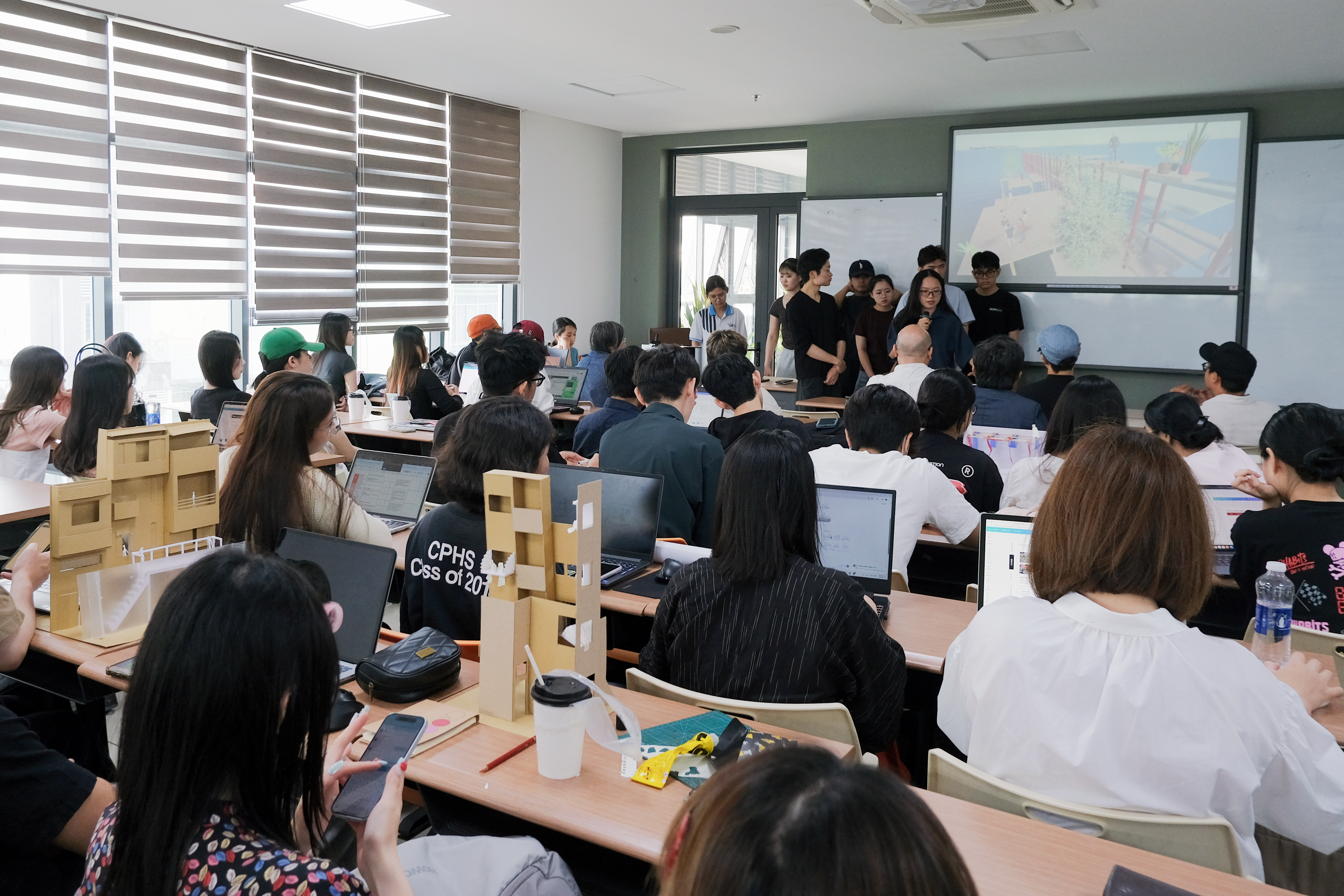
Presentation session on urban architectural design proposals
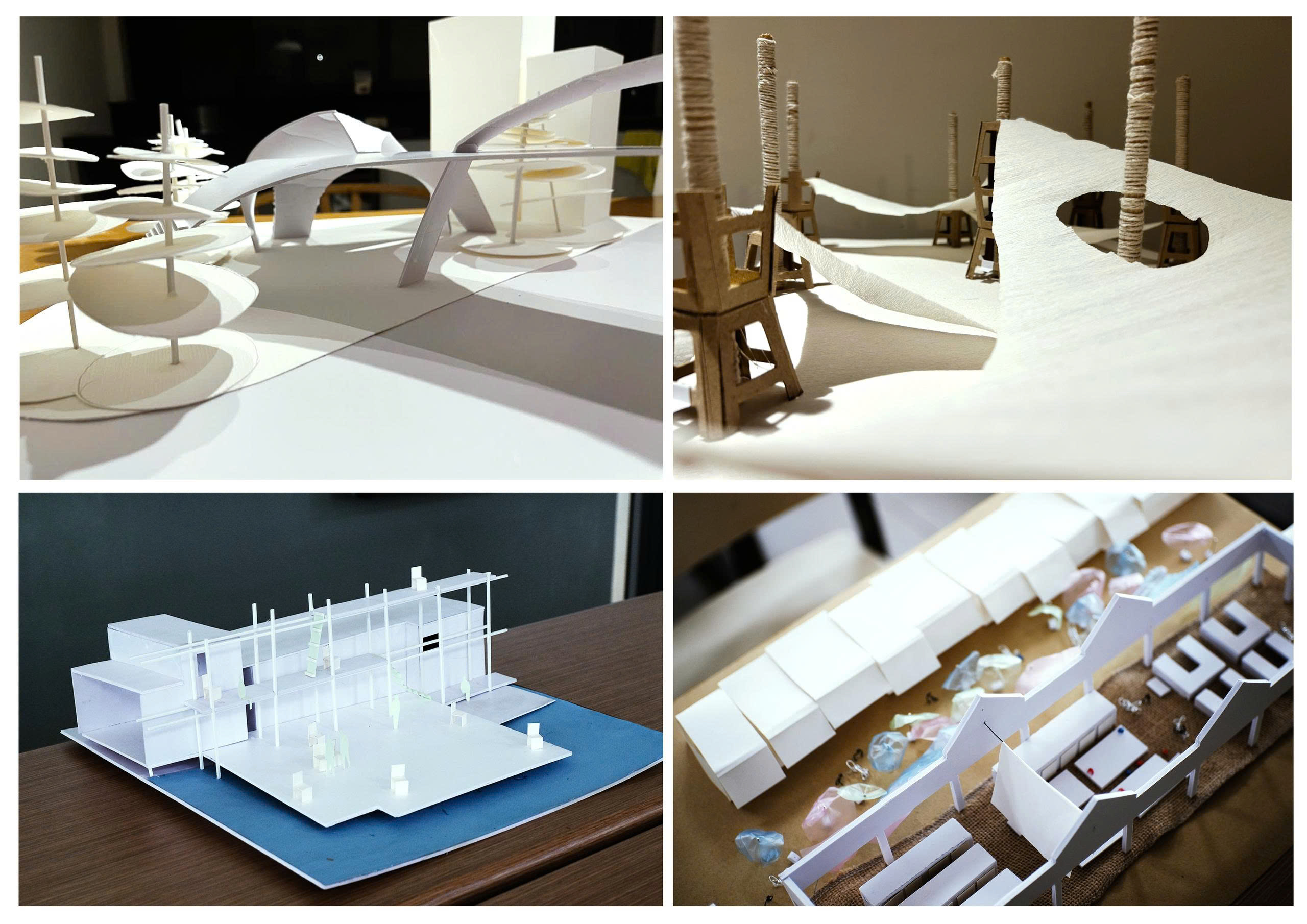
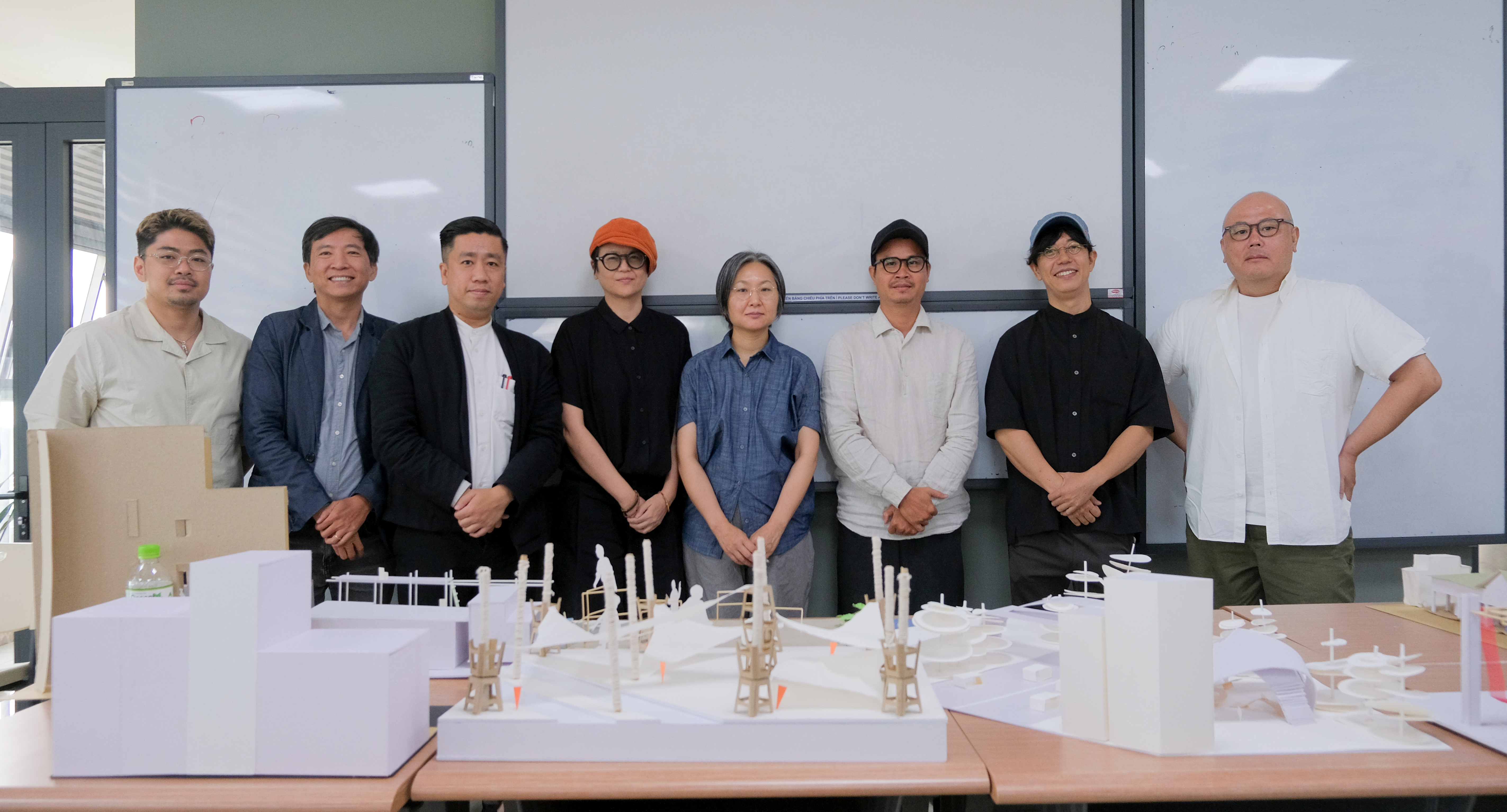
The final presentation session, attended by domestic and international experts, provided an opportunity for groups to present and defend their design solutions through research reports and experimental models. The eleven proposals presented revealed a common thread: although starting from very small elements such as canopies, benches, or waste bins, each intervention can become a catalyst for people-centered urban space when approached simultaneously through multiple cultural lenses.
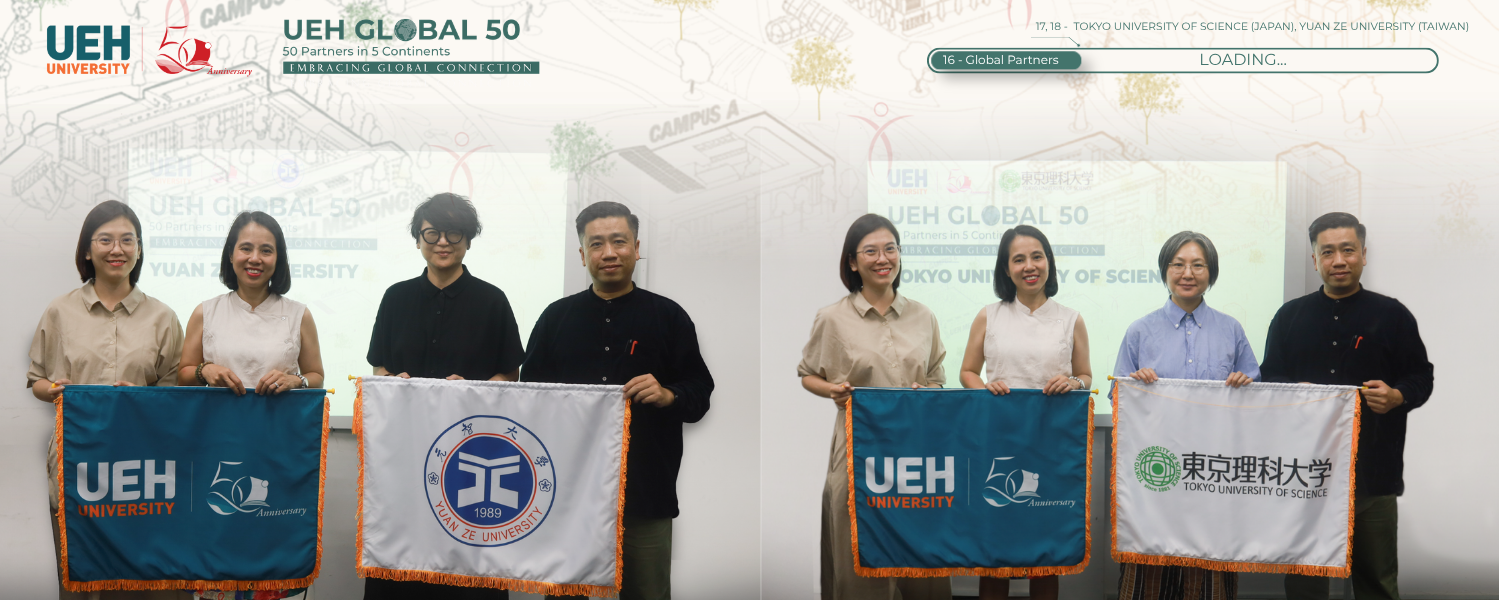
Within the workshop framework, the UEH Flag Journey ceremony between representatives of the three schools took place as an important milestone, marking the beginning of the academic cooperation relationship being built between UEH, Tokyo University of Science, and Yuan Ze University.
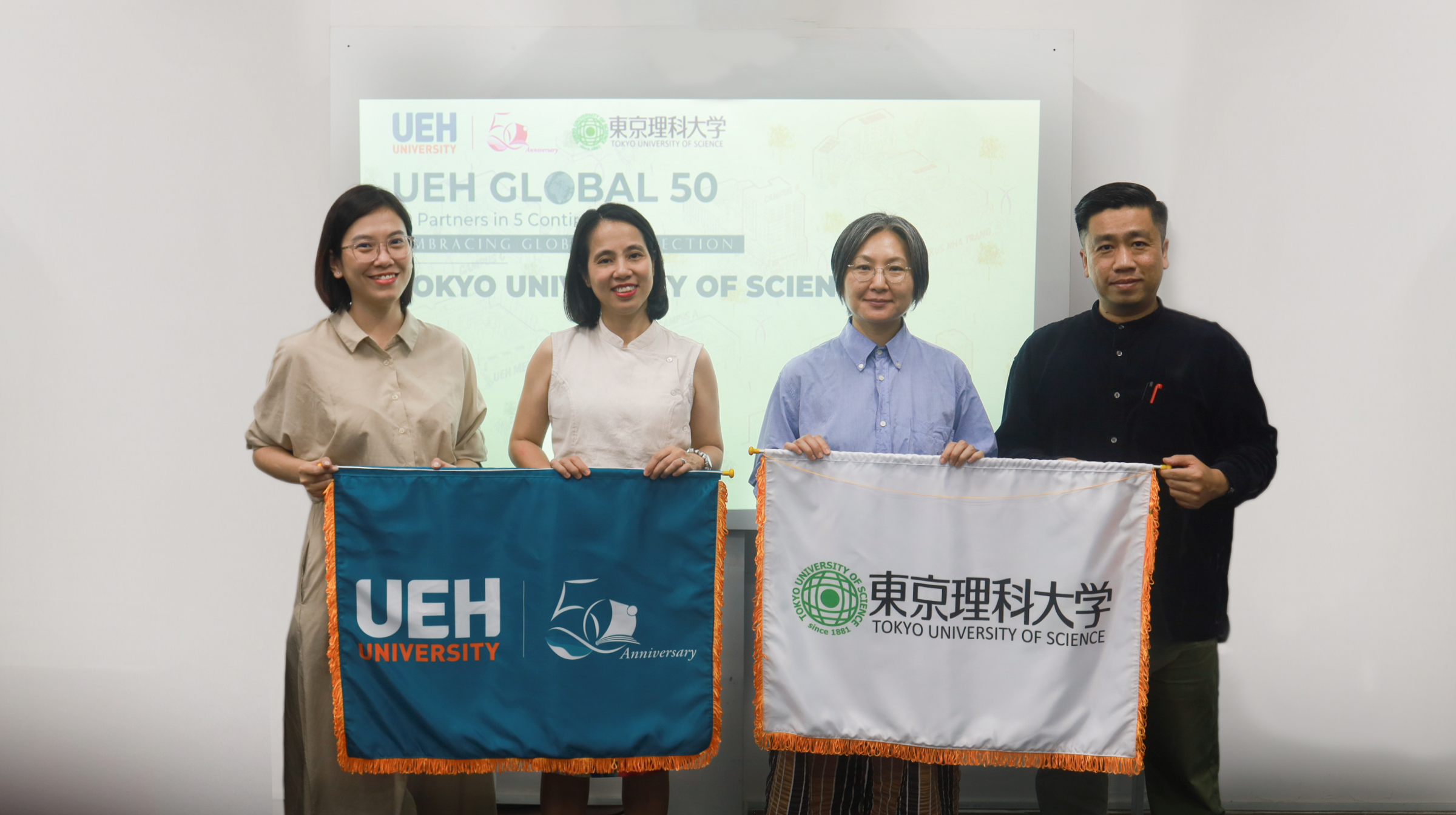
Representatives of the UEH Institute of Smart City and Management conducting the UEH Flag Journey ceremony with Tokyo University of Science (TUS), Japan
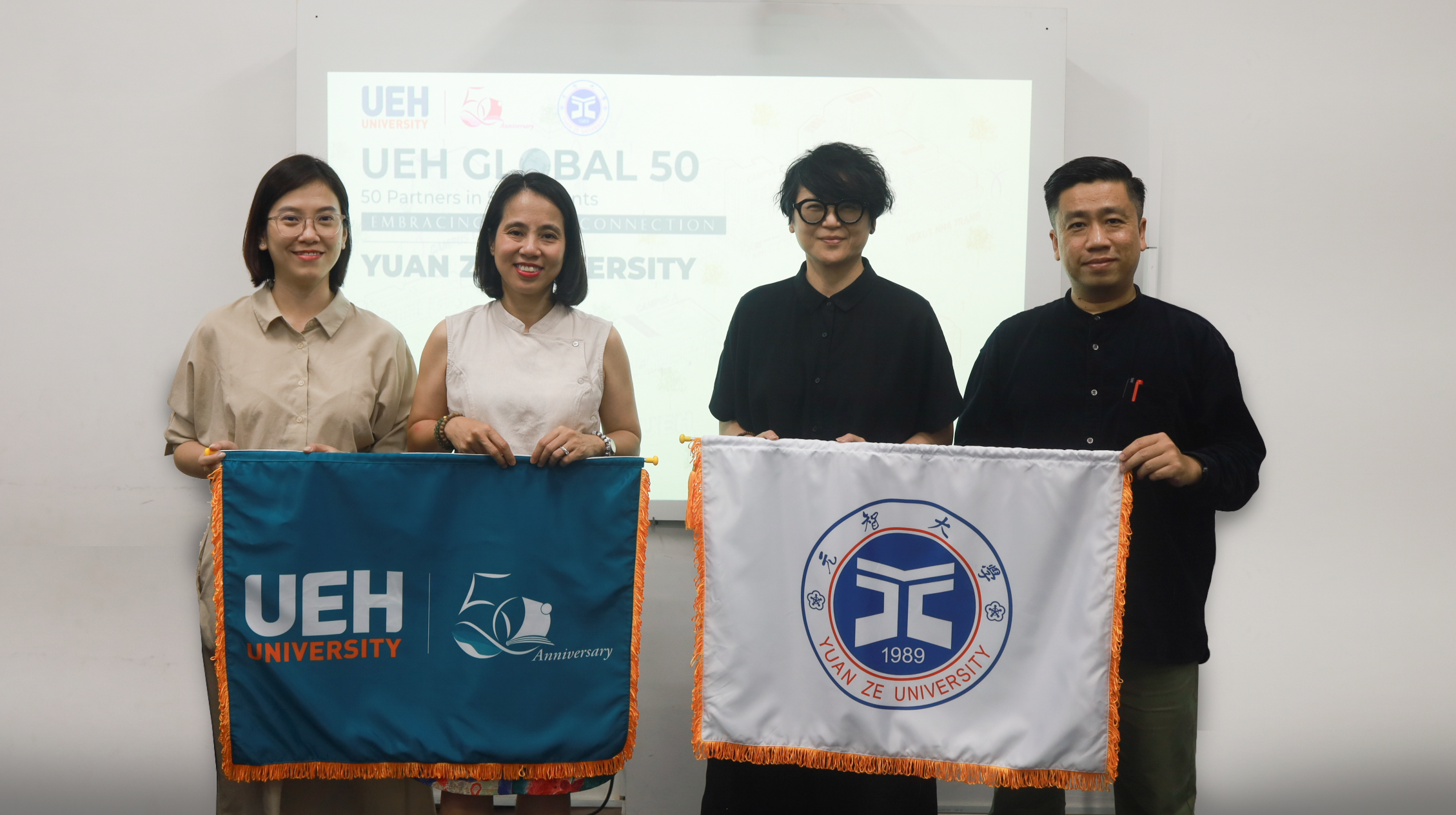
Representatives of the UEH Institute of Smart City and Management and Yuan Ze University (YZU), Taiwan, conducting the UEH Flag Journey ceremony together
The workshop also demonstrated the strong orientation towards connecting UEH with international partners in the fields of architecture, design, technology, and urban research. These are fields that play an important role in UEH's multidisciplinary development process, especially as the university expands its training and research directions associated with smart cities, sustainable development, innovation, and technological transformation.
Through activities such as inter-university workshops, academic exchanges, joint curriculum design, collaborative research, and experimental projects linked to urban contexts, UEH hopes to build a connected education ecosystem in Asia. In that ecosystem, universities go beyond student and faculty exchanges to share knowledge, international experience, and new practice models, thereby contributing to training a workforce with interdisciplinary thinking, creative capacity, and the ability to adapt to contemporary urban challenges.
ISCM sincerely thanks all faculty members, students, and guests who participated and contributed to the success of the R.E.D. Workshop 2026. Special recognition is given to the professional contributions of the critique jury:
- Arch. Kosuke Nishijima – Director, Inrestudio
- Arch. Sanuki Daisuke – Director, SDA Architects
- M.A. Arch. Nguyen Khiêm – Vice President, American Institute of Architects (AIA) Southeast Asia Chapter
- Designer Nguyen Dinh Hoa – Design Director, LAITA Design Studio
- M.A. Arch. Anh Tuan – Lecturer, Faculty of Architecture, Vietnamese-German University
Other images from the program:
UEH’s Leading International Partner Connection Series UEH 50 Years: 50+ Global Partners
|
News, images: Department of Communications and Partnerships, Department of Research - Development and Global Engagement