UEH Shares Its Model of an Innovation-Driven University and Expands Partnership Networks in Japan
14 Oct, 2026


Participating in Dialogue on the Role of Universities at STS Forum 2026
In Kyoto, the UEH delegation participated in STS Forum 2026 on October 4 and 5. The forum addressed a wide range of issues concerning the relationship between science, technology, and society, from artificial intelligence, education, and research to climate change, innovation, and collaboration among universities, businesses, and governments. This provided an opportunity for UEH to engage with international perspectives and exchange views on the changes shaping higher education.
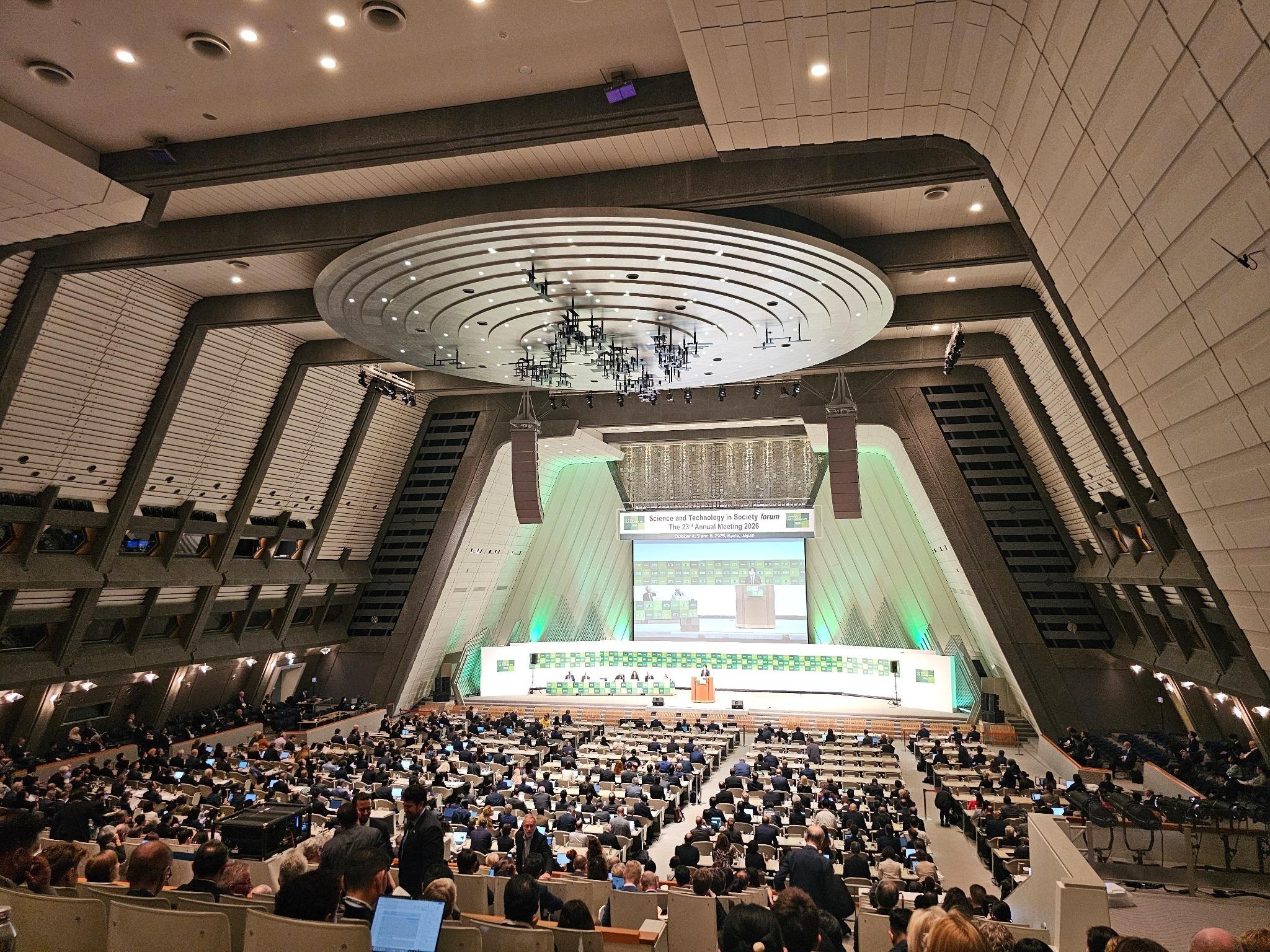
Overview of STS Forum 2026 in Kyoto
A key highlight of the program was the University Presidents’ Meeting held on October 4 at the Kyoto International Conference Center. Focusing on rethinking the role of universities in advancing knowledge, academic excellence, innovation, and social impact in a changing world, the meeting was co-chaired by leaders of Osaka University and Erasmus University Rotterdam.
Assoc. Prof. Bui Quang Hung, President of UEH, participated in the roundtable discussion alongside representatives from international universities and research institutes. The discussion focused on three key issues: the role of universities in shaping an inclusive and sustainable future through collaboration; balancing the need to generate measurable social impact with the mission of fundamental research and knowledge development; and governance mechanisms and incentives to sustain long-term co-creation among universities, communities, businesses, and governments.
Participation in the dialogue provided UEH with an opportunity to exchange experiences in social engagement while drawing on governance and collaboration approaches to support the development orientation of a multidisciplinary and sustainable university.
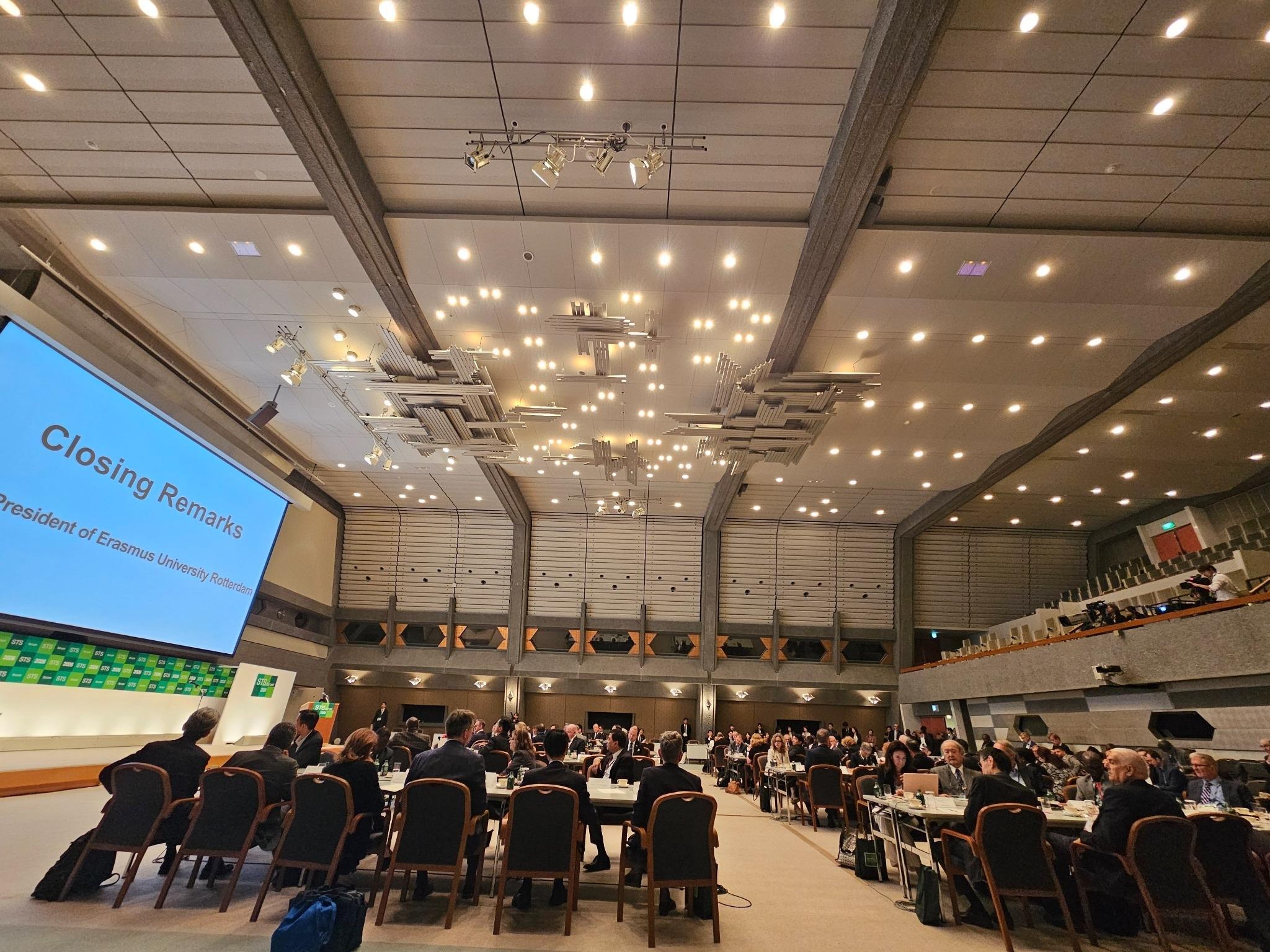
University Presidents’ Meeting discussion session at STS Forum 2026
Sharing the UEH Model Connecting Government, Universities, and Businesses
On October 8, at the Suita Campus of Osaka University, the UEH delegation participated in the 4th Japan-Vietnam University Presidents’ Conference, themed “Achievements and Future Vision of Japan-Vietnam Academic Cooperation.” The program focused on university collaboration in talent development, social impact creation, and the building of innovation ecosystems.
At Thematic Session B on Japan-Vietnam university-industry-government collaboration to promote innovation ecosystems, Assoc. Prof. Bui Quang Hung presented the paper “The UEH UniverCity Innovation Hub Model as a Driver for Regional & Urban Sustainability” (The UEH UniverCity Innovation Hub Model as a Driver for Regional and Urban Sustainable Development).
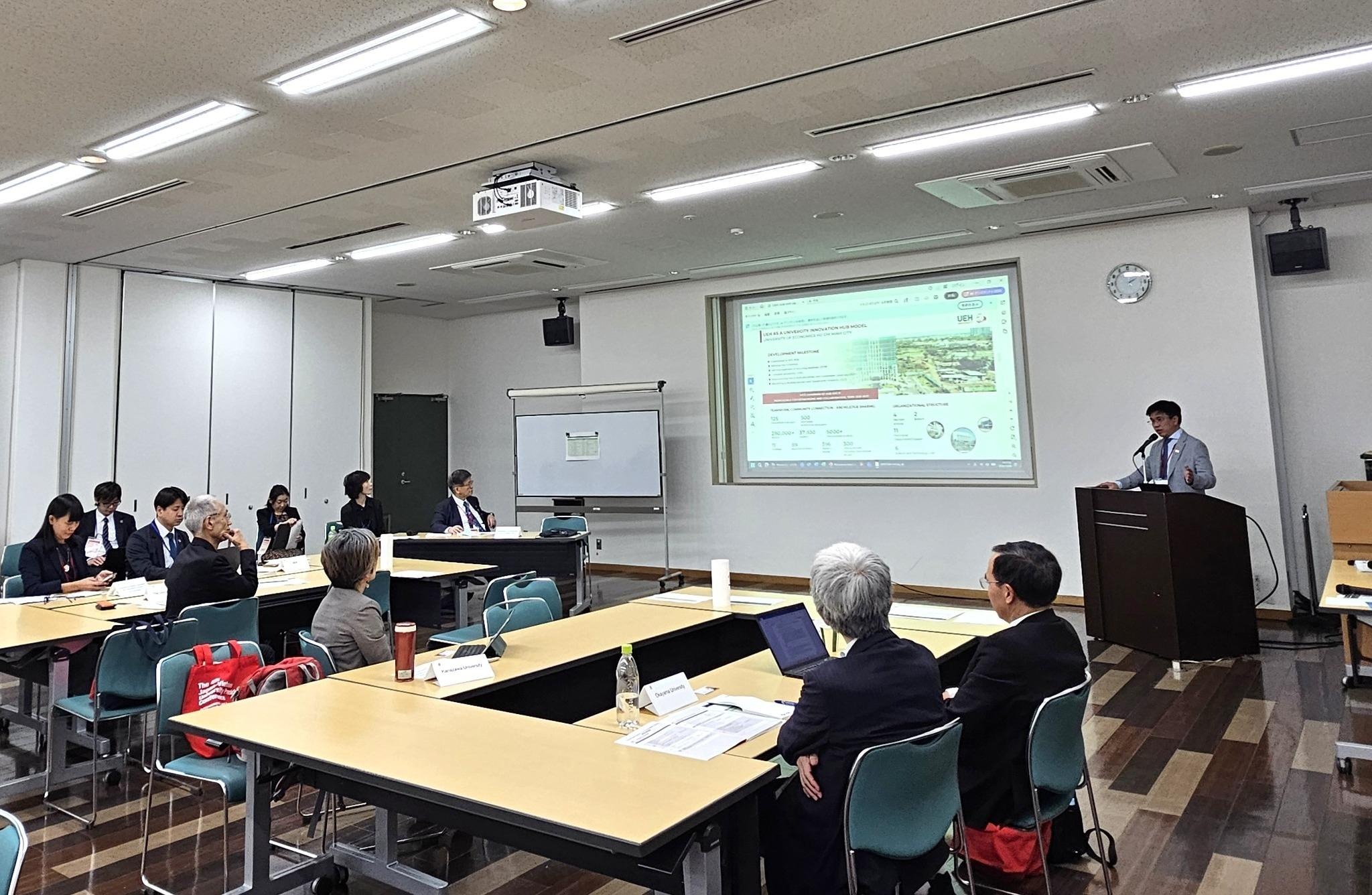
Assoc. Prof. Bui Quang Hung presenting at the 4th Japan-Vietnam University Presidents’ Conference
The presentation introduced an approach that positions the university as a connector of knowledge, development spaces, and collective action to address urban and regional challenges. Accordingly, the university’s capacity in education, research, and innovation is mobilized to support sustainable transformation beyond the boundaries of the campus.
Building on the Quintuple Helix collaboration model, UEH connects universities, government, businesses, and communities, while placing the environment and sustainable development requirements at the center of the collaboration process. The co-creation mechanism is implemented through four steps: jointly identifying problems, jointly designing solutions, jointly implementing them, and transforming outcomes into value and practical impact.
Examples presented included collaboration with local authorities on policy consulting, human resource development, research, and digital transformation; laboratory systems and Living Labs; as well as initiatives supporting entrepreneurship and innovation. These examples demonstrated how UEH connects research and education with the needs of local authorities, businesses, and communities.
For Vietnam-Japan cooperation, UEH introduced potential areas for co-creation in talent development, joint research, technology transfer and experimentation, as well as the implementation of solutions in urban and regional settings. These areas of cooperation connect the academic and technological capabilities of Japanese partners with UEH’s local knowledge, business networks, and practical application spaces in Vietnam.
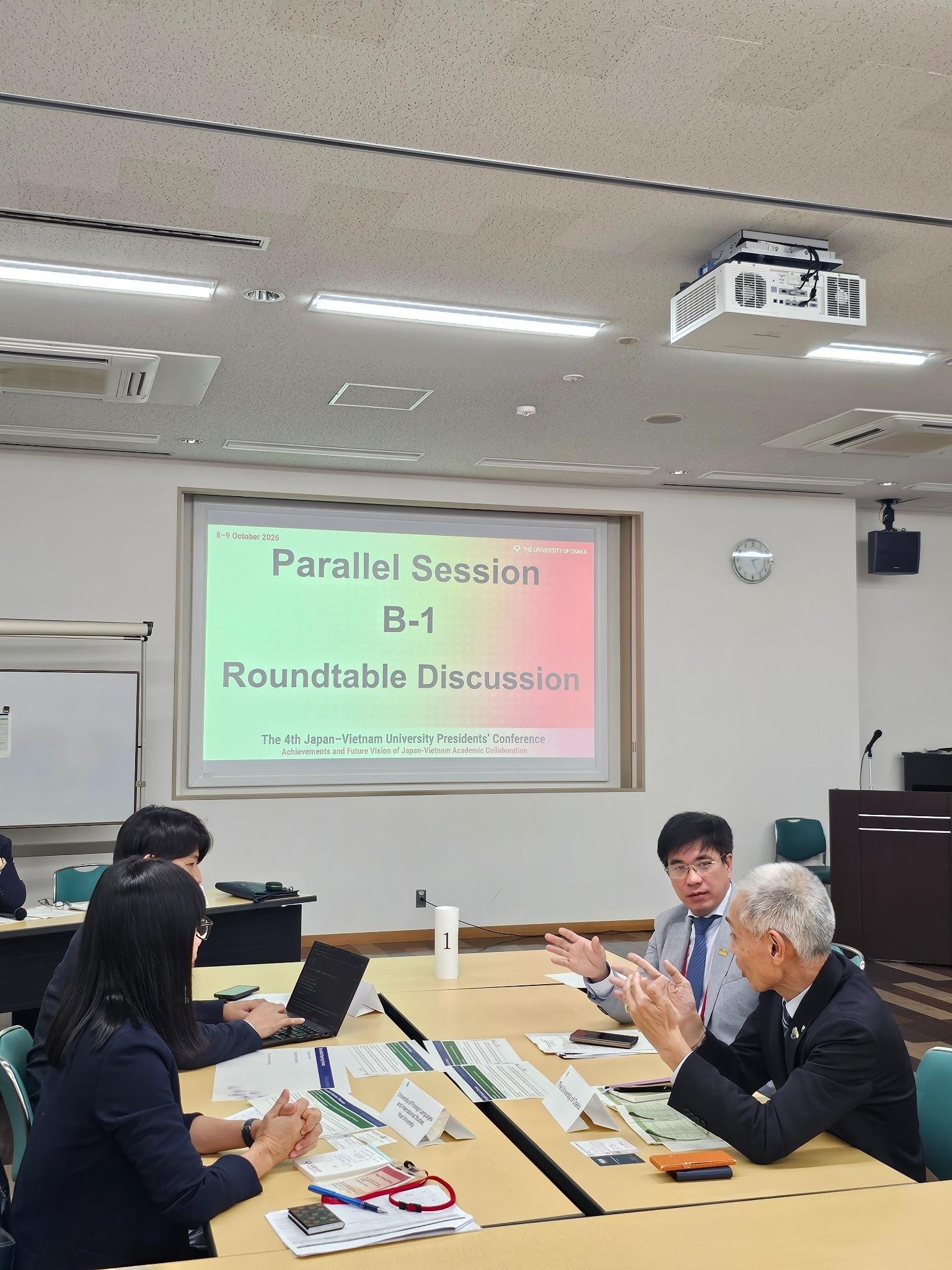
Roundtable discussion at the 4th Japan-Vietnam University Presidents’ Conference
Expanding Connections with Japanese University Partners
Alongside the conference activities, the UEH delegation held a number of meetings to explore collaboration opportunities and develop partnerships with Japanese higher education institutions.
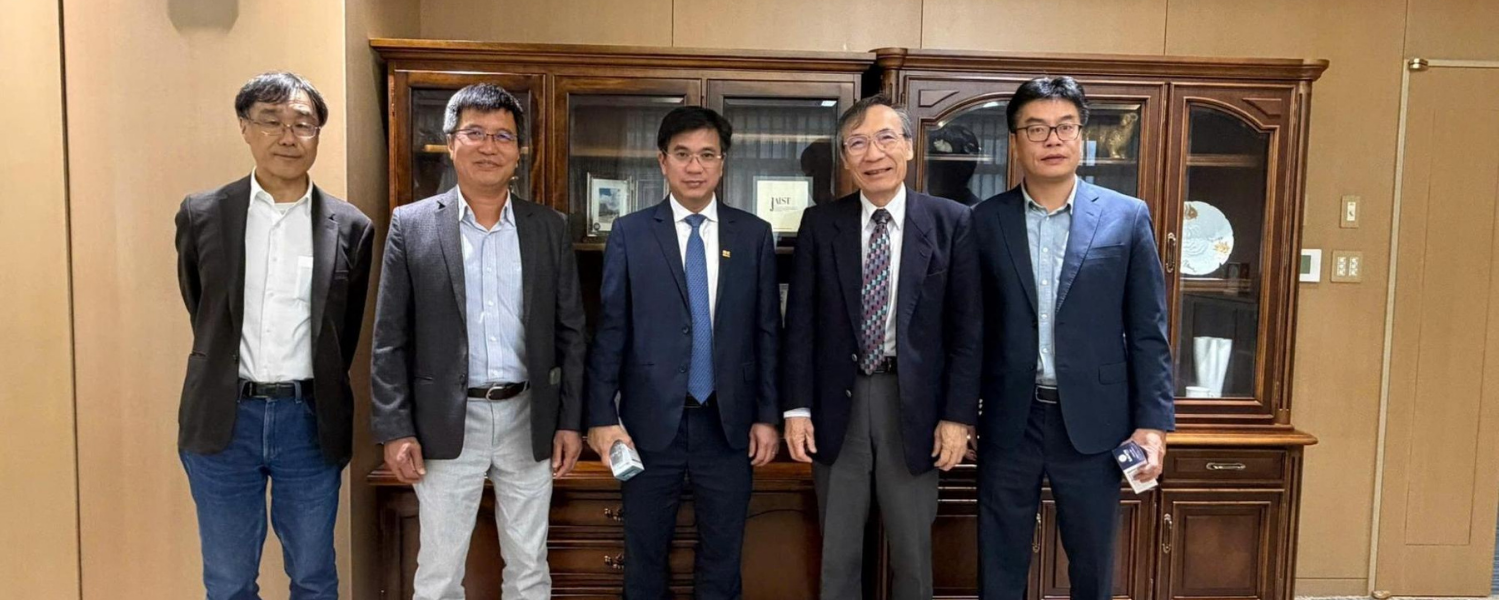
On October 6, in Ishikawa, the delegation visited the Japan Advanced Institute of Science and Technology (JAIST), meeting President Prof. Terano Minoru and two Vice Presidents, Prof. Iida Hiroyuki and Prof. Kohda Youji. The visit provided an opportunity to directly exchange with JAIST leadership on potential areas of cooperation, particularly dual-degree master’s programs and research collaboration.
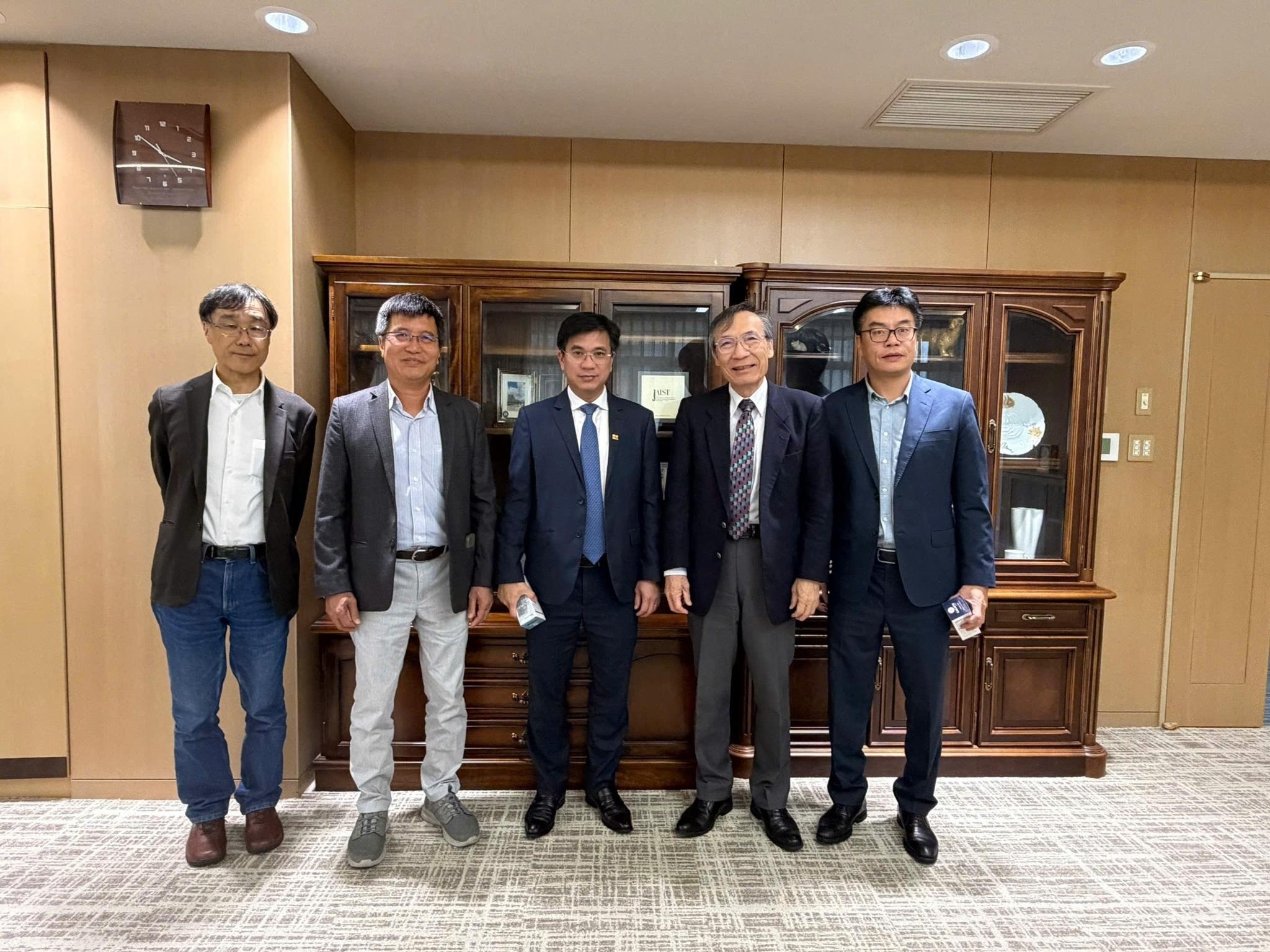
UEH delegation meeting and discussing with representatives of JAIST
On October 7, the delegation continued with a working session at the Senriyama Campus of Kansai University in Osaka. During the meeting, UEH and Kansai University signed a Letter of Intent, establishing a basis for the two sides to continue discussions and further develop specific areas of cooperation.
As part of the University Presidents’ Conference on October 8, the delegation held bilateral meetings with Kyoto University, Hokkaido University, and Nagoya University. The meetings aimed to strengthen mutual understanding and identify potential areas of connection aligned with UEH’s development orientation.
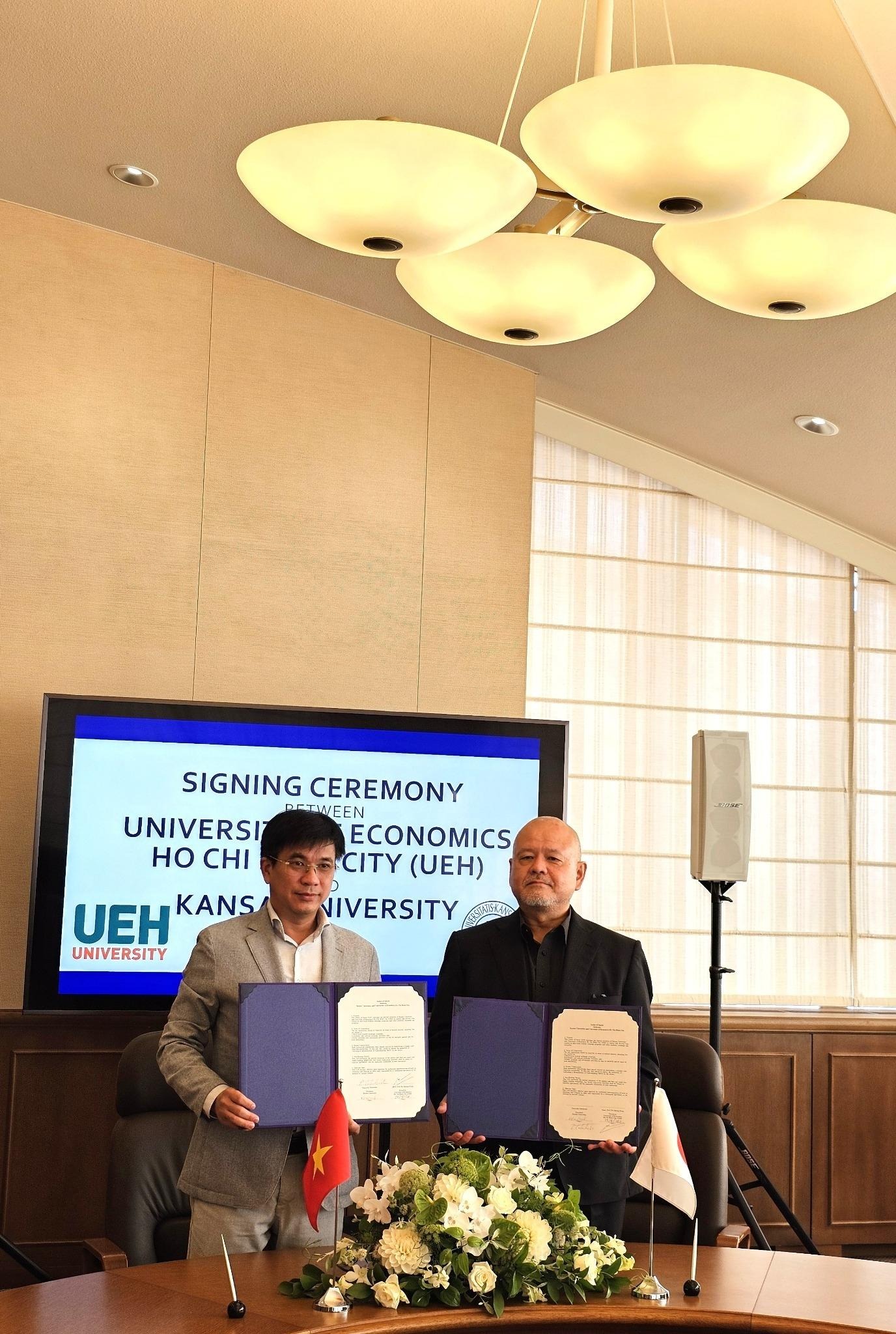
UEH and Kansai University signing a Letter of Intent
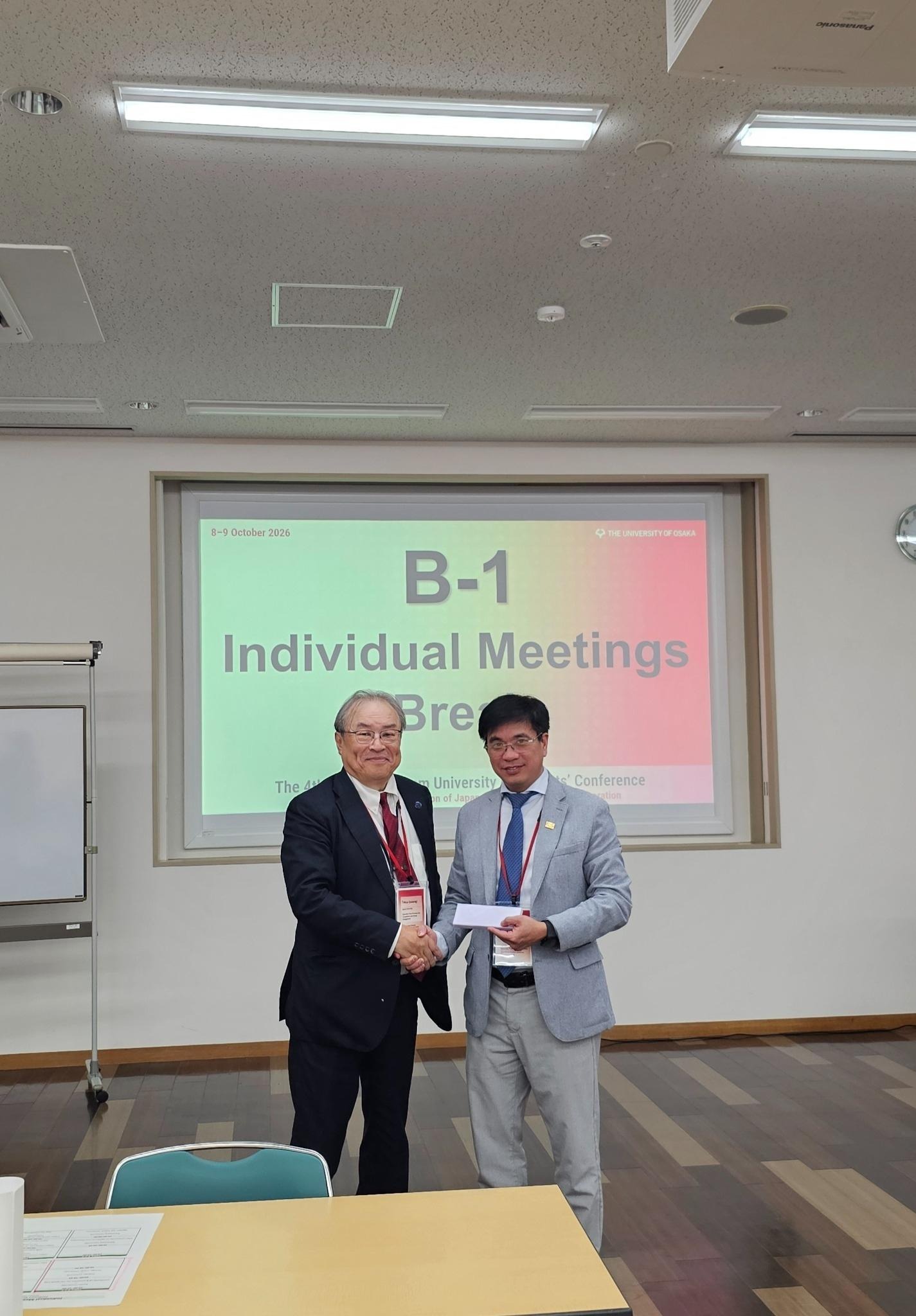
Meeting and exchanging with representatives of Kyoto University
The series of activities in Japan enabled UEH to share its university development model, which is closely connected to societal needs, at international forums while expanding direct connections with academic partners. The exchanges during the visit provide a foundation for further developing cooperation opportunities in education, research, and innovation, with the aim of creating value for learners, businesses, and communities.
News, photos: Department of Research - Development & Global Engagement

![[UEH CONFERENCE 50] UEH Hosts SR-ICYREB 2026, Advancing Student Research and Nurturing the Next Generation of Young Scholars](/images/upload/thumbnail/ueh-thumbnail-639273984608805382.png)