UEH Half Marathon 2026: Talkshow Recap on Listening to Your Body for a Safe and Sustainable Race
09 Jun, 2026
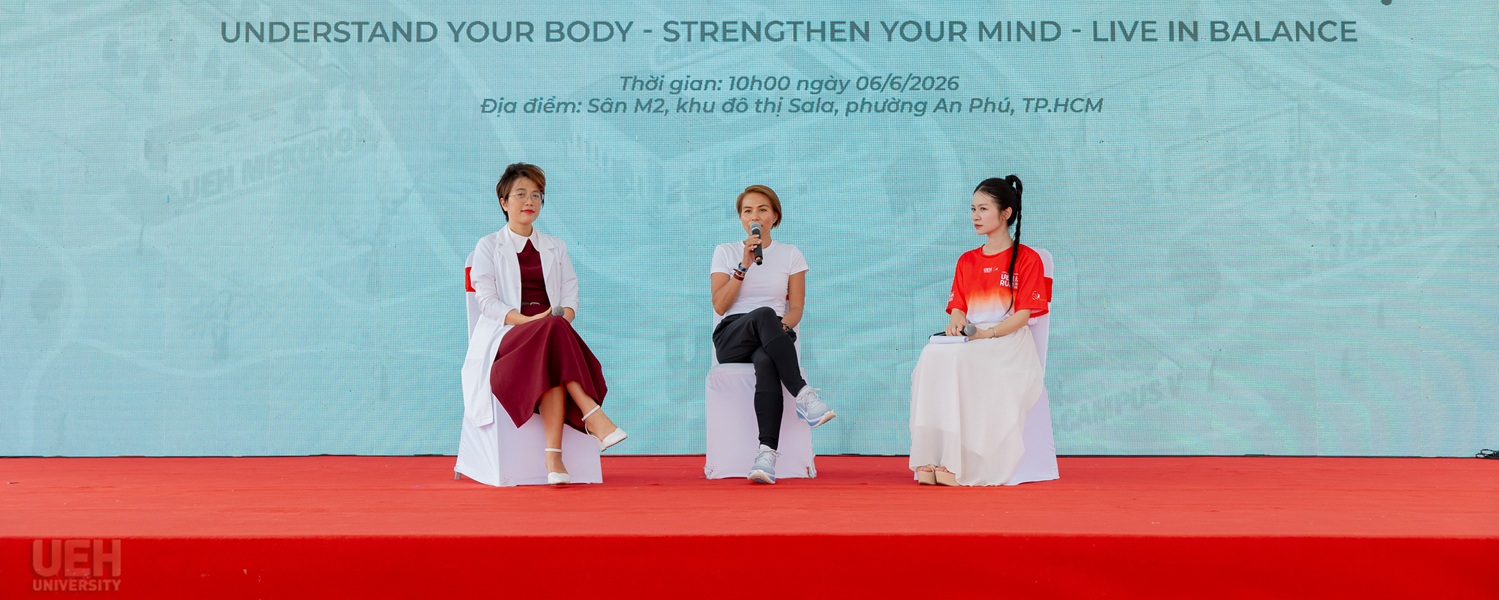
Centered on the message "listen to your body before every stride," the talk show held at EXPO DAY offered UEH Half Marathon 2026 runners practical insights on training, nutrition, and recovery to help them prepare for the heritage race course.
More than a running event, UEH Half Marathon 2026 is a journey promoting a healthy, sustainable lifestyle and personal health responsibility. Alongside professional logistics, security, medical, and operational preparations, UEH organized a range of communication activities to raise awareness about safe exercise practices among nearly 4,000 runners participating this year.
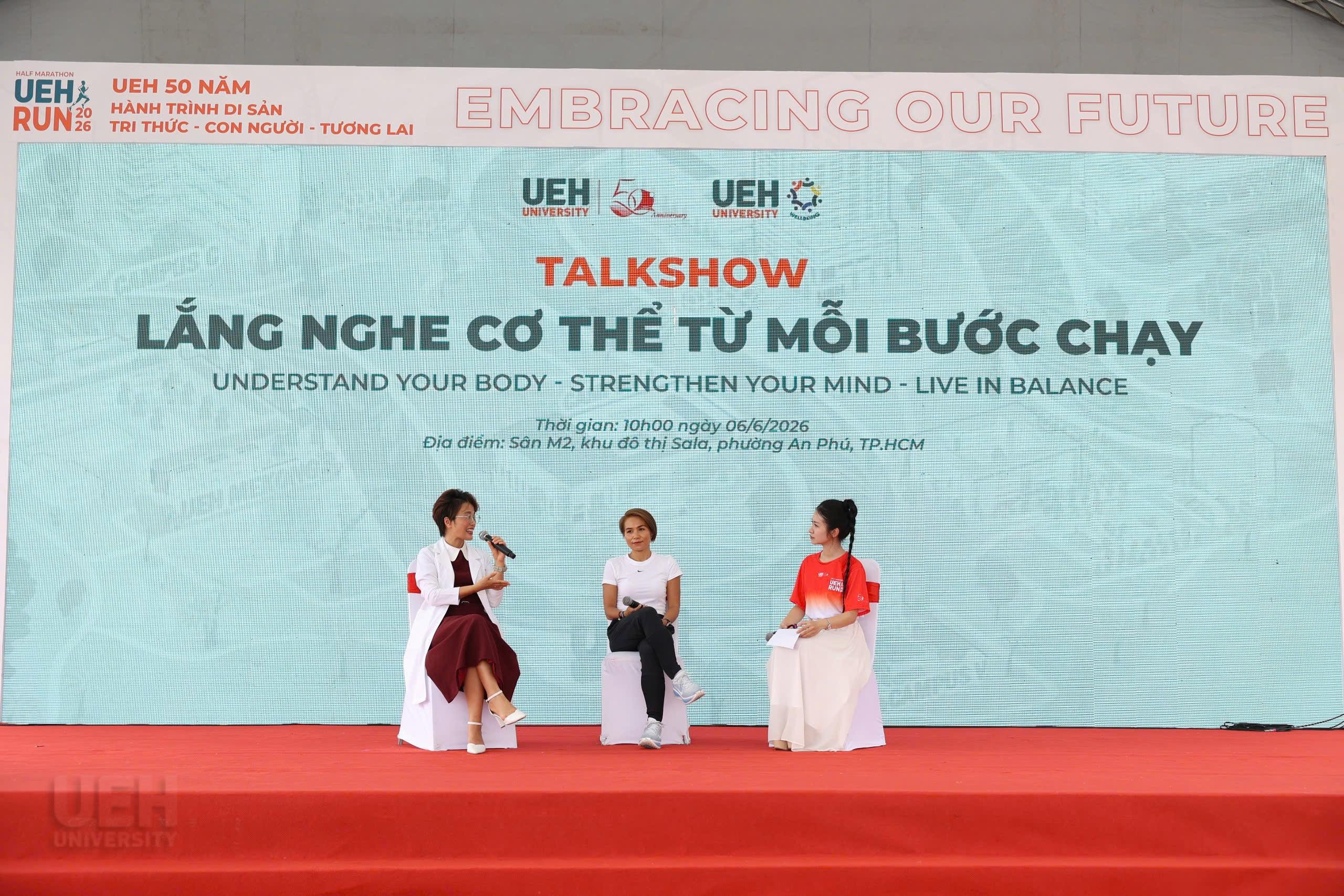
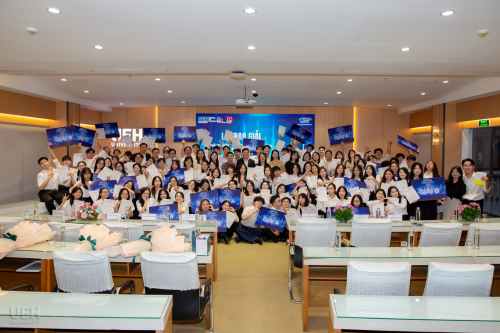
Talkshow "Listen to Your Body with Every Stride" at EXPO DAY of UEH HALF MARATHON 2026
As part of this series, the talkshow "Listen to Your Body with Every Stride" was held under the theme "Understand Your Body - Strengthen Your Mind - Live In Balance," featuring practical insights from Ms. Nga Vo, one of Vietnam's leading long-distance runners and a finisher of numerous domestic and international races, alongside Dr. Nguyen Thi Hoa, Deputy Director of the Nutrition Research and Consulting Institute (NERCI). The session not only delivered expert knowledge but also inspired runners to adopt a more informed approach to running and personal health.
The highlights from the Q&A portion of the event are compiled below.
SHARING FROM MS. NGA VO
Q: What brought you to running, and what has kept you committed to the sport until today?
Ms. Nga Vo:
"Eight years ago, I didn't have the fit and healthy body I have now. Back then, I was an office worker, sitting in an air-conditioned room almost all day with very little physical activity. Wanting to improve my health, I started exercising.
At some point in life, everyone finds something they want to pursue. I came to running first and foremost for my health. From those first steps, I gradually wanted to take on longer distances, and that connection has stayed with me ever since."
 |
Q: After countless long and challenging races, what is the greatest lesson running has taught you?
Ms. Nga Vo:
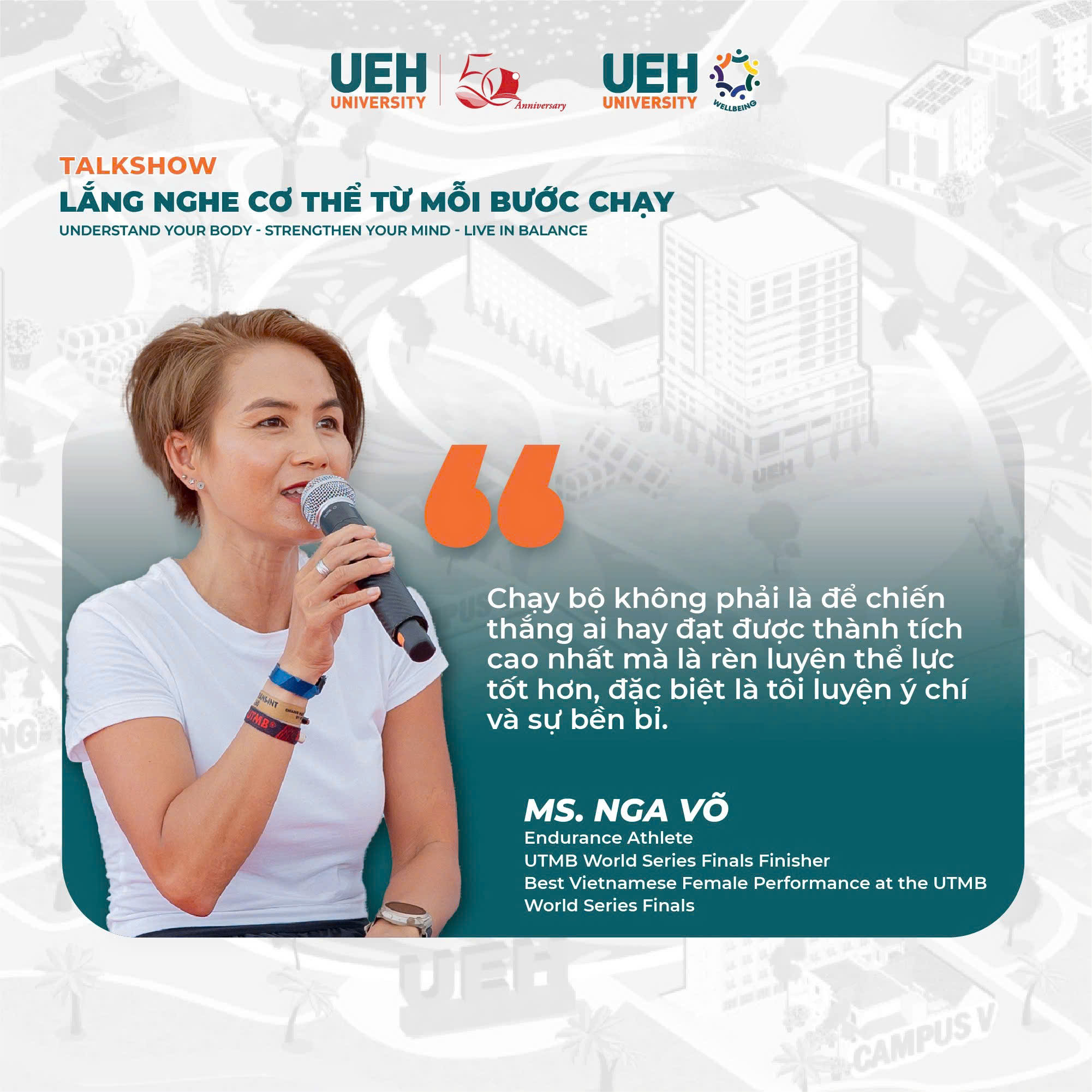
Running is not about beating anyone or achieving the highest result. The most valuable thing I have gained is better physical fitness, along with the willpower, perseverance, and resilience built through every mile.
 |
Q: For beginners, especially students or busy working professionals, how should they start running without feeling overwhelmed, and how can they keep it up long-term?
Ms. Nga Vo:
I think people don't need to set overly ambitious goals from the start. Enjoy the journey at your own pace. If you can't run yet, walk. If you're tired, slow down or rest.
Don't compare yourself to others or try to match someone else's speed. The only person we need to outrun is ourselves. If today is just one percent better than yesterday, that is already a success.
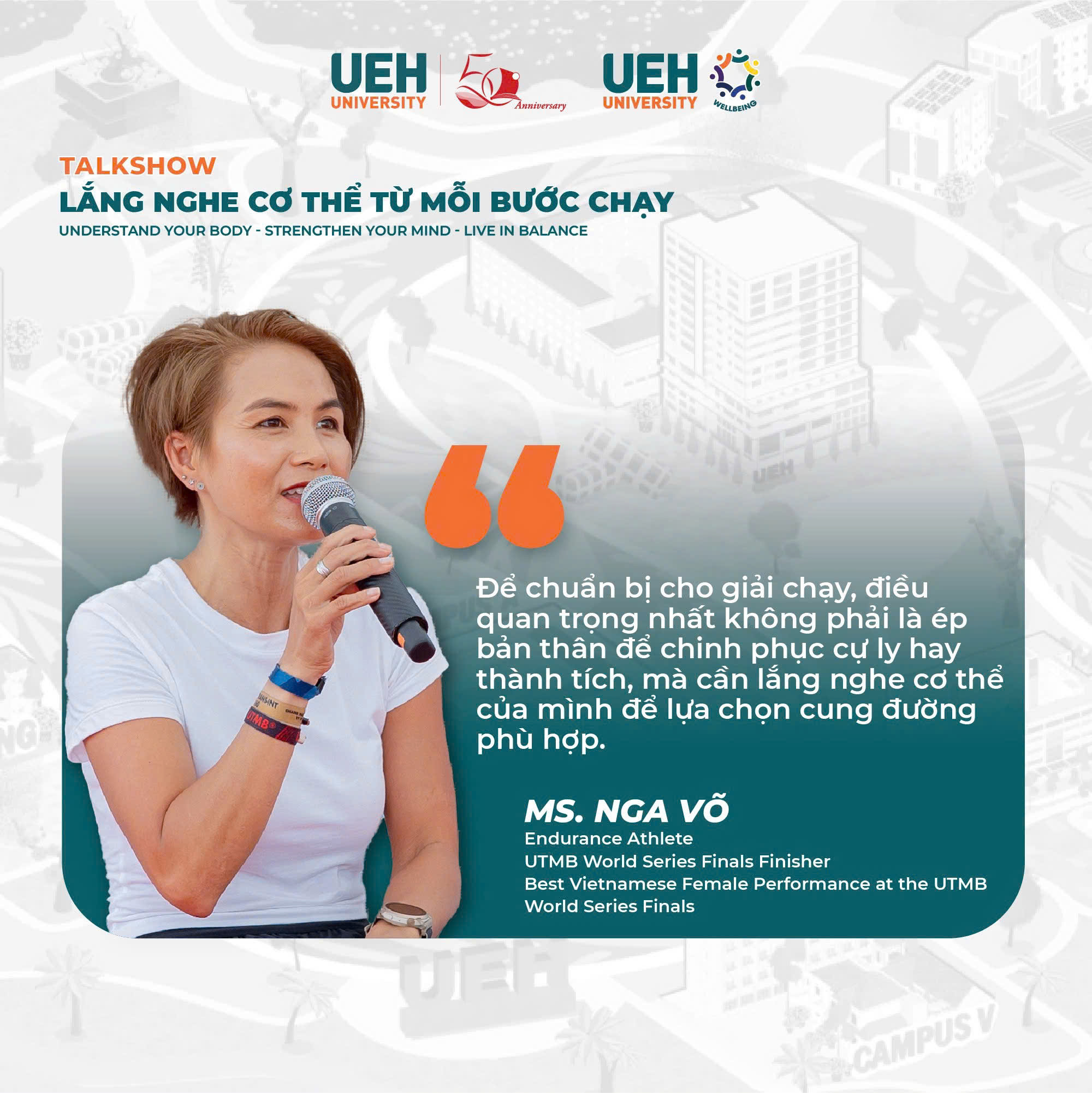
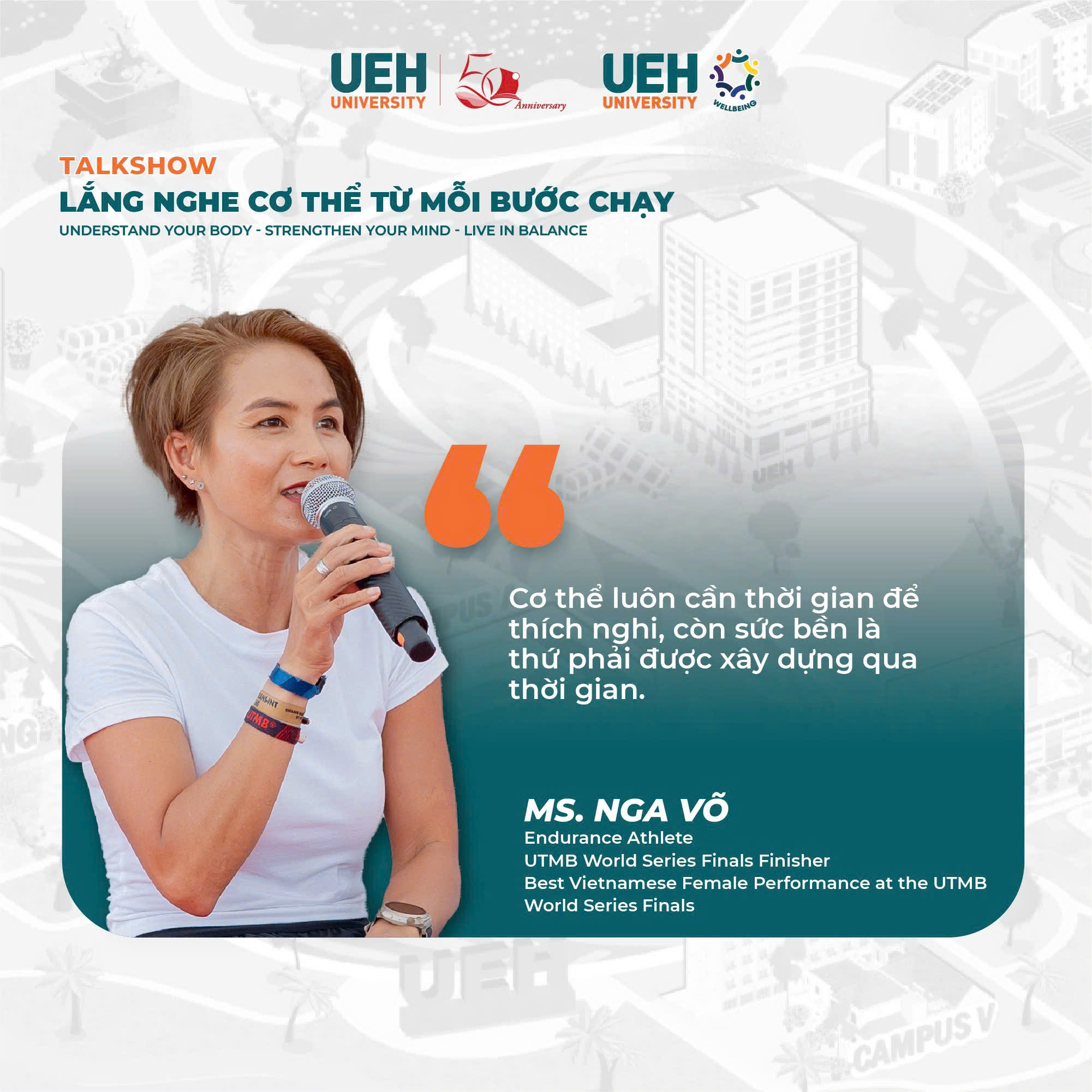
A common mistake beginners make is setting targets that are too big. The body needs time to adapt. Endurance also takes time to build. Everyone has a different physical condition, so learn to listen to your body and respect the signals it sends.
 |
SHARING FROM DR. NGUYEN THI HOA
Q: Why is nutrition so important for runners and people who exercise regularly?
Dr. Nguyen Thi Hoa:
Nutrition is the foundation for everyone, especially those who are physically active. For runners, nutrition does not only provide energy for training; it also supports muscle recovery and builds endurance.
When the body is properly nourished, metabolic processes run more efficiently, physical health improves, and mental well-being follows.
Q: What are the most common nutritional mistakes made by beginner runners?
Dr. Nguyen Thi Hoa:
Many people believe they should not eat before running, fearing stomach cramps or side stitches. This is a misconception. The body needs fuel before exercise, particularly for longer or more intense sessions.
Another mistake is only drinking water after a workout, or not replenishing nutrition at all. This is precisely the stage when the body needs energy and nutrients to recover muscles and restore energy reserves.
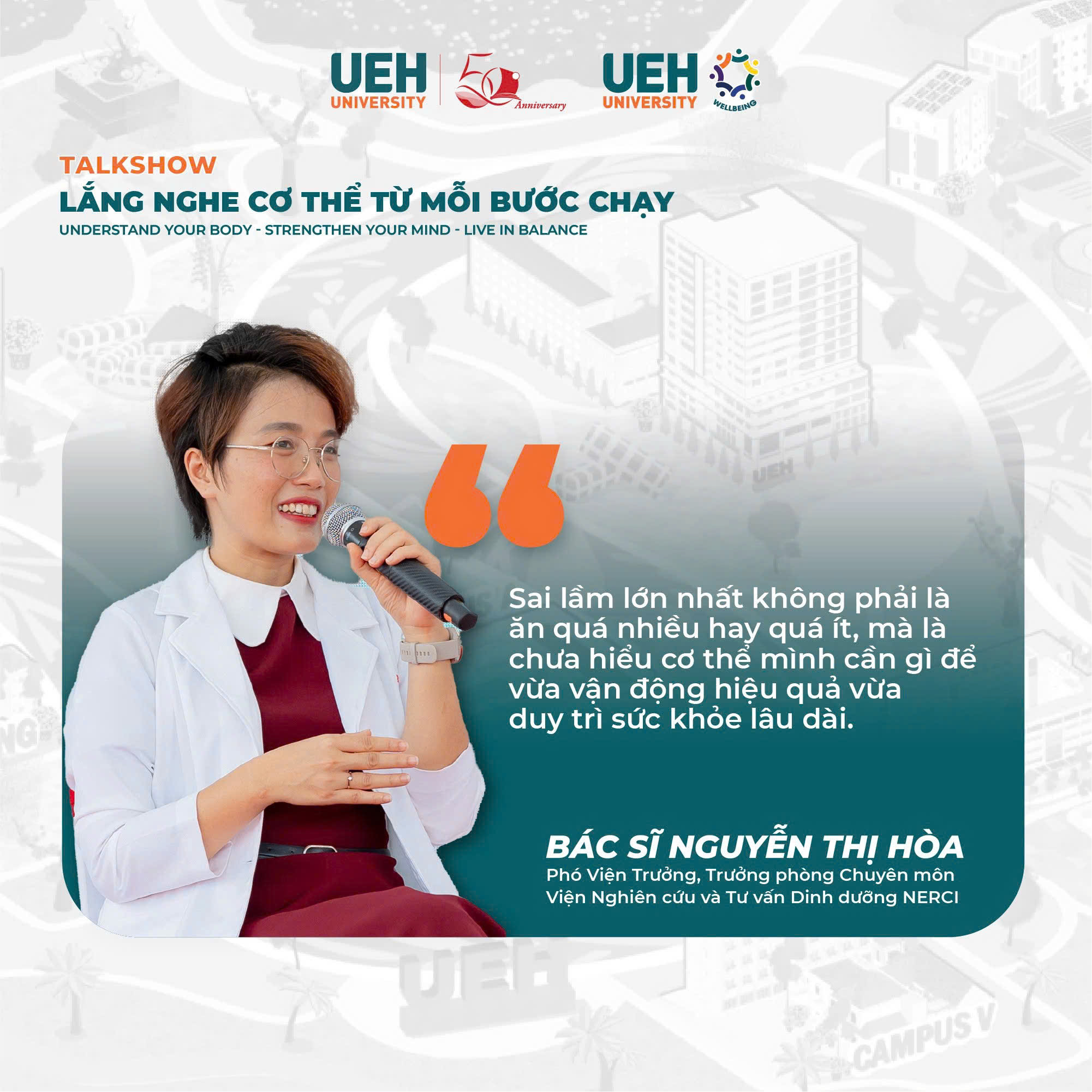
In my view, the biggest mistake is not eating too much or too little, but simply not understanding what the body needs in order to perform well and maintain long-term health.
 |
Q: What should runners eat and drink before a race to have enough energy without causing discomfort?
Dr. Nguyen Thi Hoa:
On the day before a race, it is advisable to limit foods high in fat and fiber to reduce the risk of digestive discomfort, while ensuring the body receives adequate energy and hydration.
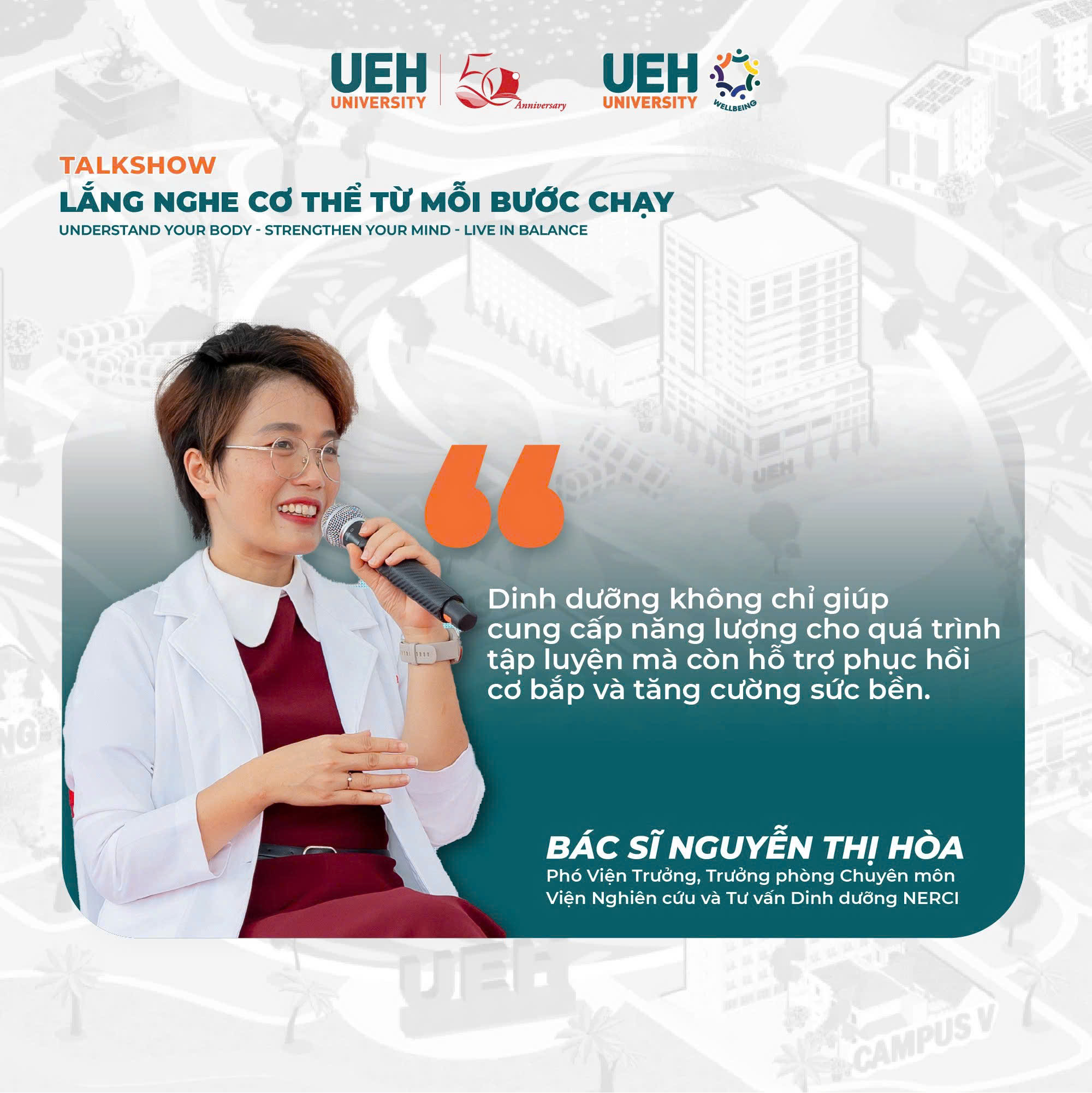 |
Q: After running or a workout session, what does the body need to recover effectively?
Dr. Nguyen Thi Hoa:
After exercise, the body needs protein for muscle recovery, carbohydrates to restore energy, and fluids to replace what was lost during training or competition.
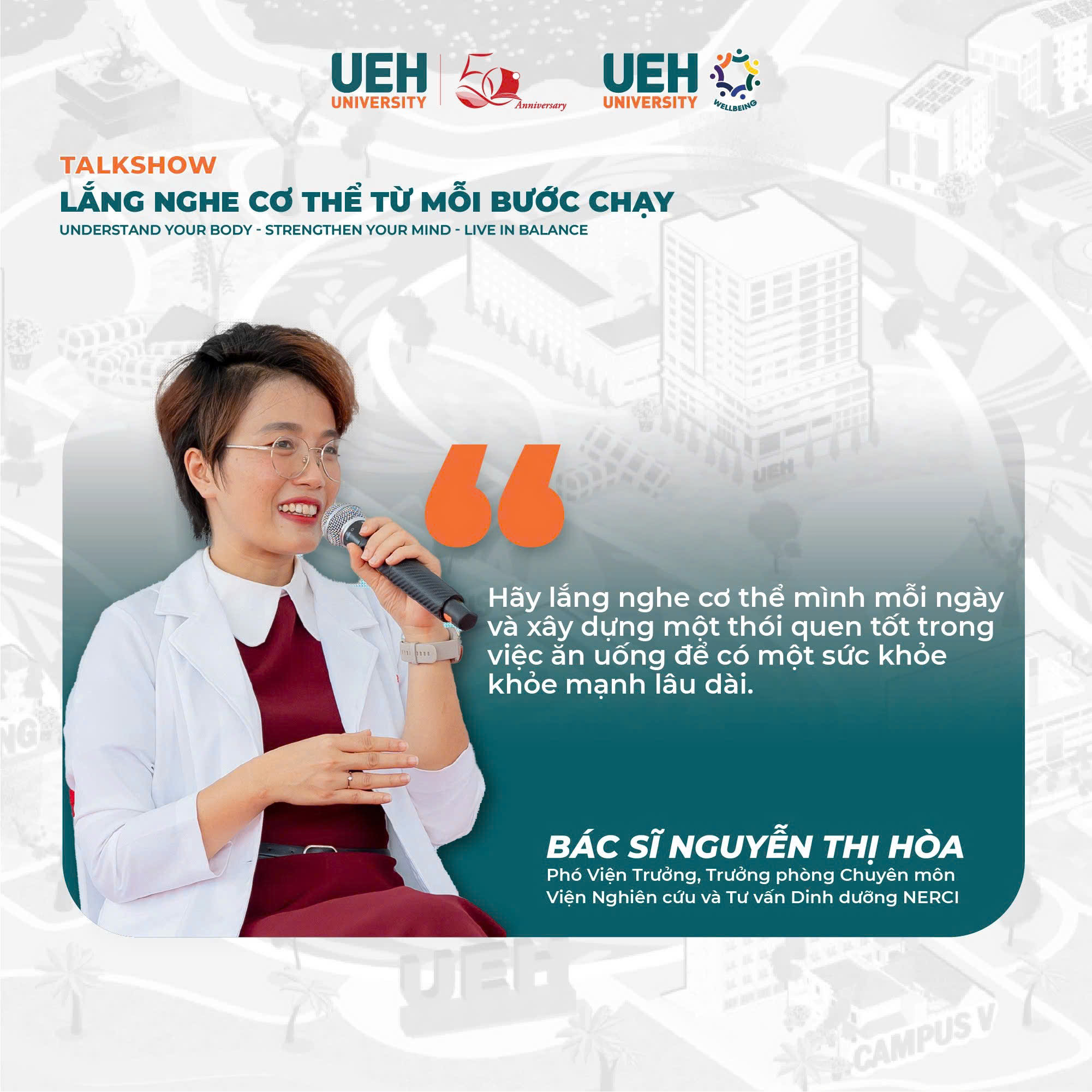 |
PANEL DISCUSSION WITH BOTH SPEAKERS
Q: How can a person tell whether they are training within their limits and truly listening to their body?
Ms. Nga Vo:
Beginners often want to progress quickly, but the body always needs time to adapt. If you feel tired, drained, or not at your best, don't hesitate to slow down, walk, or rest.
The body is not the same every day. What matters is not pushing yourself to complete a certain distance or hit a certain time, but knowing how to listen to what your body is telling you.
Dr. Nguyen Thi Hoa:
Listening to your body also means listening to its needs for nutrition, rest, and recovery. When we understand the signals our body sends, we are better equipped to adjust our training and diet accordingly.
Q: If you could choose one small change that could make a big difference to someone's health, what would it be?
Dr. Nguyen Thi Hoa:
Slow down and listen to your body every day. Build the habit of nourishing yourself properly and consistently, not just on training days, but as part of everyday life.
Ms. Nga Vo:
Start small. A light workout, a short run, maintained regularly each day. There is no need to run far or train hard right from the beginning.
What matters is building the habit, feeling the changes in your body day by day, and enjoying the journey. When you stay consistent with small steps, big results will come in time.
Talkshow là một trong những hoạt động đồng hành của UEH Half Marathon 2026, nhằm mang đến những góc nhìn thực tế về chạy bộ, dinh dưỡng và sức khỏe toàn diện, góp phần trang bị cho các vận động viên những kiến thức cần thiết trước khi bước vào hành trình chinh phục đường chạy di sản Tri thức - Con người - Tương lai.
The talk show was one of the companion activities of the UEH Half Marathon 2026, offering grounded perspectives on running, nutrition, and holistic health to equip runners with the knowledge they need before embarking on the heritage race course: Knowledge - People - Future.
Through insights shared by experienced experts and athletes, UEH hopes that every runner will not only cross the finish line but also better understand their body, learn how to protect their health, and build an active, sustainable lifestyle for the long term.
News, photos: UEH 50th Anniversary Organizing Committee, Department Communications and Partnerships