UEH and UNDP Foster the Integration of Responsible Business Conduct and ESG into Vietnam's Higher Education Curriculum
14 Mar, 2026
On March 10, the University of Economics Ho Chi Minh City (UEH), in collaboration with the United Nations Development Programme (UNDP) in Vietnam, and with the support of the Government of Japan, hosted an Academic-Policy-Business Consultation Workshop on Responsible Business Conduct in Vietnam.
The event was designed as a multi-stakeholder dialogue, following the "three-pillar" (university-state-enterprise) model, to identify challenges and opportunities and to propose a systematic roadmap for integrating Responsible Business Conduct (RBC) and ESG into Vietnam's higher education curriculum.
The workshop was attended by Ms. Eri Ogawa, Consul for Economic Affairs at the Consulate-General of Japan in HCMC; Dr. Tran Minh Son, Director of the Center for Legal Support for Small and Medium Enterprises (Department of Civil - Economic Law, Ministry of Justice); Ms. Do Le Thu Ngoc, Assistant Resident Representative and Head of the Inclusive Growth Unit at UNDP Vietnam; Assoc. Prof. Dr. Nguyen Tat Toan, Rector of Nong Lam University, HCMC; Assoc. Prof. Dr. Thai Ba Can, Rector of Gia Dinh University; along with faculty and department heads from universities across HCMC and representatives from the business community.
From UEH, attendees included: Assoc. Prof. Dr. Bui Quang Hung – UEH Interim President; Assoc. Prof. Dr. Pham Khanh Nam – Head of the Department of Research, Development and Global Engagement (RDGE); along with representatives from various units, faculty, and interested staff.
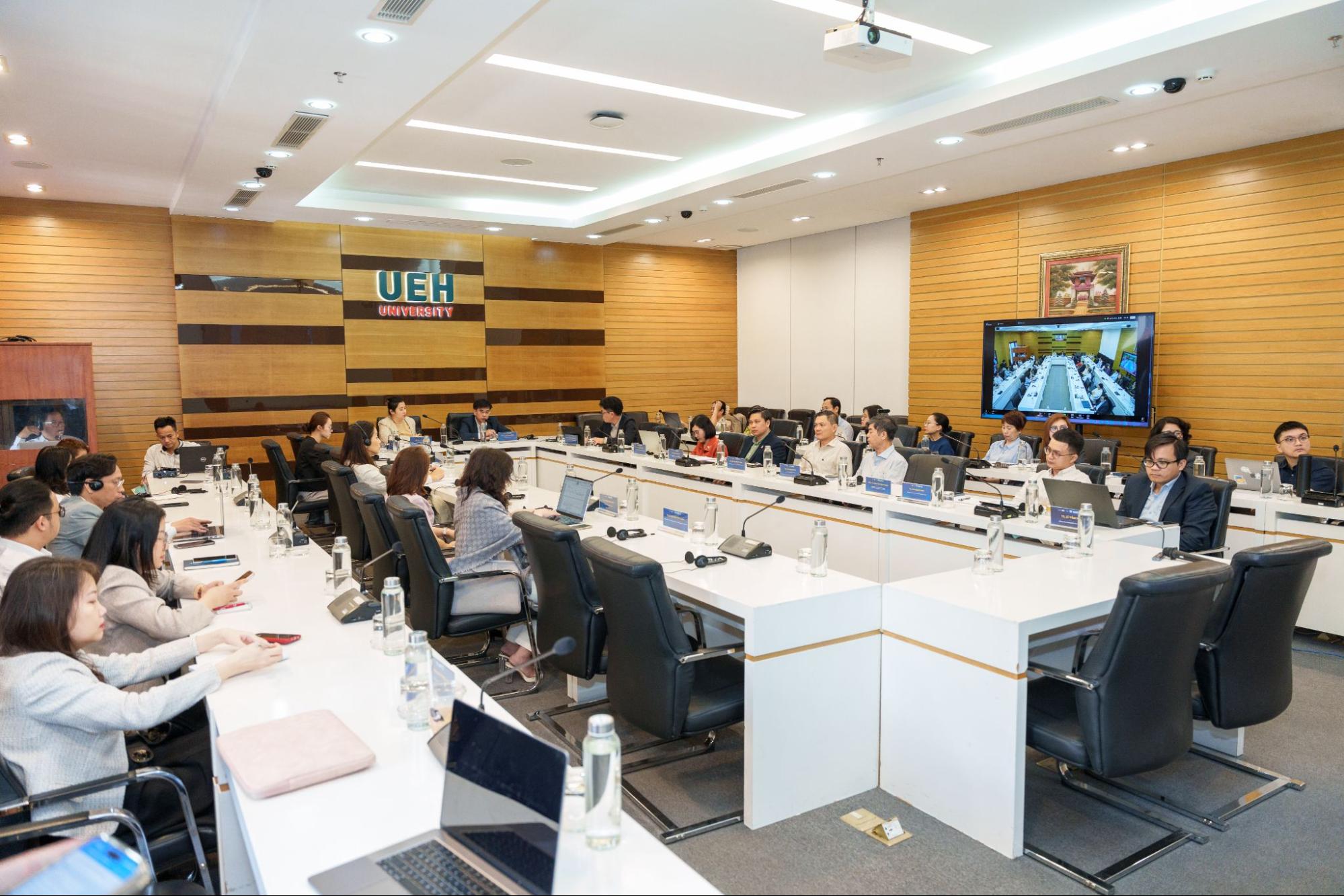
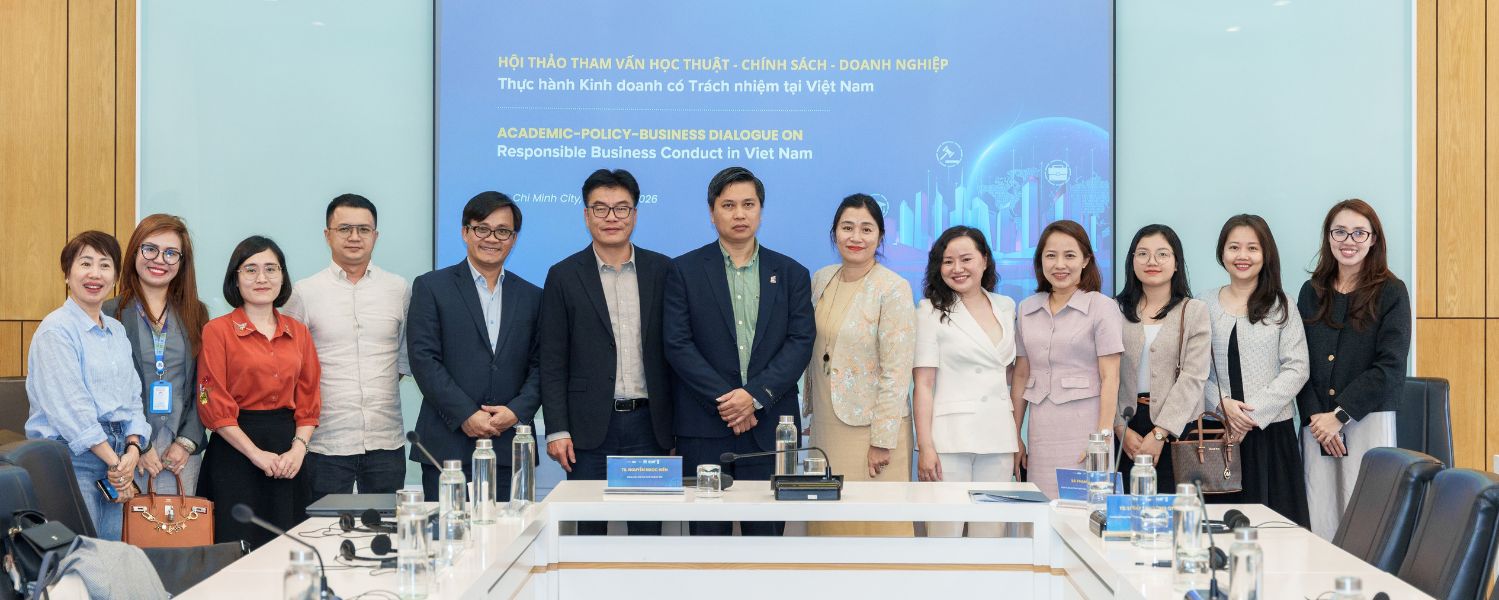
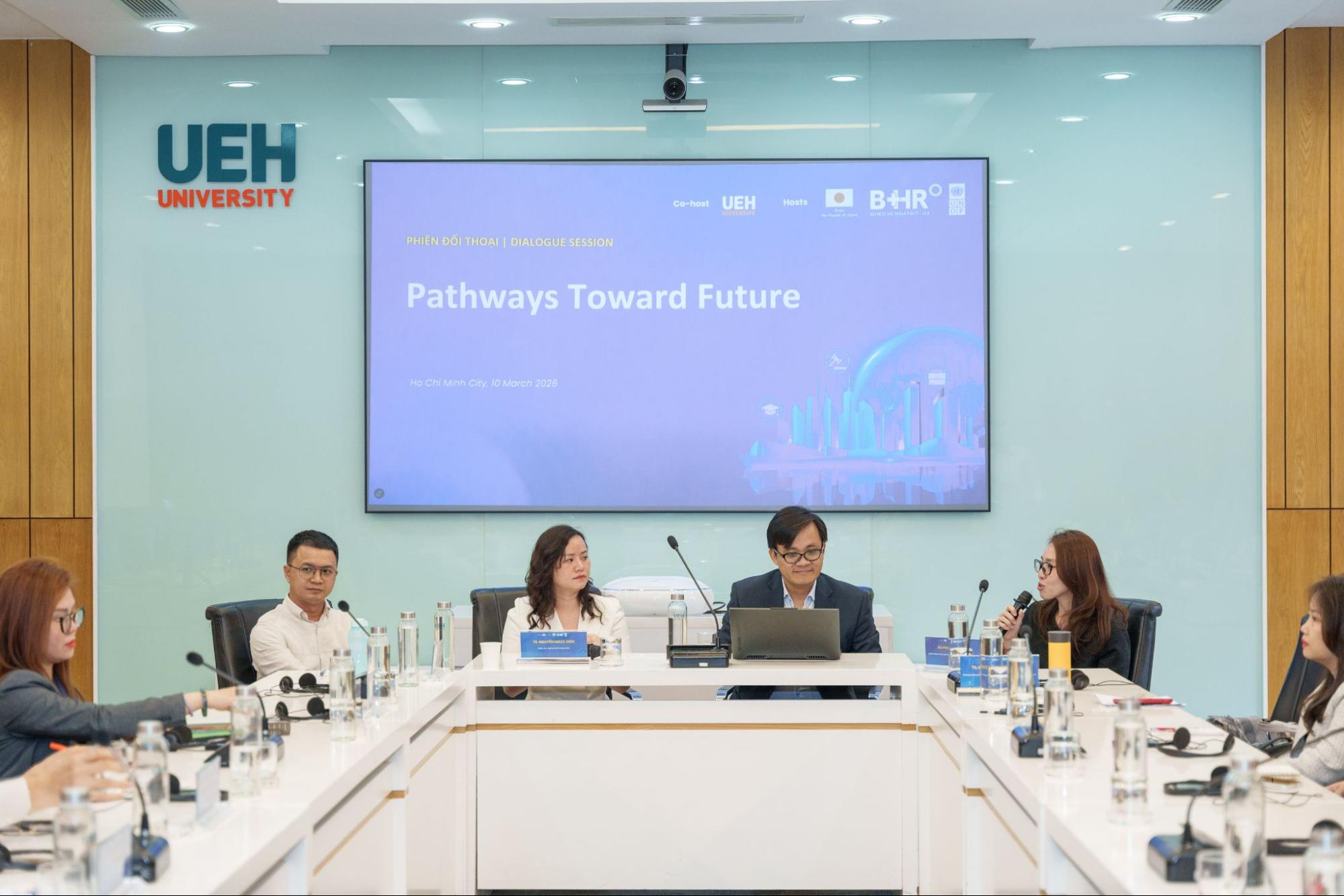
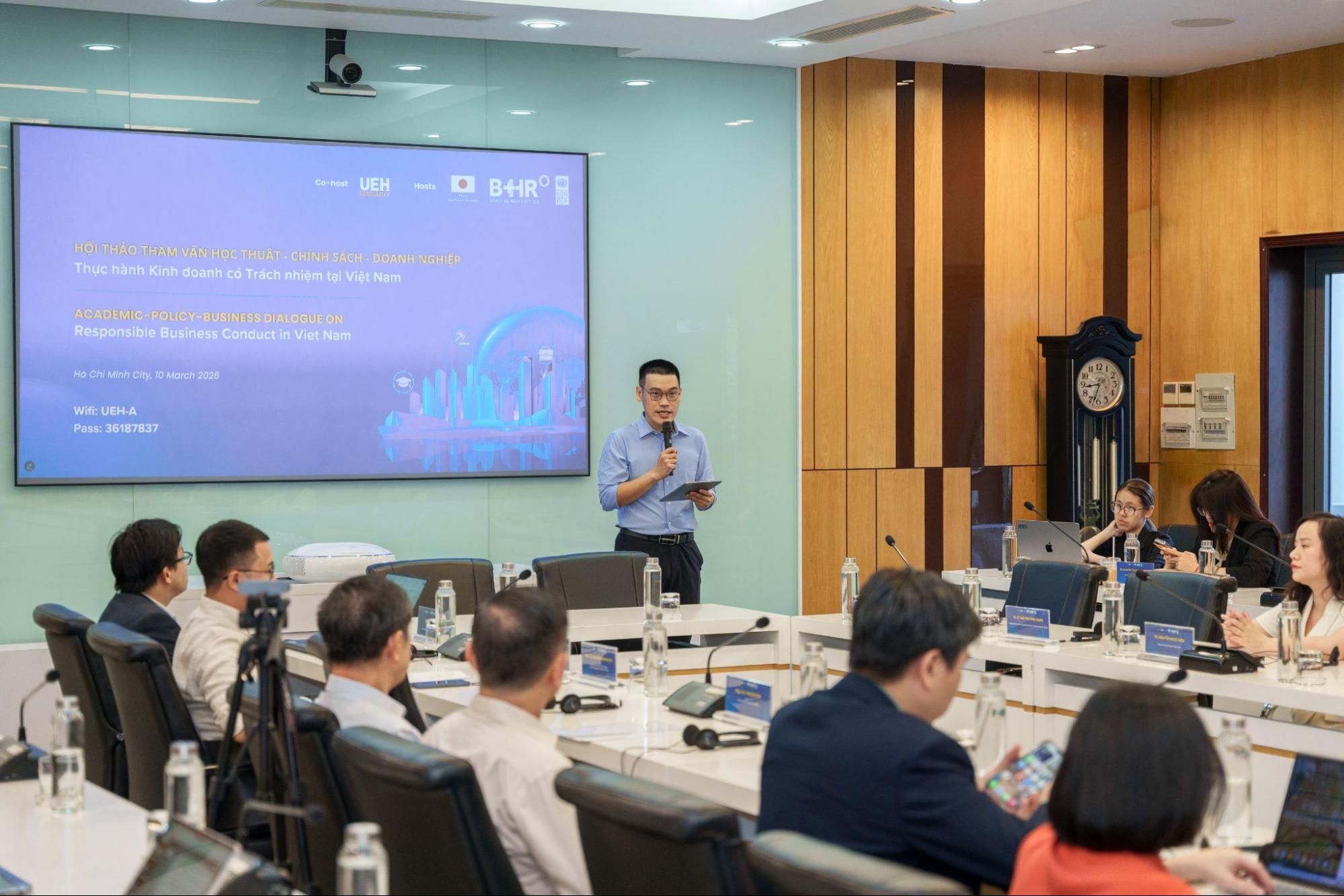
An overview of the Academic-Policy-Business Consultation Workshop on Responsible Business Conduct in Vietnam.
In his opening remarks, Assoc. Prof. Dr. Bui Quang Hung emphasized that the global context is rapidly shifting towards sustainable development, transparent governance, and social responsibility, with ESG and RBC standards becoming increasingly critical requirements of the international business environment. In Vietnam, the issuance of the National Action Plan (NAP) on RBC under Decision No. 843/QĐ-TTg in 2023 was a pivotal milestone, demonstrating the nation's commitment to integrating with international standards for sustainable business and promoting the implementation of the UN Guiding Principles on Business and Human Rights (UNGPs). In this context, higher education is identified as playing a foundational role in training a high-quality workforce and fostering a mindset of responsibility and sustainable governance for the future generation of leaders.
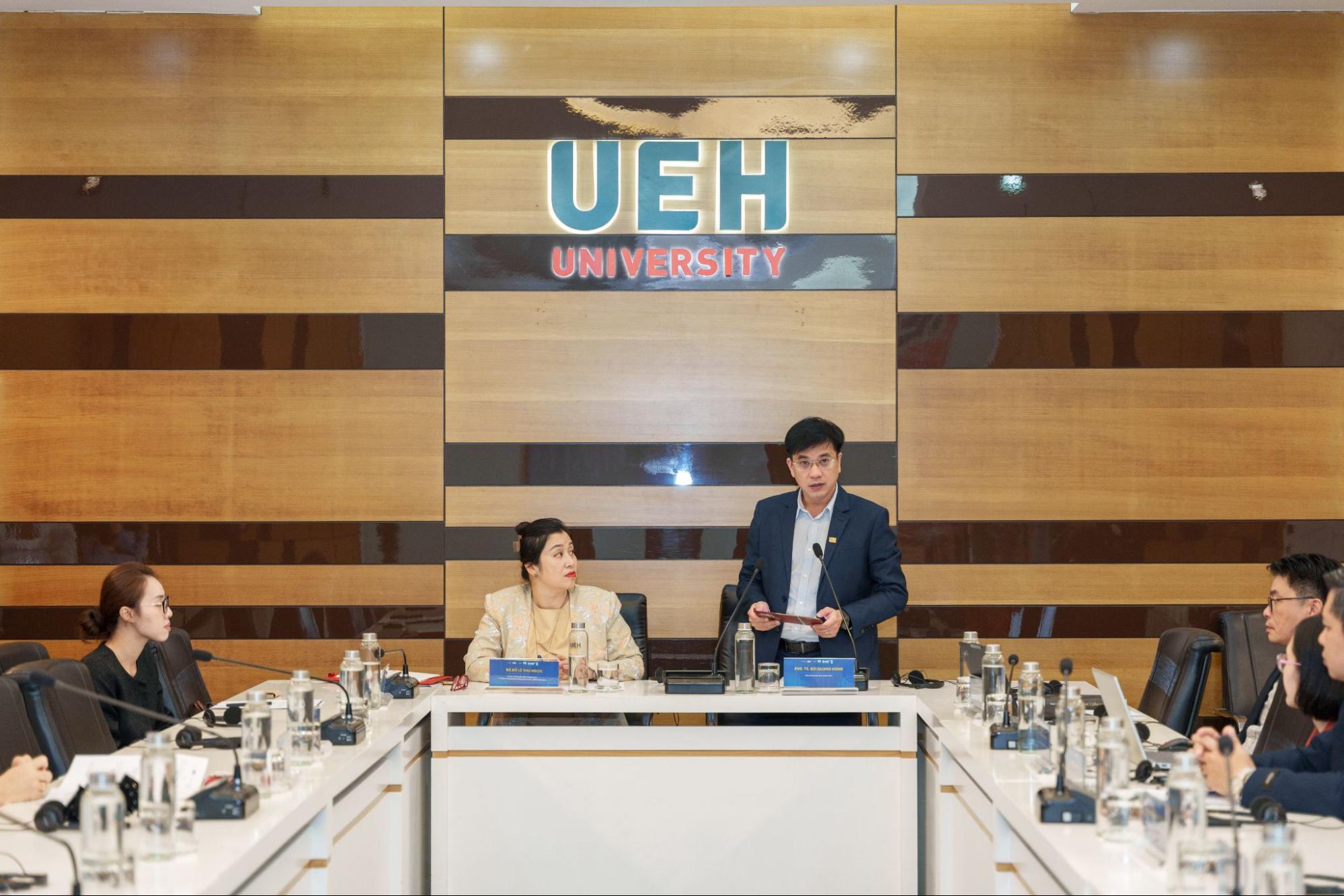
Assoc. Prof. Dr. Bui Quang Hung, UEH Interim President, delivering his opening remarks
With its "Sustainable University" development orientation, UEH continues to affirm its commitment to integrating sustainable development and social responsibility into its teaching, research, governance, and community engagement. This workshop is a concrete step toward realizing the contents of the NAP, particularly the integration of ESG/RBC into the curriculum and enhancing the capacity of faculty members.
In his keynote presentation, a UEH representative shared practical experiences in incorporating sustainable development, governance, and social responsibility into training activities. He also highlighted common challenges, such as the readiness of localized learning materials, pedagogical capacity, and the need to ensure quality and interdisciplinarity during integration.
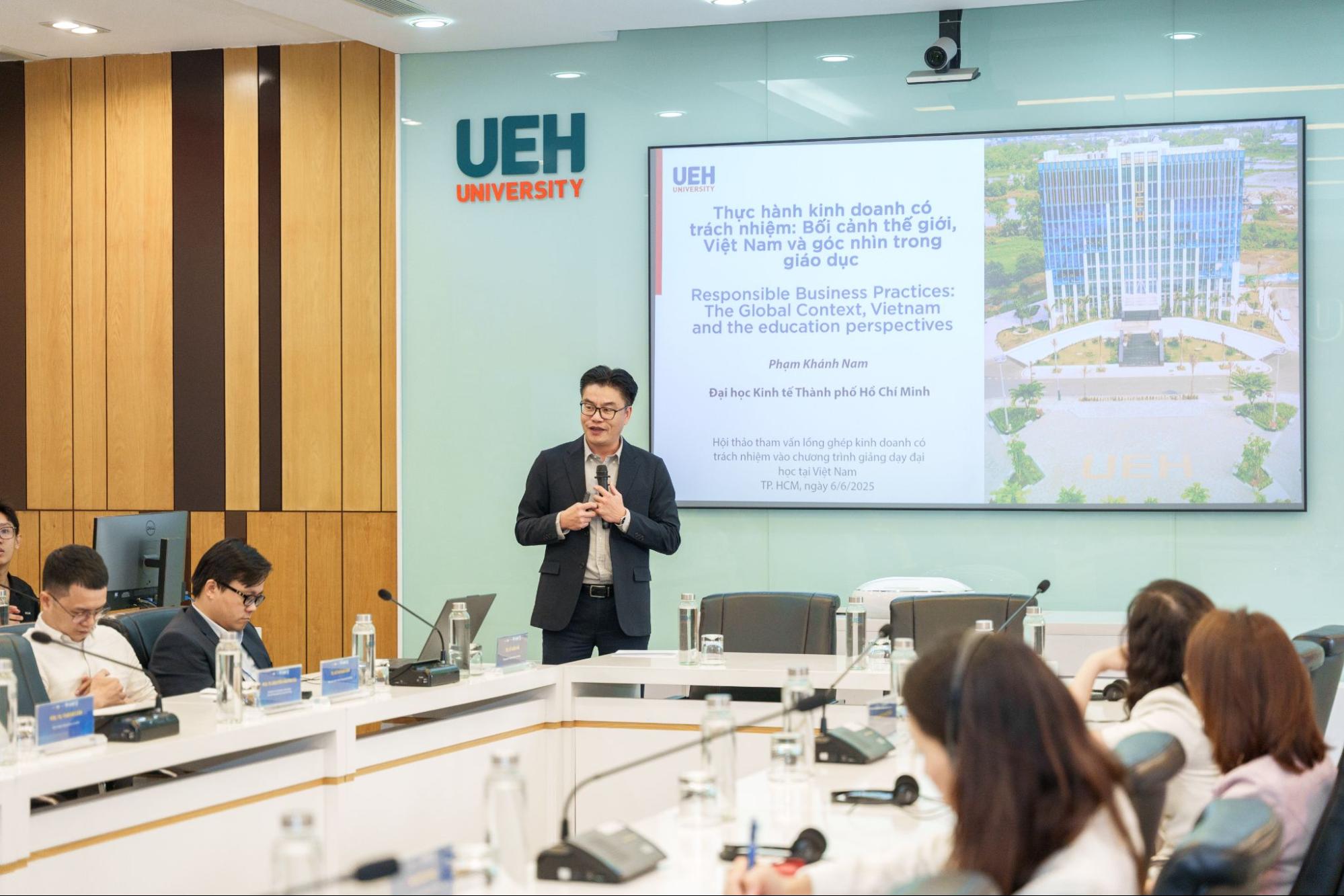
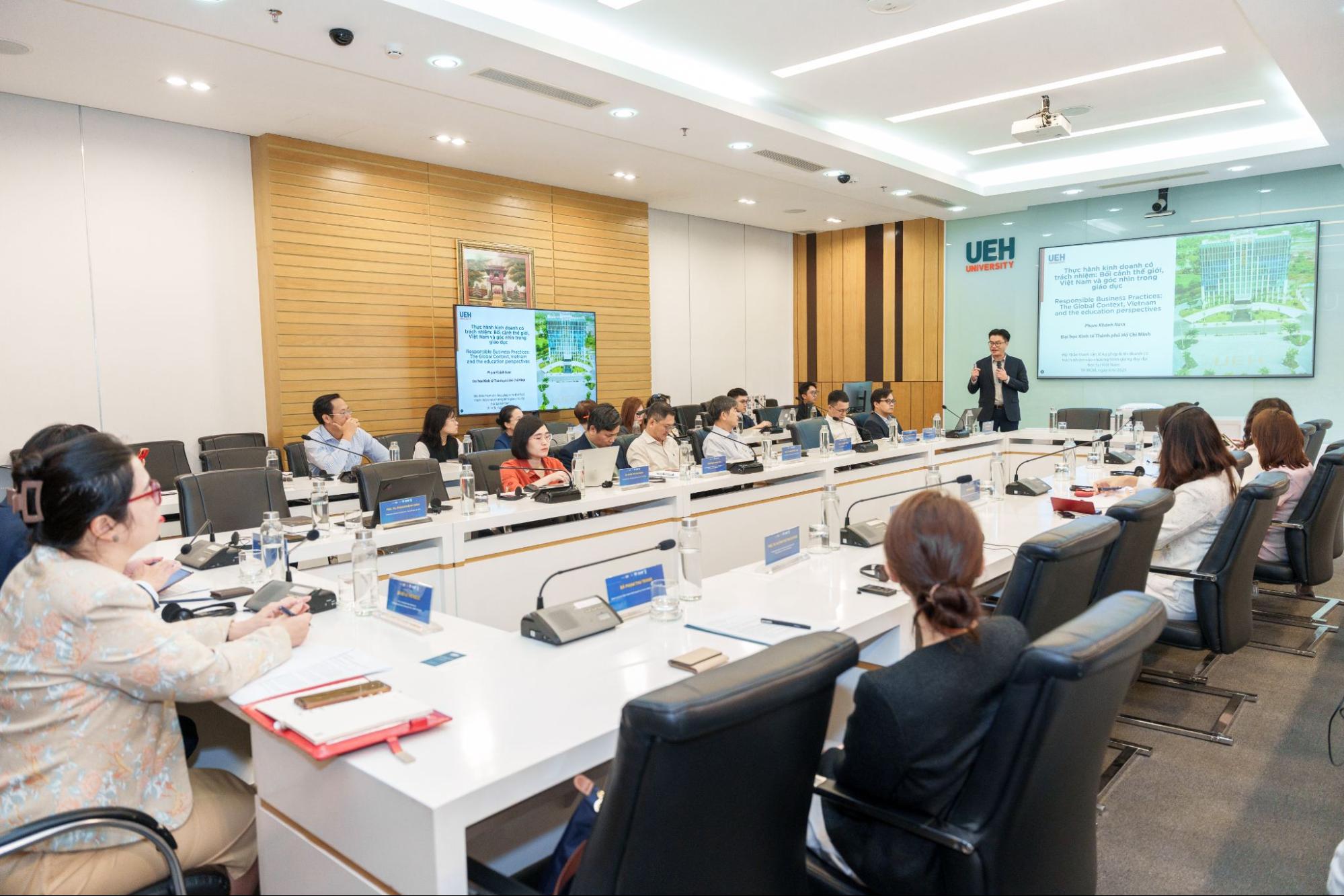
Assoc. Prof. Dr. Pham Khanh Nam, Head of the RDGE, presenting the Keynote on "Responsible Business Conduct: Global and Vietnamese Contexts, and an Educational Perspective"
Two subsequent dialogue sessions focused on "opportunities, challenges, and strategic vision" and "orientations for the future." Delegates from academia, regulatory agencies, and the business community discussed the current landscape of RBC/ESG integration, shared implementation experiences, and proposed systematic solutions.
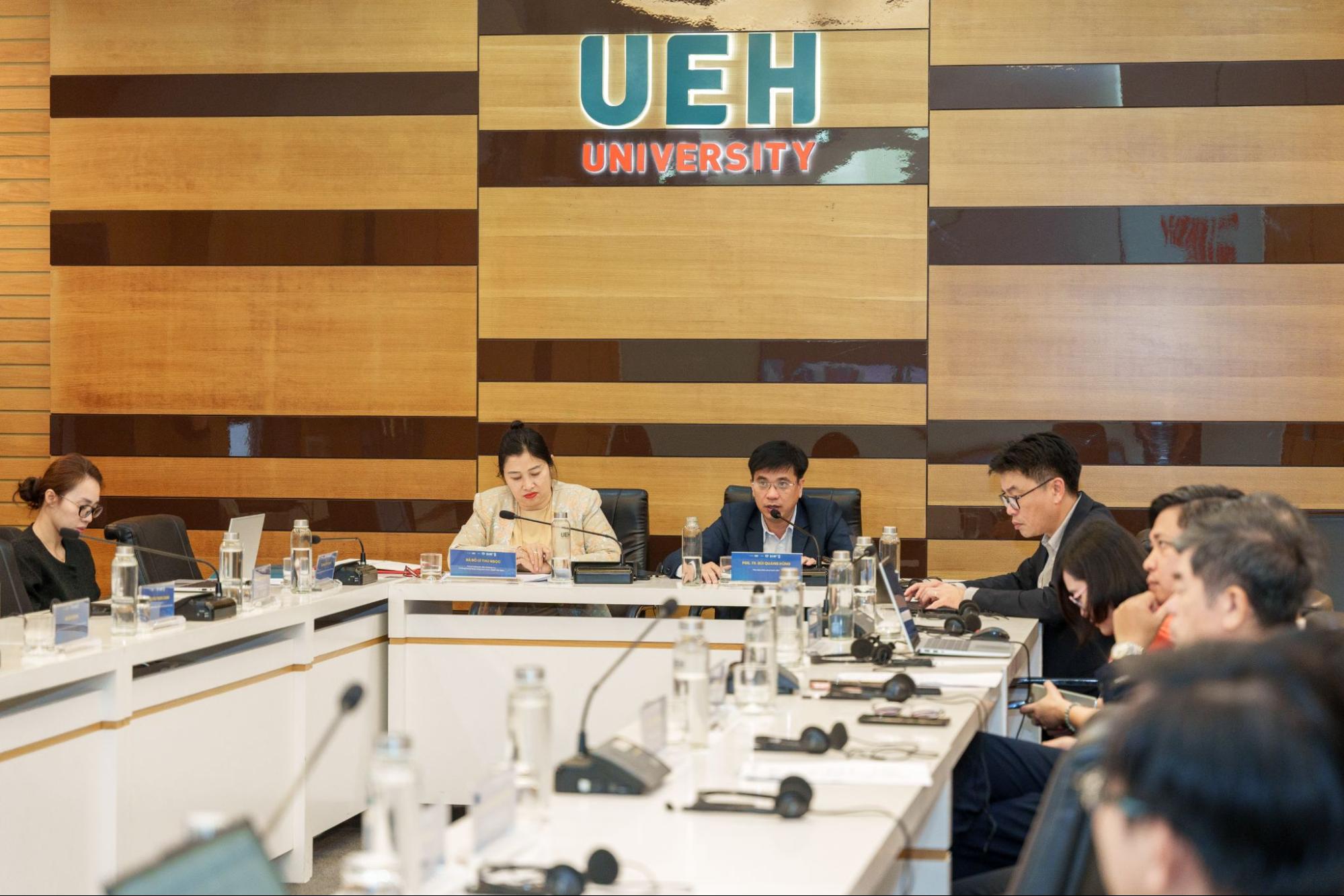
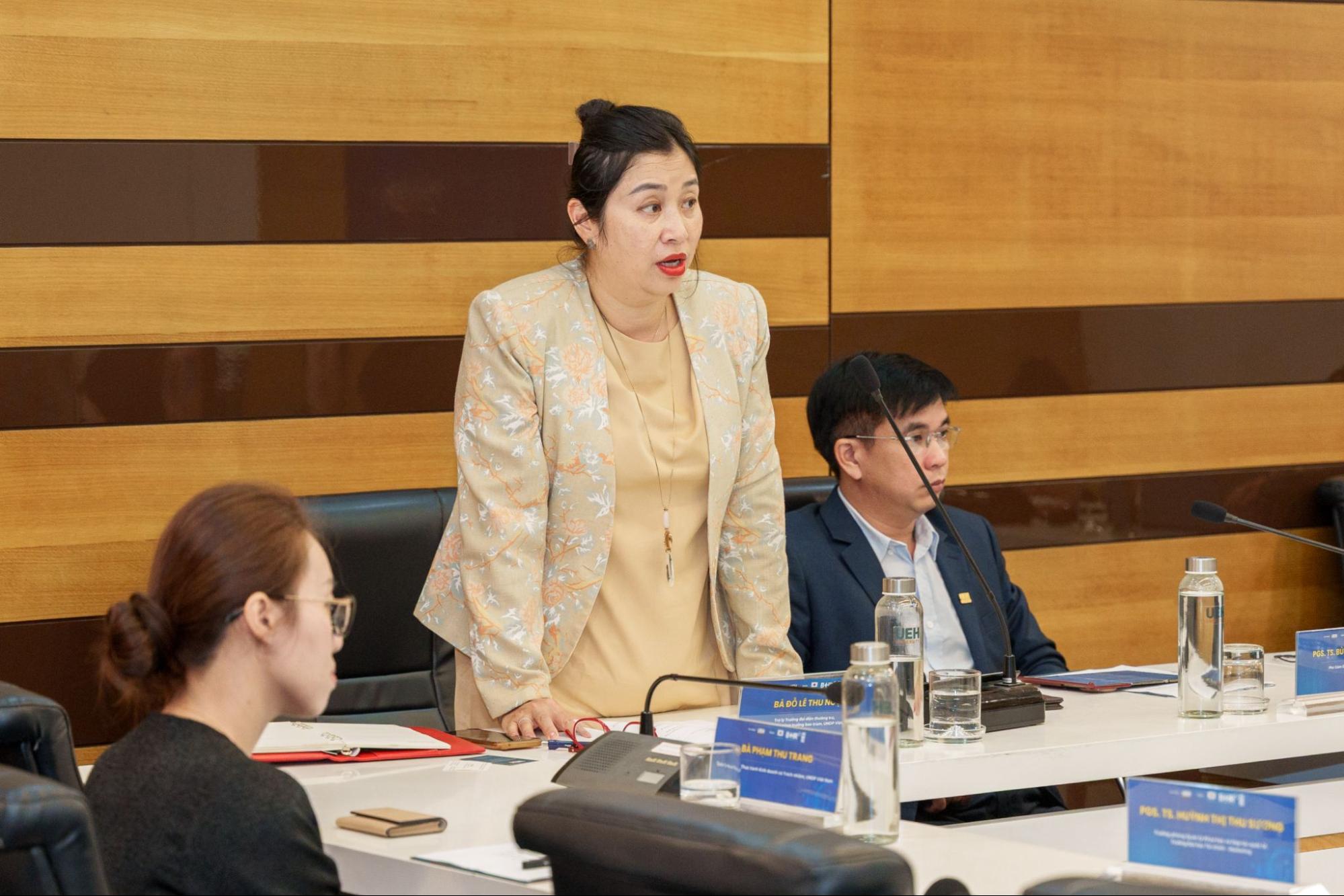
Assoc. Prof. Dr. Bui Quang Hung and Ms. Do Le Thu Ngoc from UNDP Vietnam co-chairing the dialogue session
The discussions highlighted three priority areas: (1) policy and support mechanisms to promote synchronous implementation; (2) a roadmap for curriculum integration at various levels (from standalone modules to integration into existing courses and program-level outcomes); and (3) enhancing faculty capacity through flexible models like train-the-trainer programs, certifications, co-teaching with businesses, and developing a case bank and assessment tools.
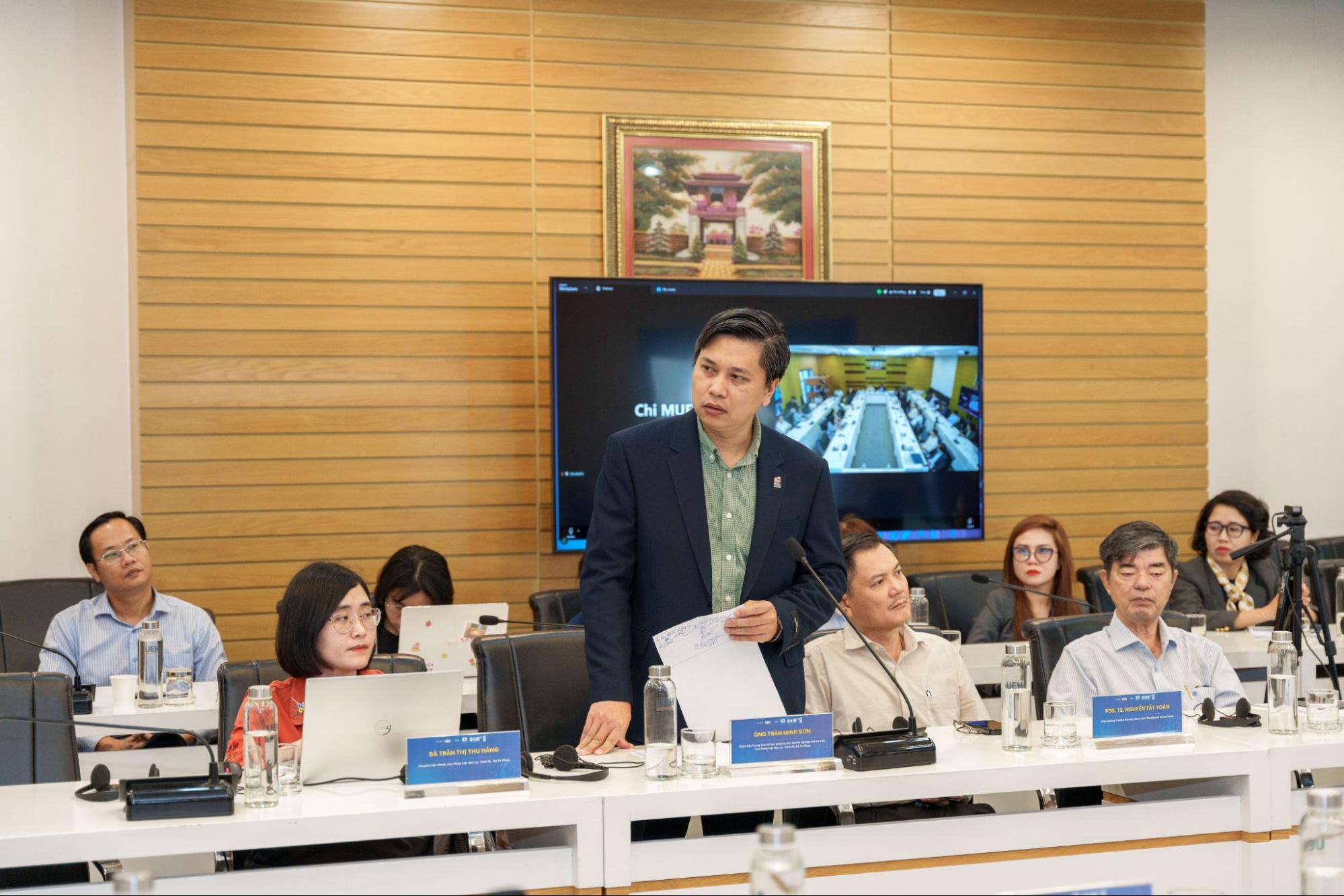
Dr. Tran Minh Son, Director of the Center for Legal Support for Small and Medium Enterprises, sharing his views during the discussion session
Notably, the dialogue also underscored the crucial role of businesses in ensuring the practical relevance of RBC/ESG education. Businesses can participate in co-designing courses, providing Vietnamese case studies, sharing standards and implementation lessons, and partnering through mentoring, internships, and recruitment. Participants agreed that for sustainable cooperation, a "win-win" mechanism with clear coordination and a regular quality feedback loop between universities, businesses, and regulatory agencies is essential.
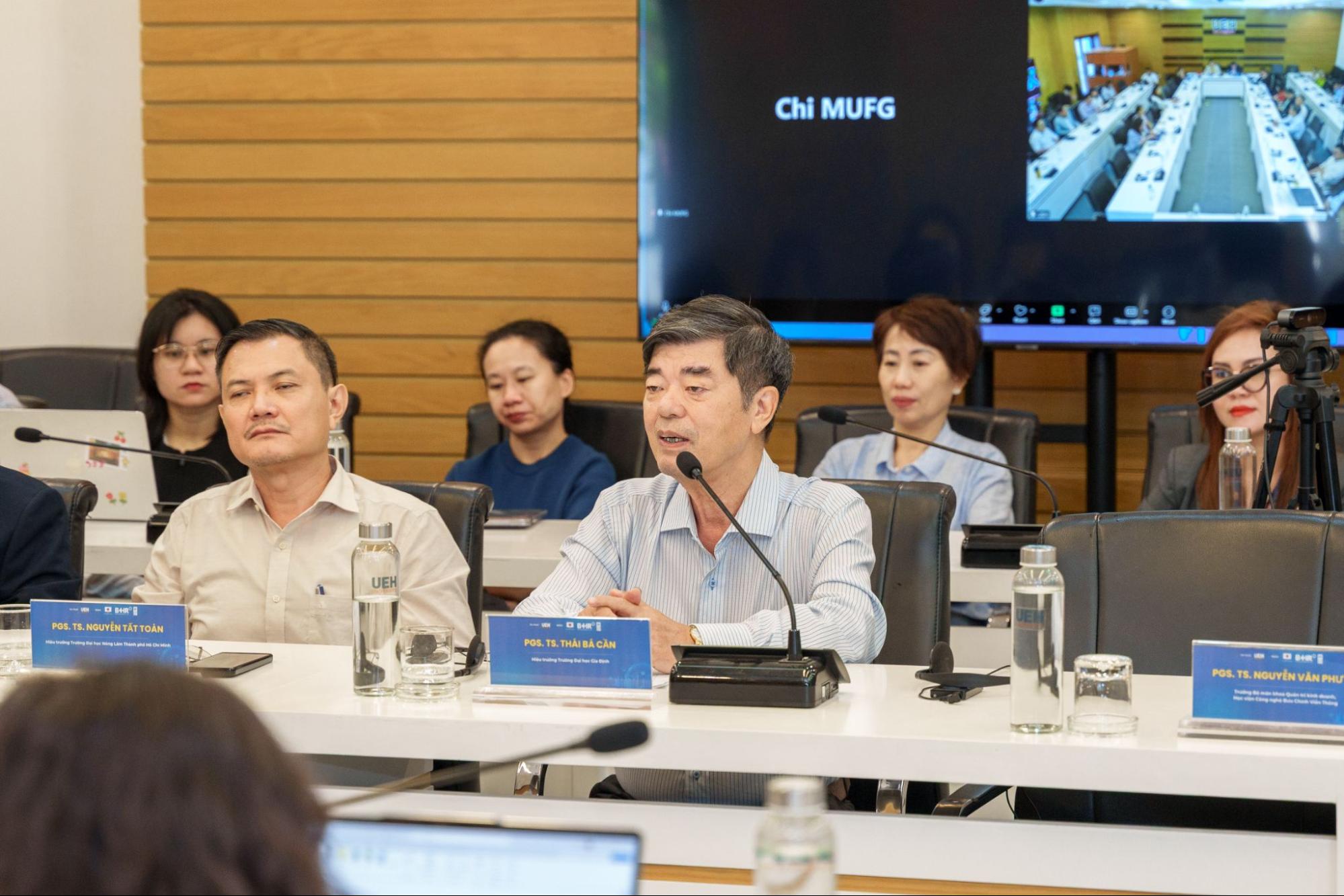
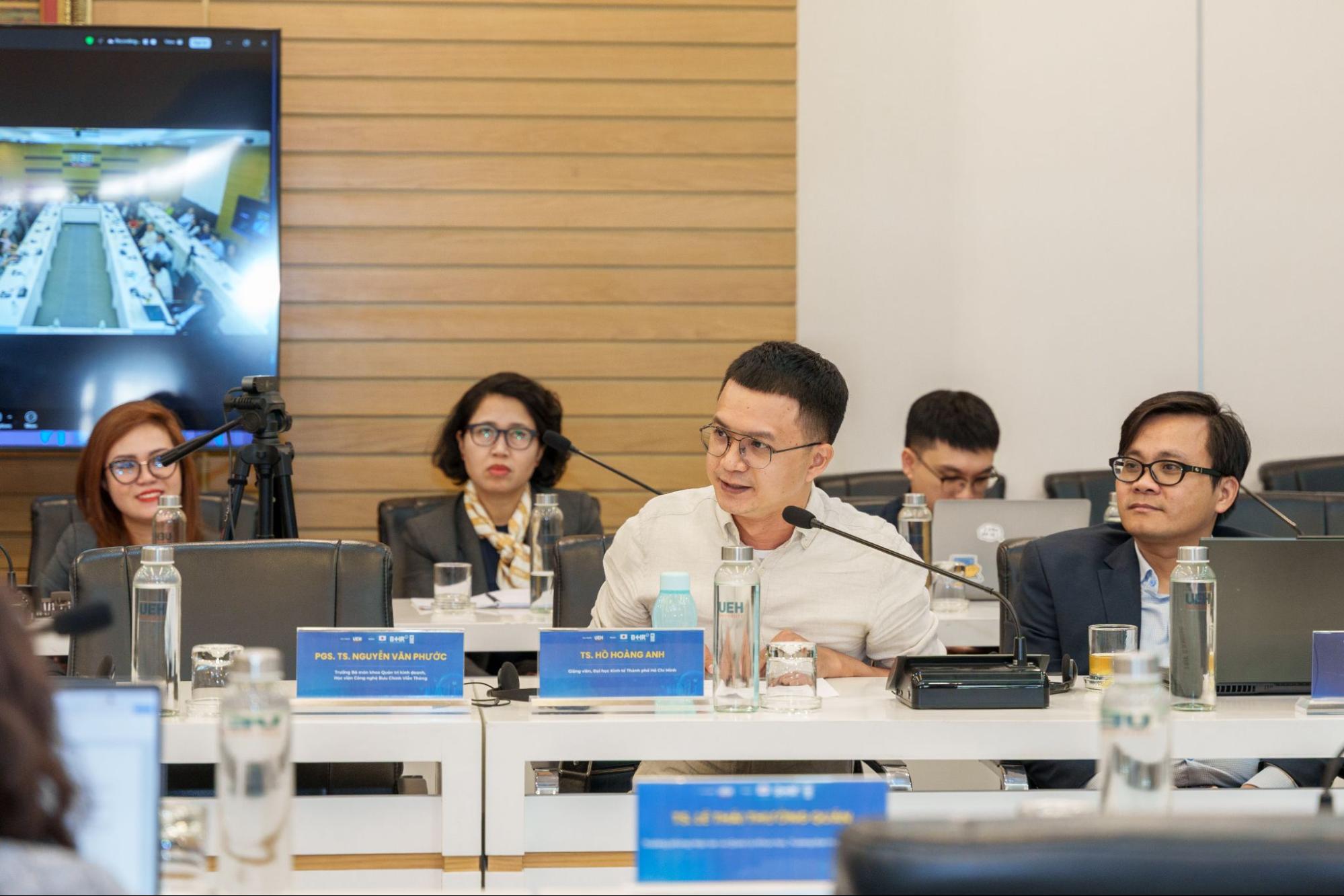
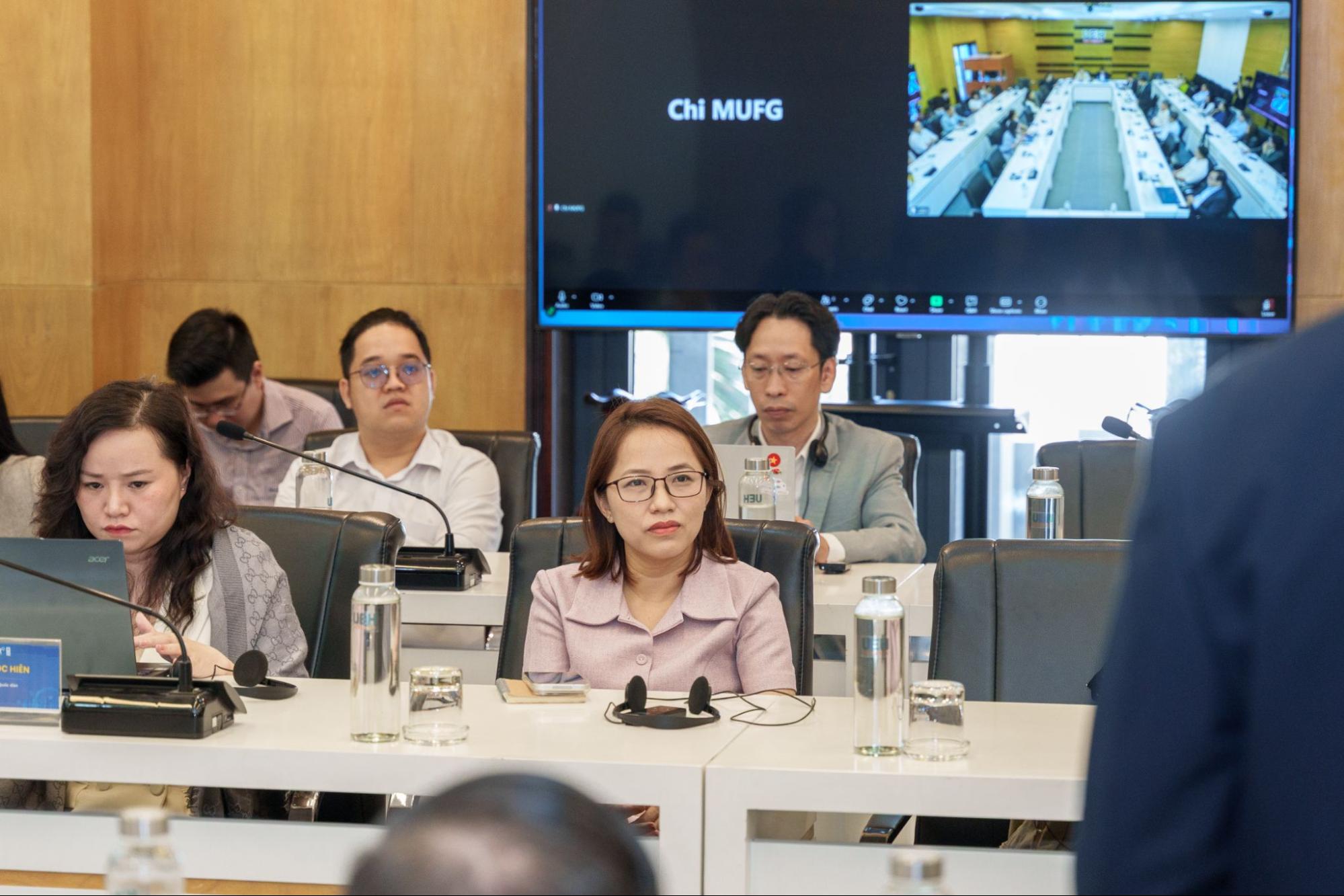
Delegates sharing their opinions during the discussion sessions
Concluding the workshop, UEH and UNDP took note of the policy proposals and implementation recommendations from all stakeholders, which will serve as a basis for future activities. Through this multi-stakeholder dialogue, the workshop has helped to strengthen the foundation for cooperation between academia, policy, and business, all aimed at the common goal of promoting education on responsible business to meet Vietnam's integration and sustainable development needs in the new era.
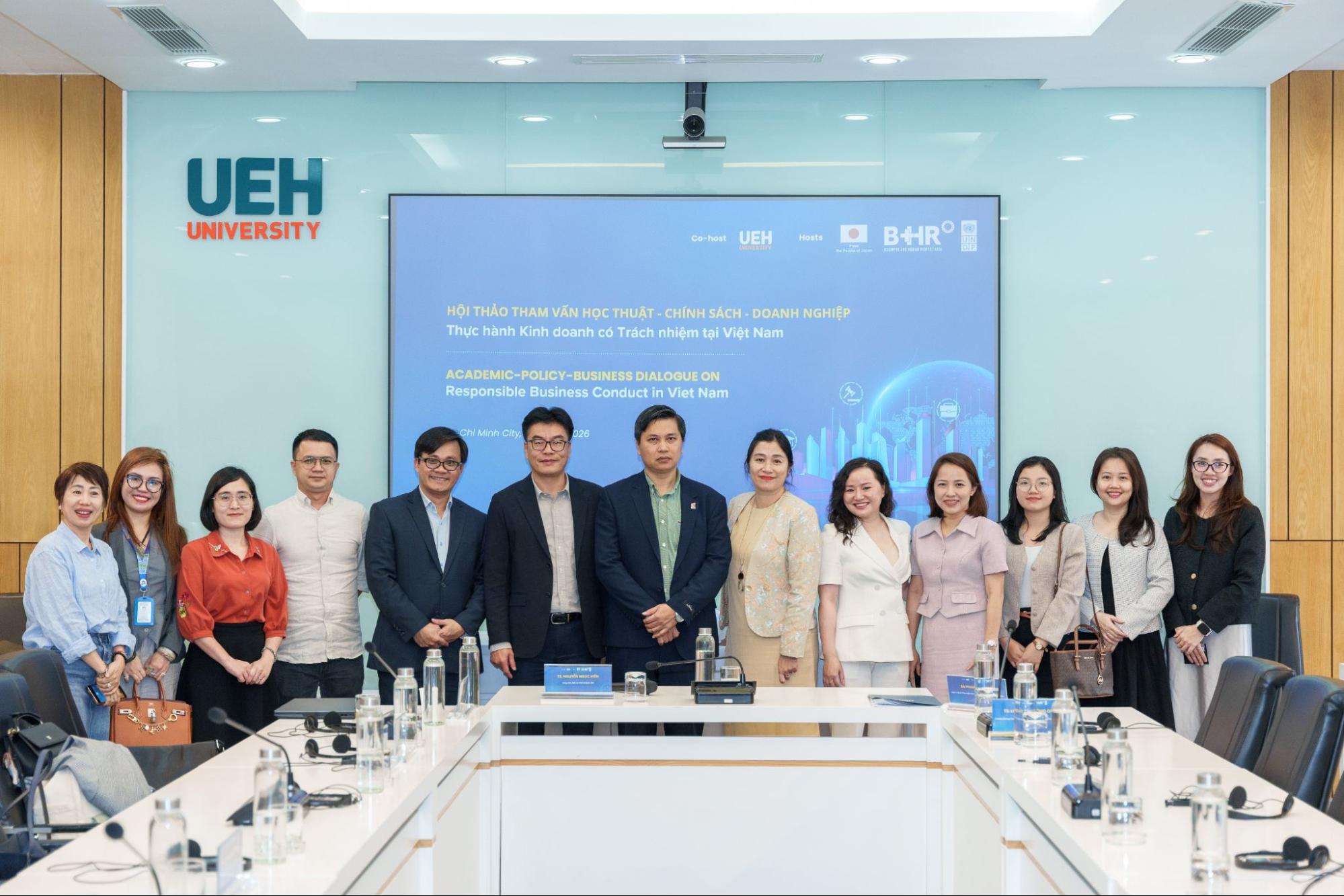
Other images from the event:

In the Press:
Government News: Strengthening Coordination to Promote Responsible Business in Vietnam
Pillars: Training, Community Connection
Project: UEH Connecting
News, photos: UEH Institute of Innovation