Training course "Co-creating Future-Ready Education: Applying AI and Big Data to Transform Teaching and Learning in Vietnam" - Connecting a community of lecturers from 26 higher education institutions
08 Sep, 2026


After 15 hours of training combined with numerous mentoring and coaching sessions, the training course "Co-creating Future-Ready Education: Applying AI and Big Data to Transform Teaching and Learning in Vietnam" has officially concluded. This activity is part of a collaborative project between the University of Economics Ho Chi Minh City (UEH) and the University of Roehampton (United Kingdom), within the framework of the TNE Exploratory Grant 2025 funded by the British Council, along with matching funds from UEH.
Connecting a community of lecturers from many higher education institutions
From the moment it was launched, the programme attracted 135 registrations, from which 45 lecturers from 26 higher education institutions across many localities were selected to join the course. The course clearly reflected its diversity, bringing together teachers from a wide range of teaching and research fields. The strong participation of female lecturers and of teachers from many regions across the country affirmed the significant demand for updated knowledge, while demonstrating a proactive spirit of connection and of promoting technology adoption within Vietnam’s higher education community today.
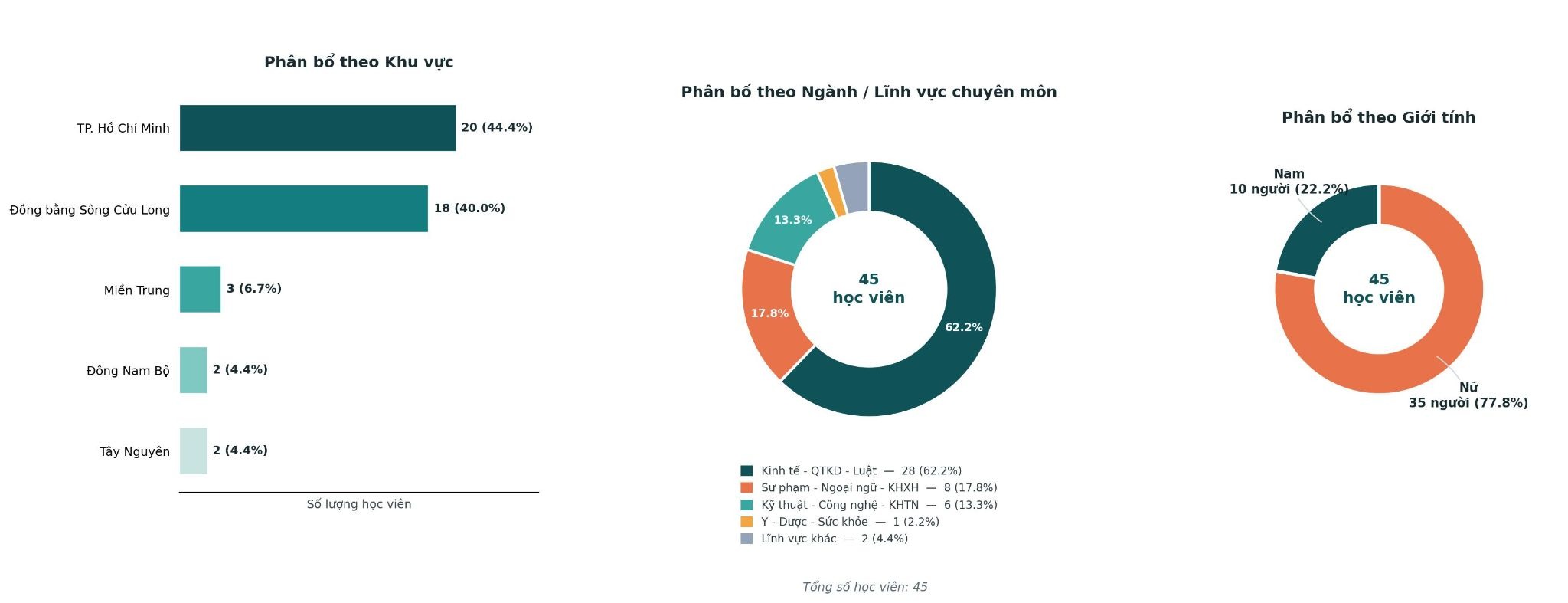
The diverse profile of candidates attending the training course
Speaking at the opening of the training course, Assoc. Prof. Dr. Nguyễn Phong Nguyên - Rector of UEH College of Business and Project Director emphasized: “Given the rapid development of AI and Big Data, the key question is no longer ‘whether to use AI’, but ‘how to use AI to create genuine value for education’. However advanced technology becomes, it cannot replace the role of the teacher. AI can help us process information faster, design content more flexibly and understand learners better. Yet it is teachers who provide direction, verify, inspire and ensure that technology is used responsibly and humanely.”
This message also ran throughout the design of the course, with content on accuracy, bias, privacy, ethics and responsibility in using AI integrated alongside hands-on activities. In doing so, the programme pursued a balanced approach: harnessing the potential of technology while keeping educational quality and the roles of learners and teachers at the centre.
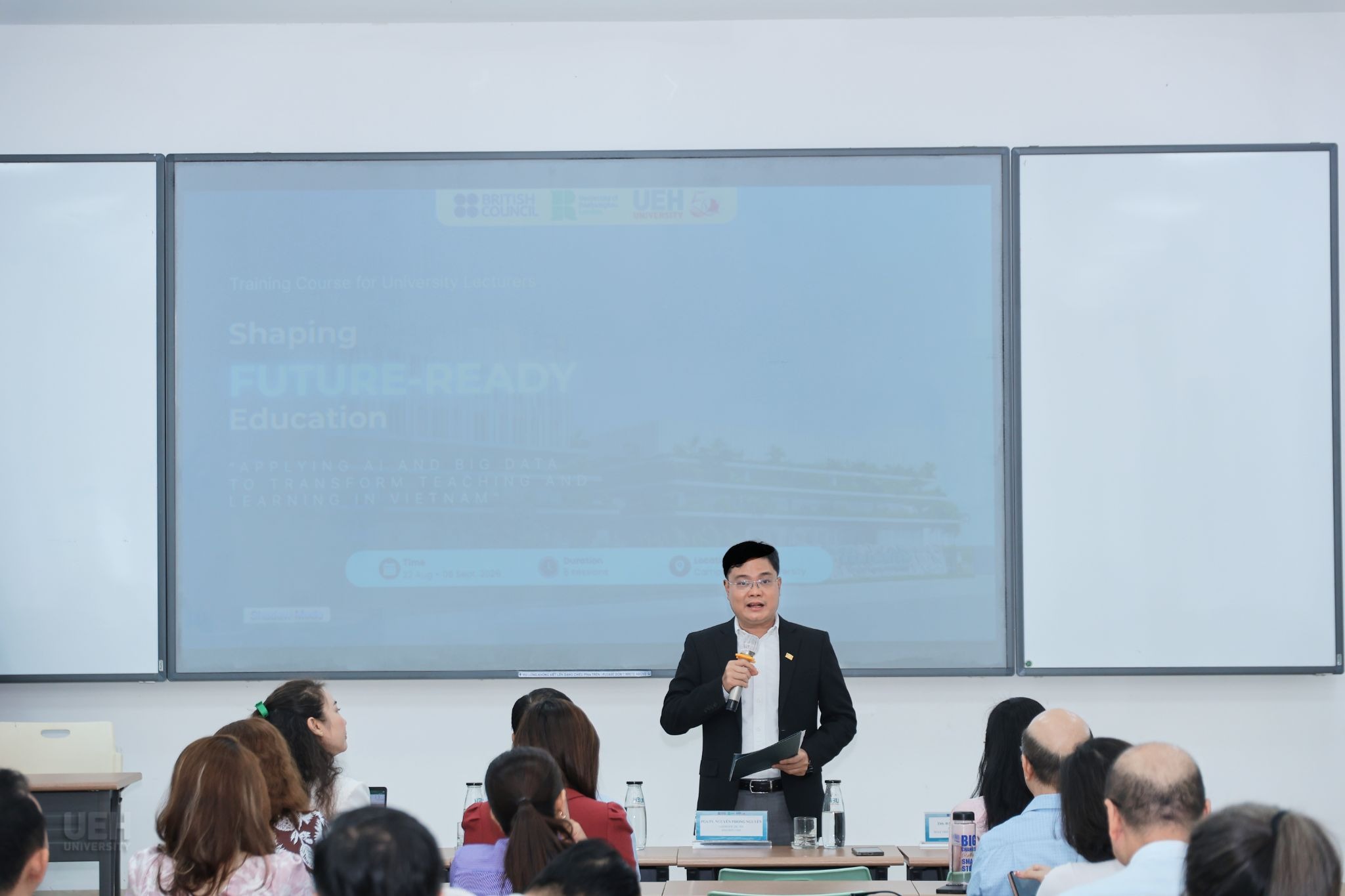 Assoc. Prof. Dr. Nguyễn Phong Nguyên - Rector of UEH College of Business and Project Director delivers the opening remarks
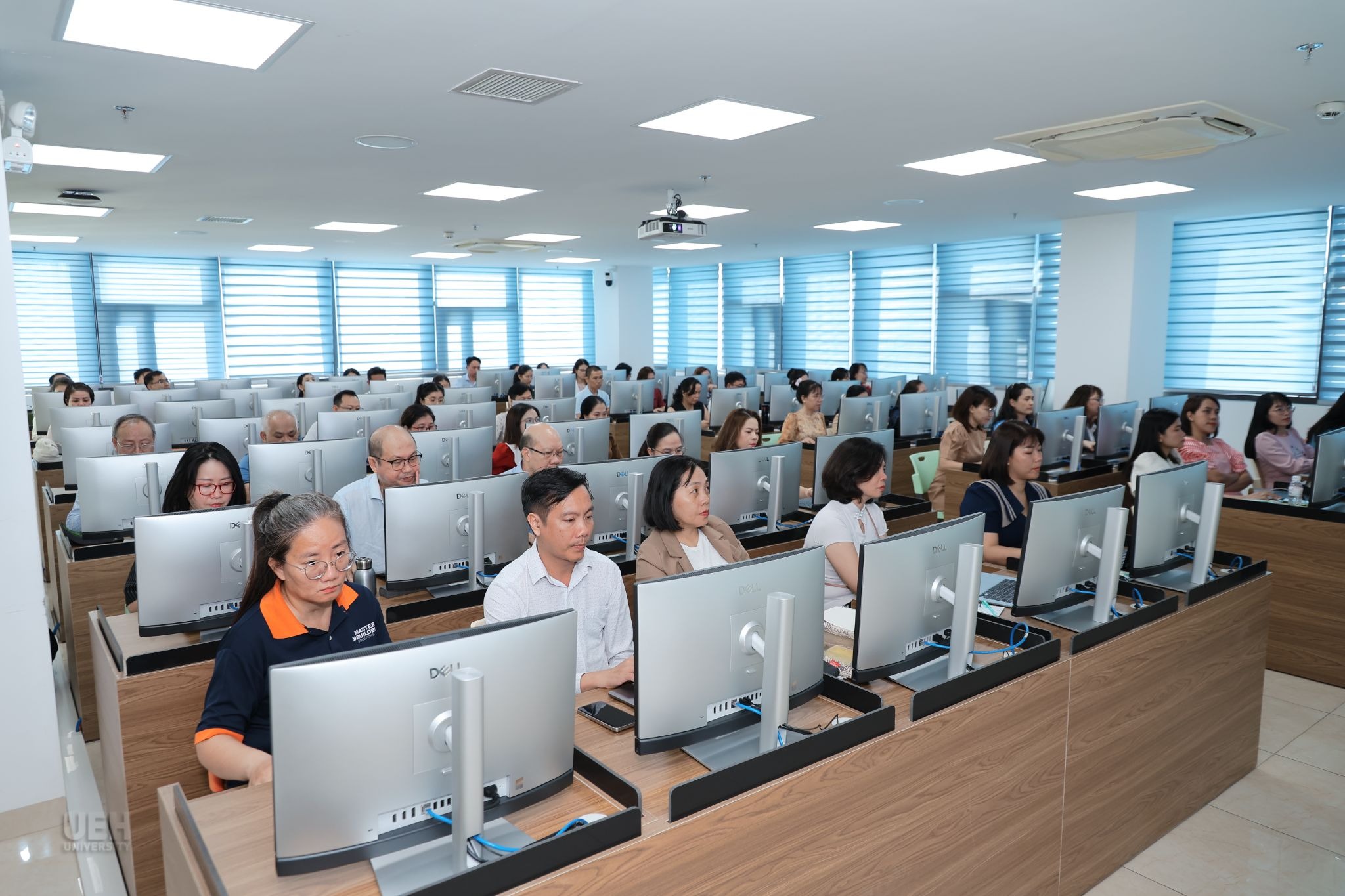
Participants practise with AI tools during the course
From engaging with technology to solving real teaching challenges
A distinctive feature of the course is that it does not focus on equipping participants with in-depth technical knowledge, but rather on their ability to bring AI and Big Data into their own subjects. The course was designed to combine foundational knowledge, hands-on practice with tools, real-world cases and applied projects; participants were not required to have specialist knowledge of programming or AI in order to take part.
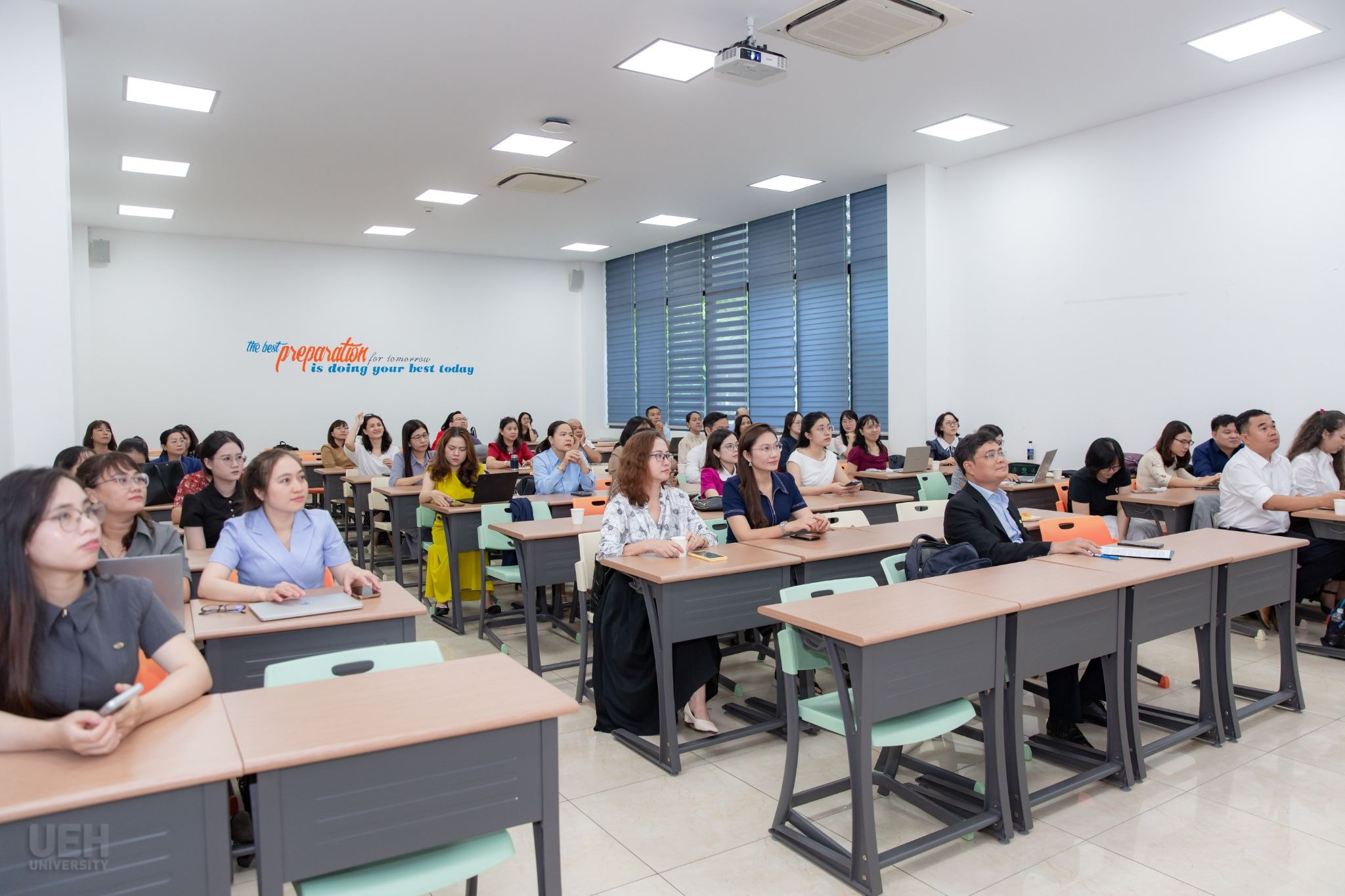
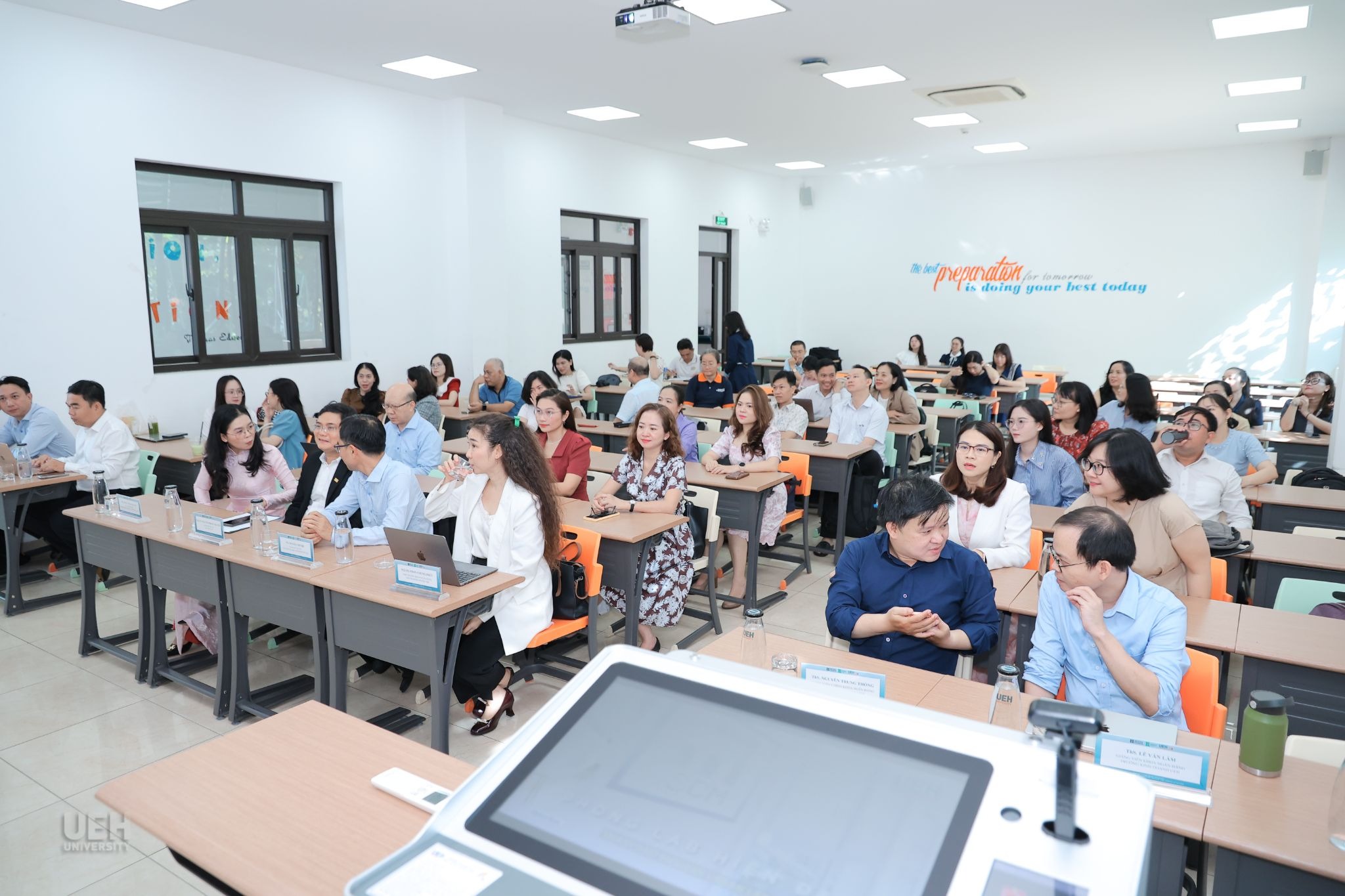
An overview of the classroom
During the course, lecturers explored applications of AI in developing learning materials, designing lessons, slides, cases, learning activities and assessment. In addition, participants were guided in building and refining prompts, working with AI on professional tasks, and verifying the reliability of AI-generated content.
The programme also extended from AI to data analytics platforms and tools such as Big Data, Machine Learning and natural language processing. Using sample datasets and a Toolkit, participants practised everything from data entry and analysis to reading and interpreting results, while discussing how these tools could be brought into their own subjects and research activities.
Learning through cases, practice and applied projects
The training pathway was delivered across five sessions, moving from AI fundamentals and Prompt Engineering, to applications of AI in teaching and assessment, and on to Big Data, Machine Learning, NLP and real application cases at UEH. In the final sessions, participants shifted from exploring tools to identifying problems, selecting solutions and building a plan for applying AI to a specific subject.
The training method combined guided instruction, hands-on practice, case discussion and project work. In particular, real cases already implemented at UEH were used as reference points, helping participants envisage how to turn technology into solutions suited to each subject. While developing their projects, participants received advice, feedback and support from lecturers, experts and the teaching assistant team.
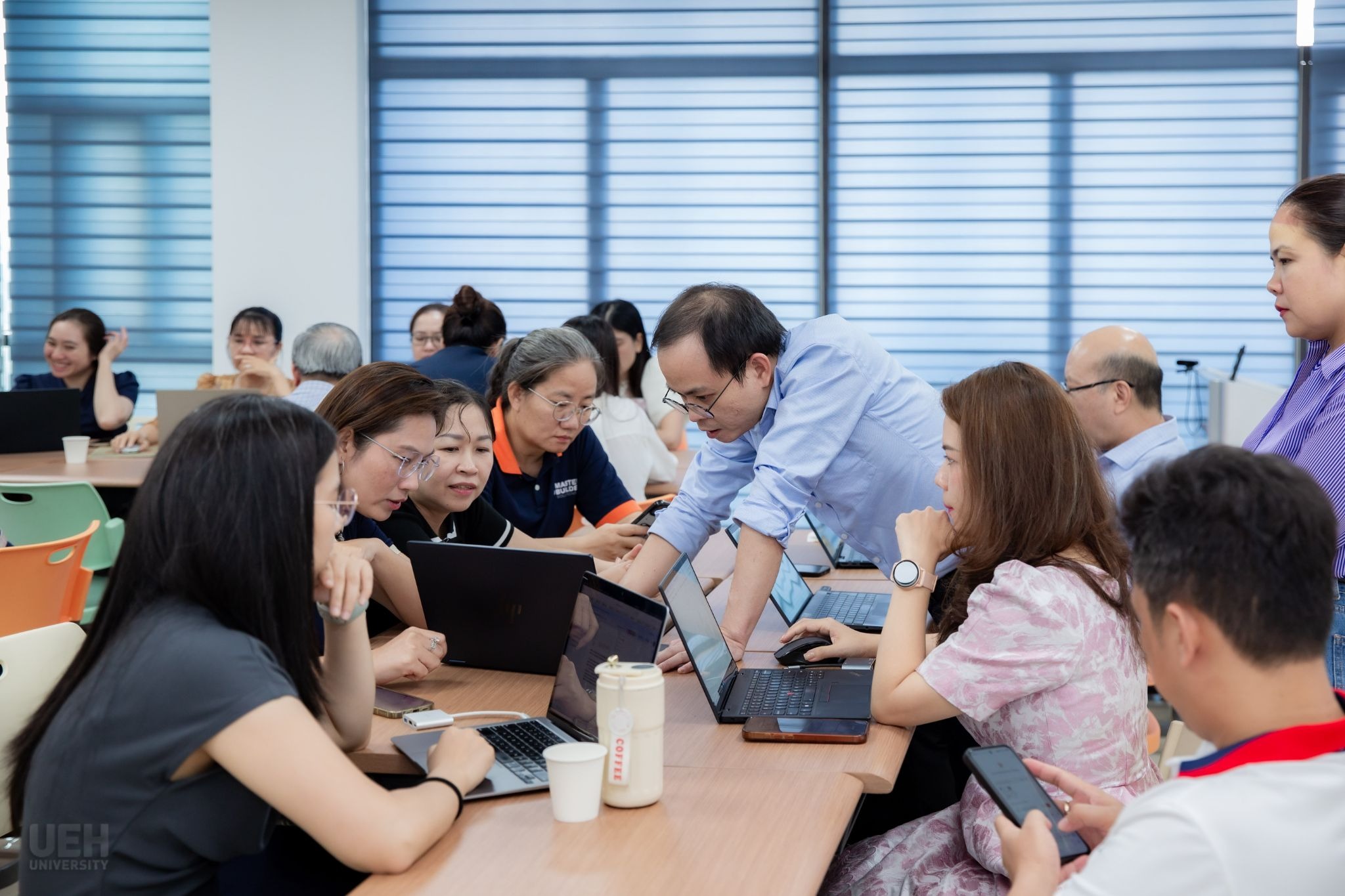
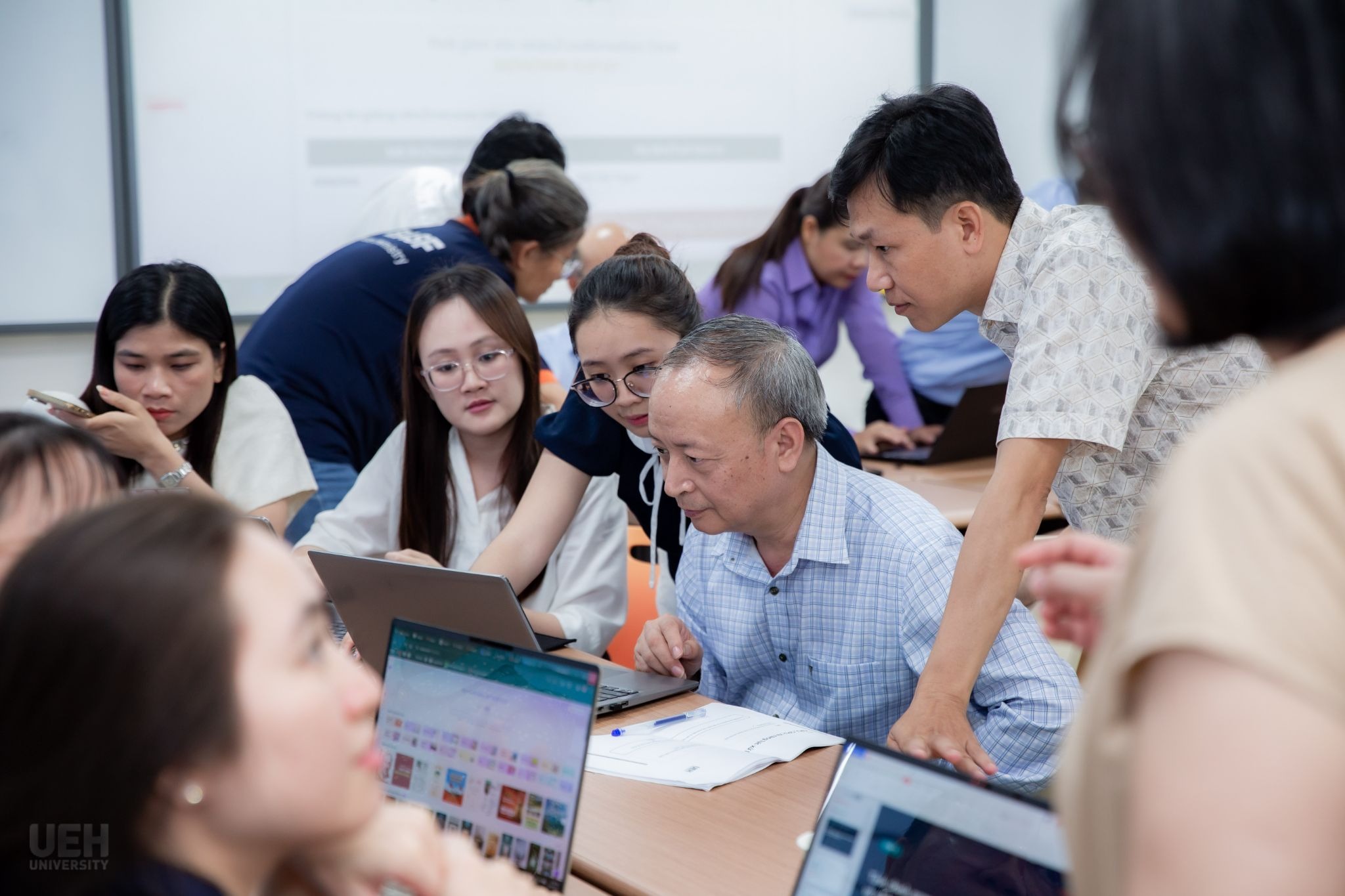
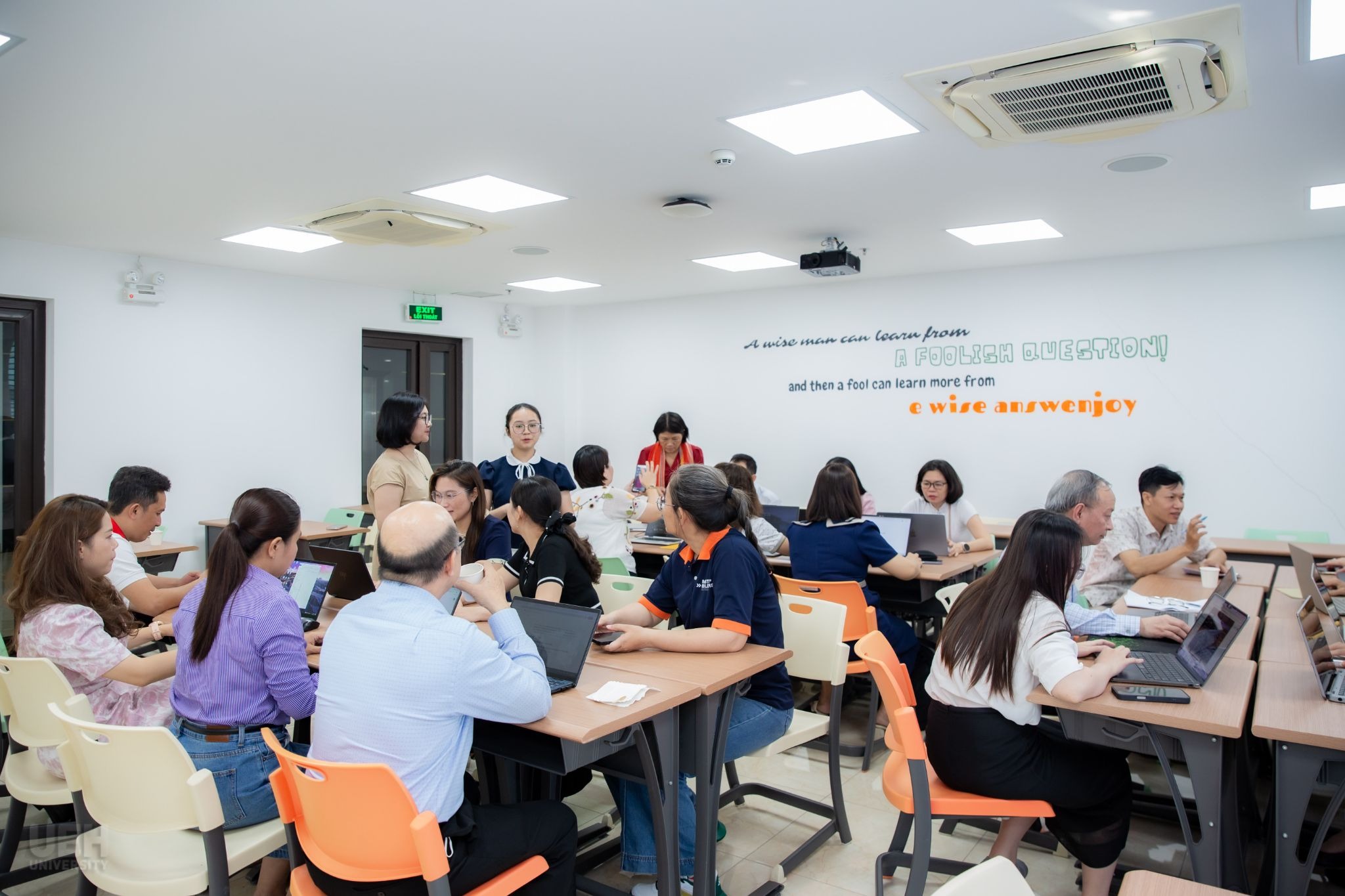
Participants exchange views, discuss and receive feedback while working on their projects
One of the core requirements of the programme was that each participant select a subject or teaching topic on which to build and present an AI application project at the end of the course. The outputs could take various forms, such as learning materials, lessons, teaching cases, assessment activities, big data analysis projects, Machine Learning projects for forecasting, or AI-integrated models suited to the specific nature of the subject. The value of the programme lies not only in helping lecturers learn about new tools, but also in their ability to choose the right tool, verify results and gradually bring solutions into their actual teaching practice.
Forming a community for sharing educational innovation
By the end of the programme, 43 lecturers had completed and presented their final projects, marking a shift from engaging with technological knowledge to designing applications that can be trialled in real teaching practice. The outputs could be developed in many directions, from learning materials, lessons, teaching cases and assessment activities to data analysis projects and AI-integrated models suited to the specific nature of each subject.
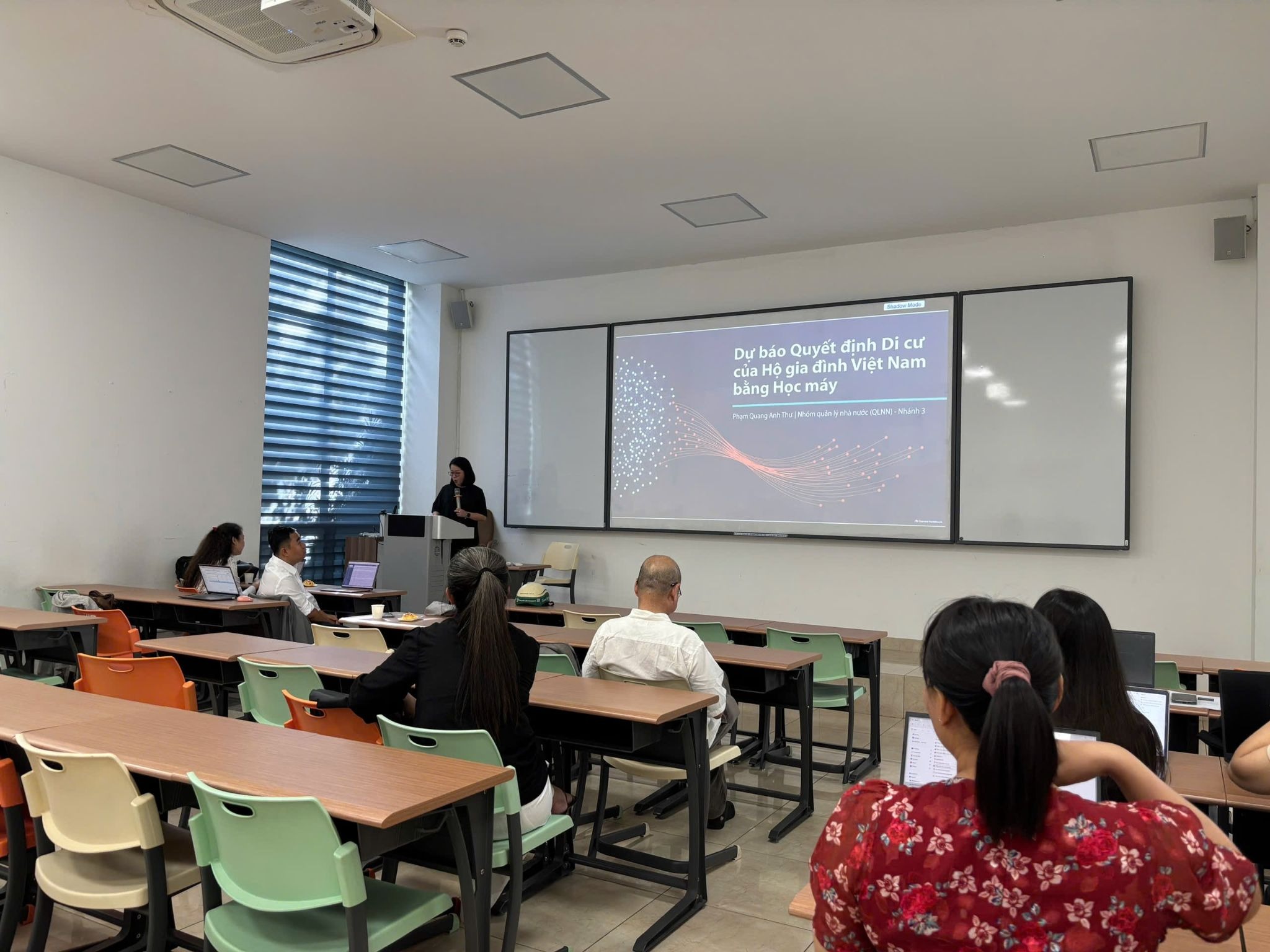
A participant presents a final project on applying AI and ML in forecasting
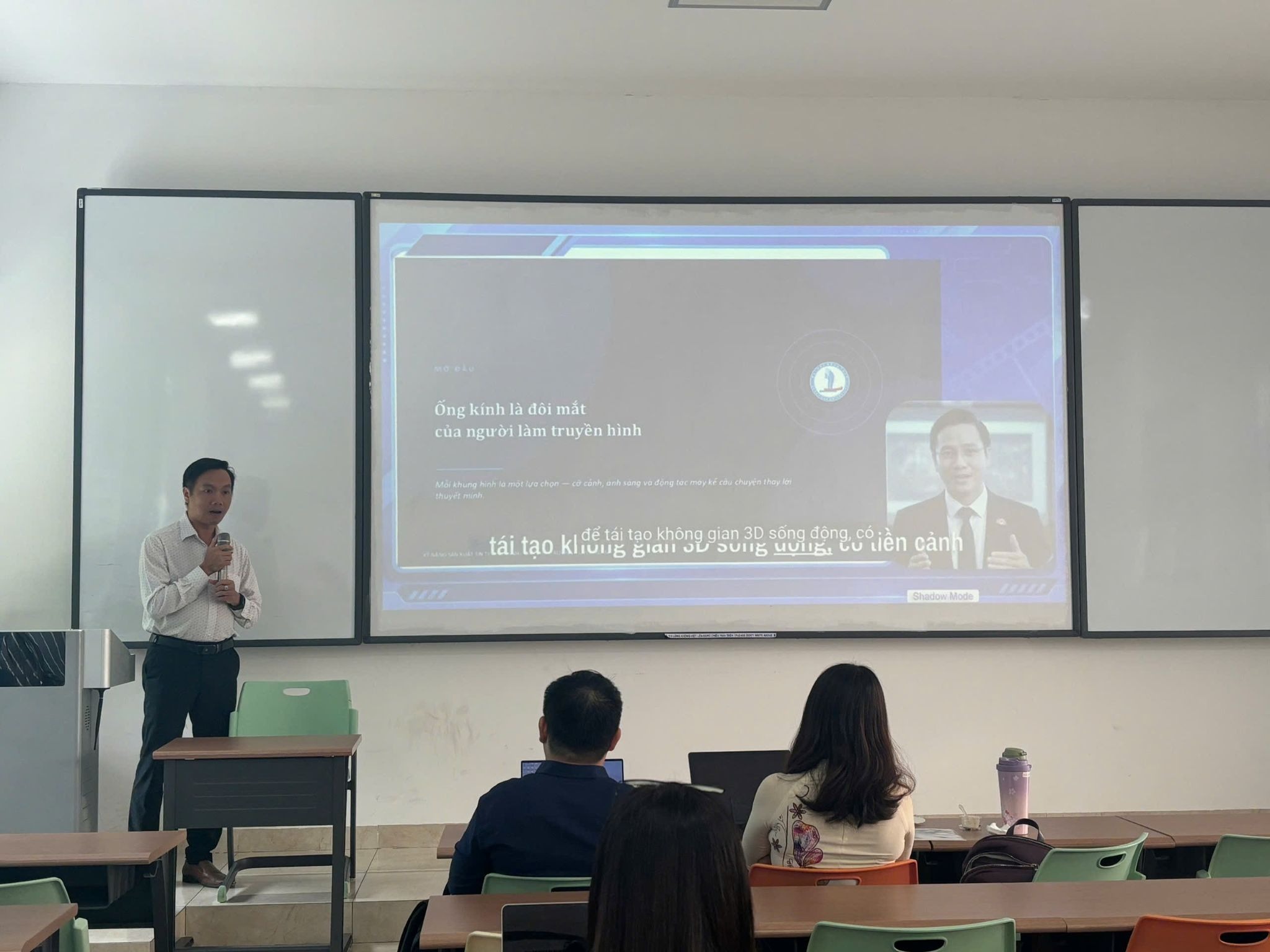
A participant presents a final product applying AI in lesson design and assessment
Expanding the digital pedagogy network
With the participation of teachers from many higher education institutions across regions of the country, the programme has laid the foundation for a digital pedagogy network connecting institutions, particularly with higher education institutions in the provinces. The programme placed strong emphasis on building a highly collaborative learning environment, where participants not only receive knowledge but also proactively share, exchange and learn from their colleagues’ real-world experience. The training course has come to a close, but the creative outputs and the close-knit network formed will continue to spread, opening up many new opportunities for teaching and learning innovation in Vietnamese higher education.
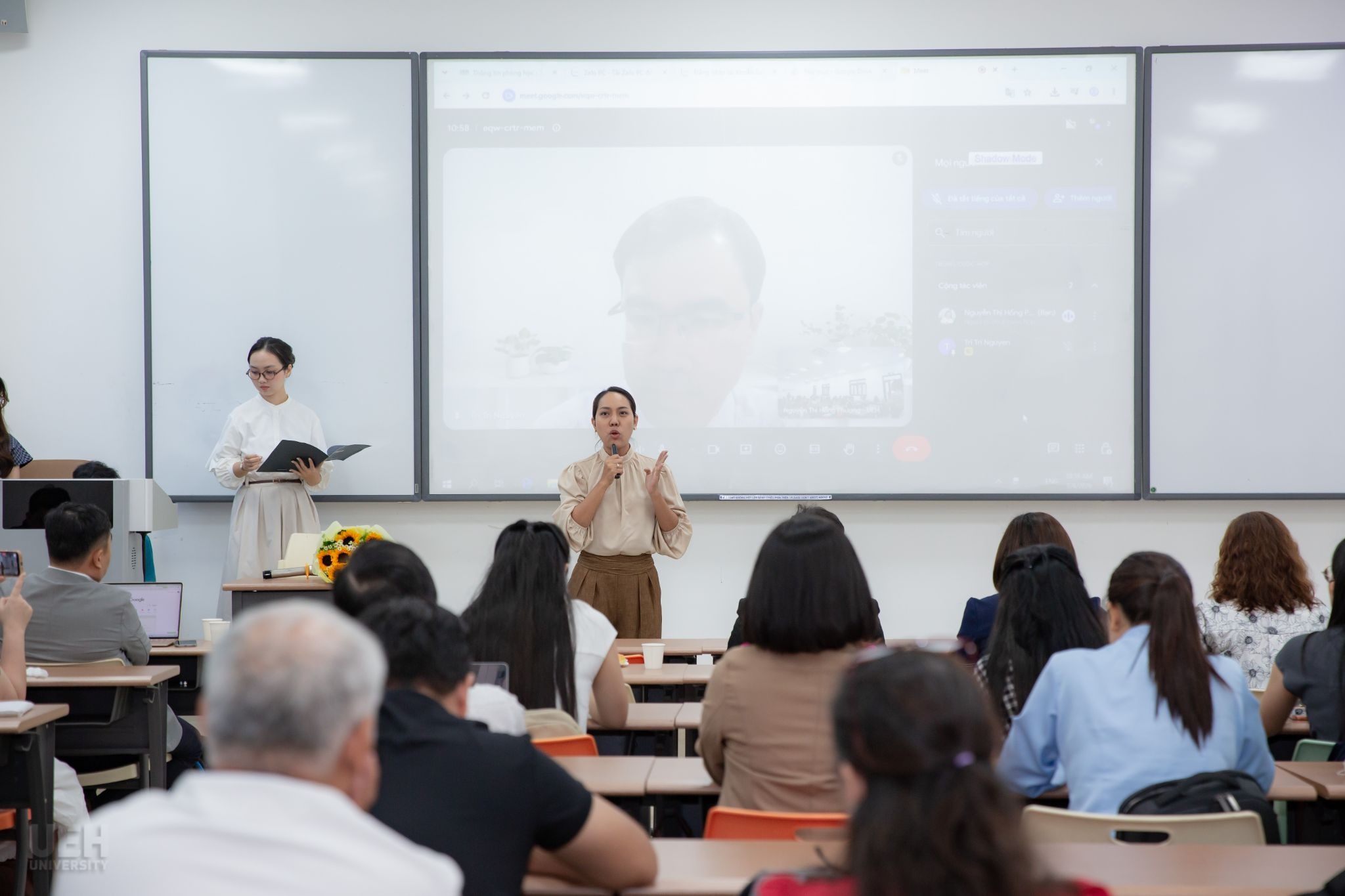
A participant representative shares their reflections and expresses appreciation for the programme
 Representatives of the teaching team and the Academic Advisor share their reflections and congratulate participants at the close of the programme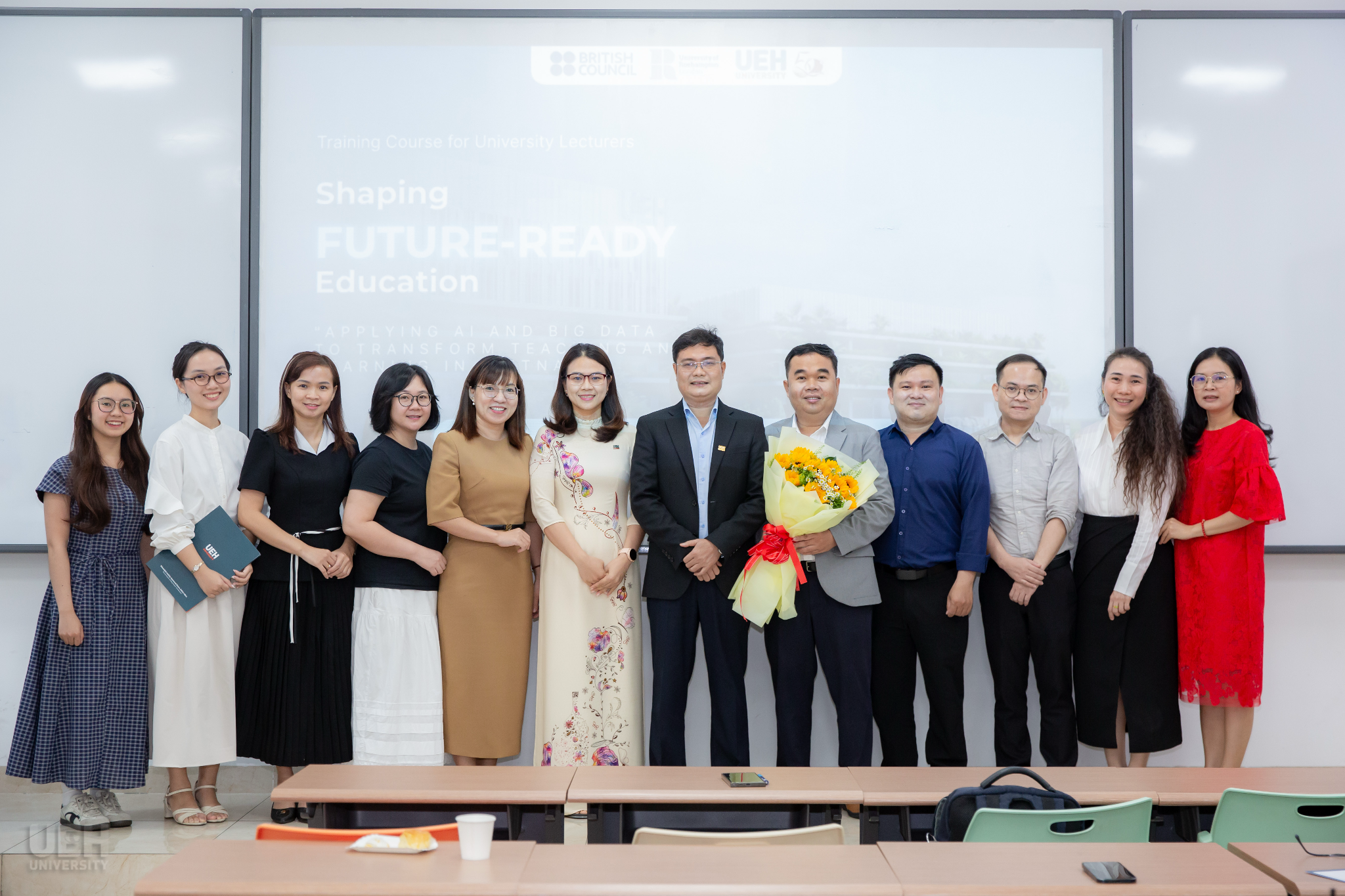
Participant representatives present flowers in appreciation to the Management Board of the project “Shaping Future-Ready Education: Applying AI and Big Data to Transform Teaching and Learning in Vietnam”
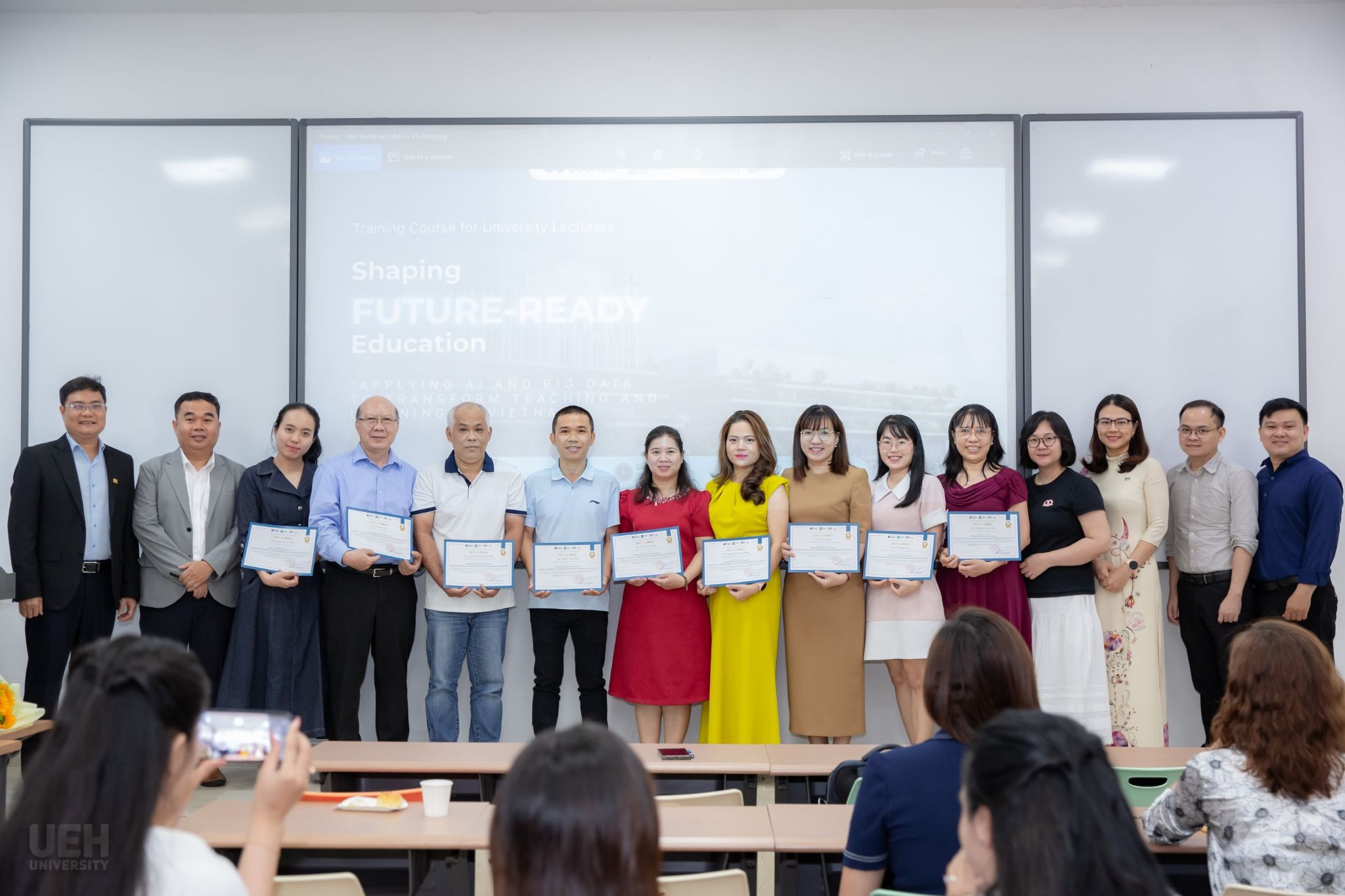
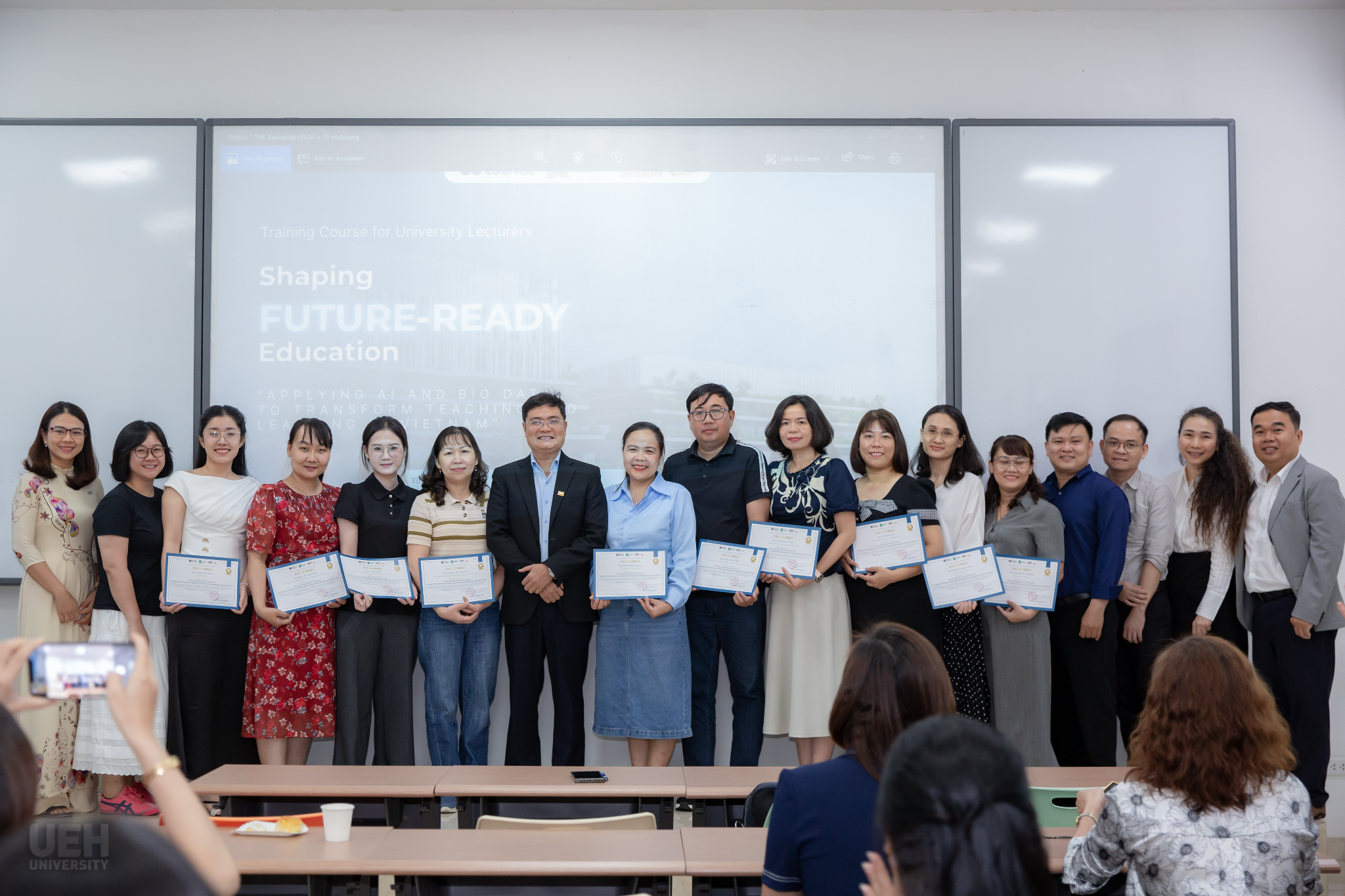
Participants at the certificate presentation ceremony
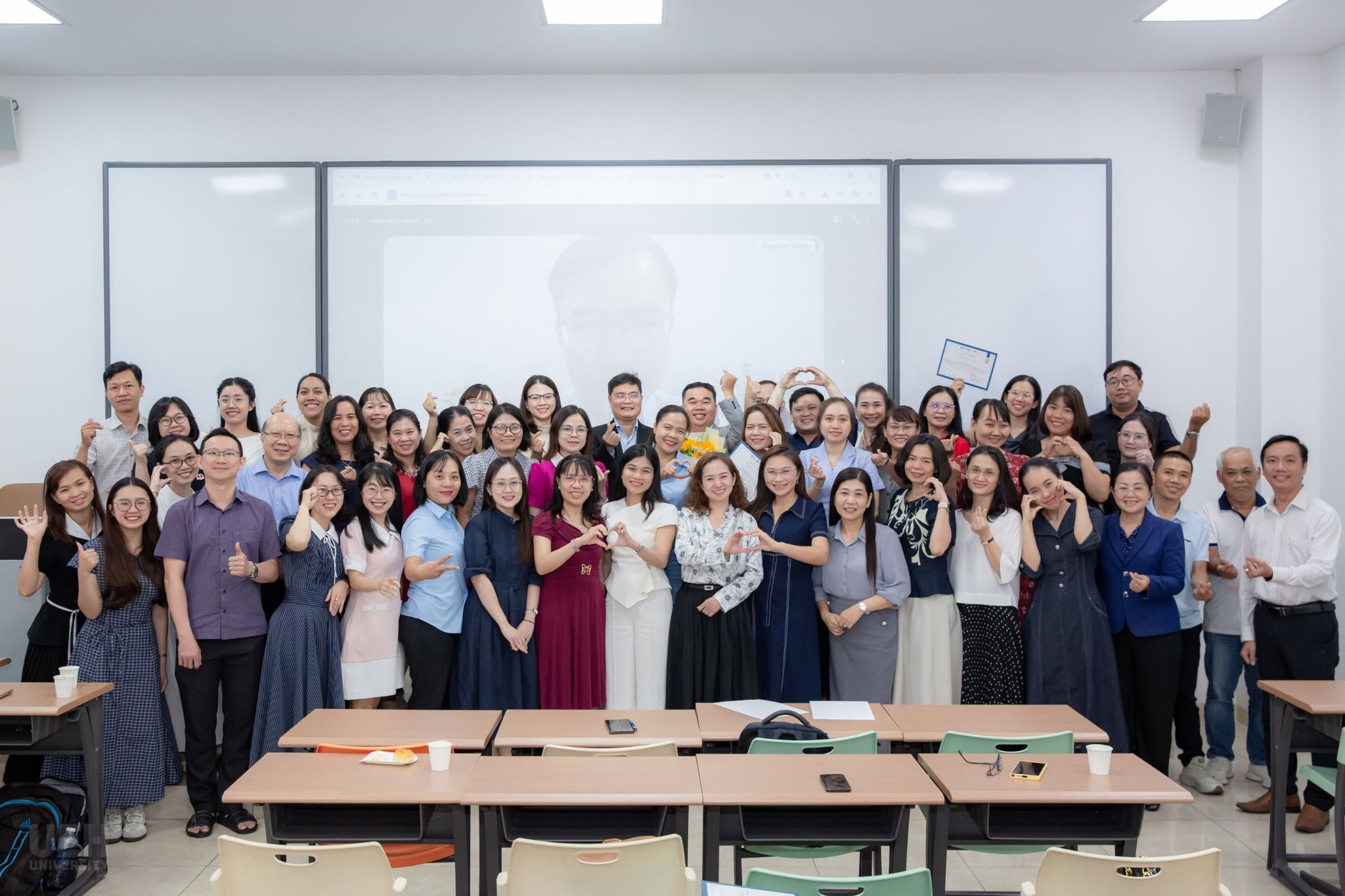
Participants take a commemorative photo at the closing ceremony
News, photos: Management Board of the project “Shaping Future-Ready Education: Applying AI and Big Data to Transform Teaching and Learning in Vietnam”; Department of Communications and Partnership Development.


![[UEH 50 Years] 8 Values Awakened – UEH’s Inner Strength Carried Forward](/images/upload/thumbnail/ueh-thumbnail-639260374870133317.jpg)